Enterprise hard drives are usually chosen for one simple reason: they are supposed to be easier to rely on when large-scale storage matters most. Yet a recent Toshiba case shows that even this category can become difficult to manage when supply is tight and a replacement is needed fast.
According to documents viewed by Tom’s Hardware, a company bought several large-capacity Toshiba enterprise HDDs, and one of those drives failed only a few months later. When the customer asked for a replacement, Toshiba reportedly could not provide a new unit and instead offered a refund based on the original purchase price.
The problem was not only the failure itself, but also the state of the replacement market behind it. Toshiba reportedly had no stock available to ship a direct replacement for the failed enterprise drive, which meant the customer could be left waiting at least a year if a new unit was still required.
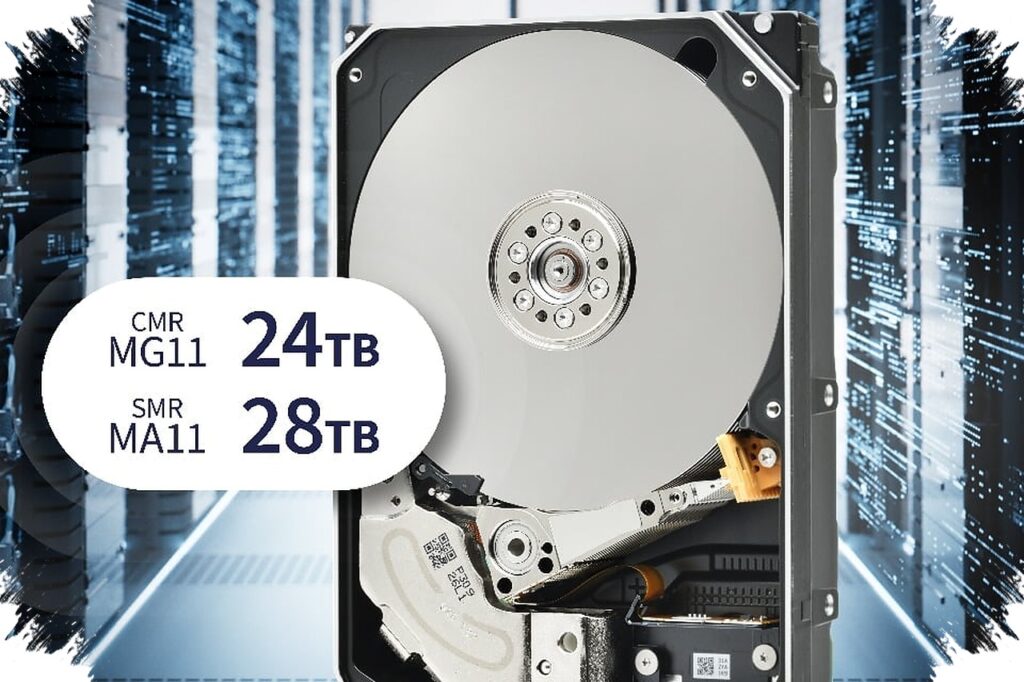
That delay matters because the drive in question was a 24 TB model. In a market where prices have moved sharply upward, a refund at the original purchase value may not be enough to cover the cost of buying the same class of storage again.
Supply pressure is reaching HDDs, not just SSDs
The case highlights how the ongoing memory supply crisis is no longer limited to SSD pricing. Enterprise HDDs, which often serve as the practical choice for bulk storage and archival use, are now being affected by the same wider supply constraints.
That creates a difficult situation for corporate buyers. HDDs remain important in environments where very large data sets need to be stored without requiring extremely fast access, but the economics begin to change when replacement hardware becomes scarce. A system may still depend on HDDs for capacity, yet the cost and availability of those drives can no longer be taken for granted.
For businesses, the risk is not only financial. A failed drive is usually expected to be swapped out quickly, but that assumption becomes less reliable when inventories are thin. In that environment, a standard replacement workflow can turn into a long wait and an operational problem.
Early failure is unusual, even for HDDs
HDDs do contain more moving parts than SSDs, so they are generally more exposed to mechanical wear. Even so, a drive failing after only a few months is not considered normal behavior.
Modern HDDs are often expected to last for more than five years depending on how they are used, while SSDs are also commonly described as lasting five to 10 years or longer, according to SanDisk. That comparison is important here because the Toshiba case is not mainly about a device reaching the end of its life. It is about a relatively new drive failing and then becoming hard to replace.
That combination makes the incident more serious than a routine warranty claim. The customer is not only dealing with a defective unit, but also with a replacement process blocked by low supply and higher market pricing.
No quick answer from new storage technologies
The storage industry continues to explore alternatives for high-capacity needs. WD has recently announced an HDD technology that it says delivers flash-like performance, while Microsoft’s Project Silica uses laser-etched glass and is claimed to store data for up to 10,000 years.
Those developments point to long-term directions for data storage, but they do not solve the immediate problem described in Toshiba’s case. Enterprise buyers still need hardware that can be replaced within a practical time frame, especially when existing drives fail unexpectedly.
The situation shows why storage planning cannot rely on a single assumption that HDDs are automatically safer than other media. When supply tightens, even traditional enterprise drives can become difficult to source, and a failed unit can quickly turn into a much larger business issue.