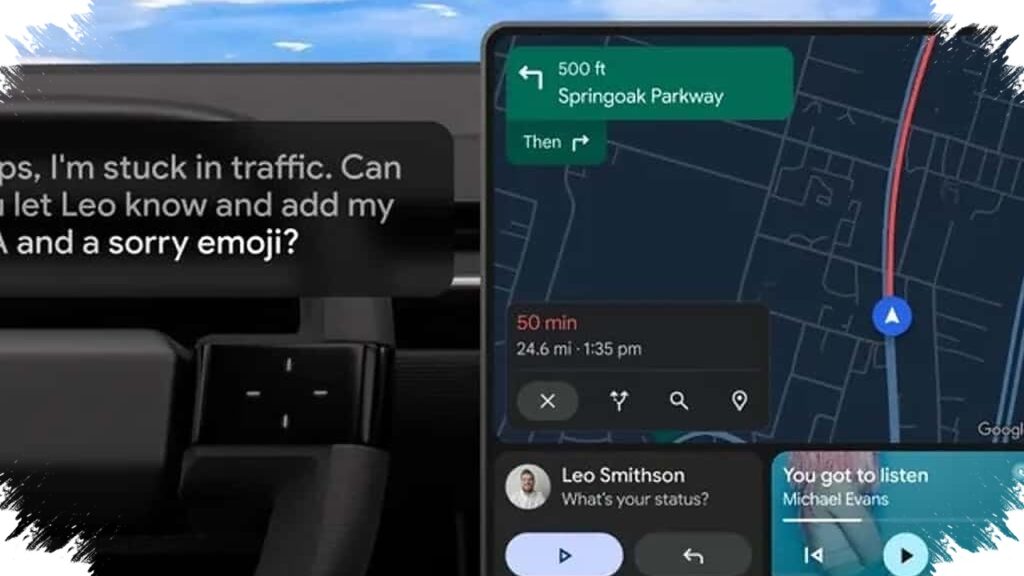
A growing number of Android Auto users are finding that Gemini does not always feel like an upgrade inside the car. Instead of delivering quick, practical voice control, the assistant is drawing complaints for talking too much and still struggling with basic commands.
That frustration is pushing some users back to Google Assistant. For many drivers, the issue is not that Gemini lacks ambition, but that its style of interaction does not match the simple, fast-paced needs of in-car use.
Why Gemini feels out of place in Android Auto
Gemini arrived on compatible Android Auto devices earlier this month, and the expectation was that it would bring a more capable assistant experience. Google had presented Gemini as a major step up from Google Assistant, with the ability to help with trip research, shopping plans, and more personal-sounding guidance.
That broader vision is not what many motorists want while driving. In a car, most users are looking for short answers, fast execution, and minimal distraction, not extended explanations or conversational depth.
For that reason, the new assistant has quickly run into a practical problem. Features that sound useful on paper can become less appealing when the driver simply wants a call placed, a song played, or a navigation-related question answered without extra commentary.
Users say the basics are still unreliable
Reports from Reddit posts cited in the source material show a pattern of disappointment. Some users say Gemini keeps talking even when the request is simple, but still fails to complete the task that was asked of it.
Those complaints include trouble recognizing contact names when asked to place a call. In other cases, Gemini reportedly could not start music playback or responded by explaining why a request could not be carried out, rather than just handling the command.
That behavior stands out more in Android Auto than it would on a phone. Inside a vehicle, even a small delay or a long verbal reply can feel disruptive because the system is supposed to reduce attention demands, not add to them.
Accuracy concerns add to the frustration
The criticism is not limited to talkative responses. Accuracy has also become part of the concern, especially when the assistant sounds confident but gets a clearly visible situation wrong.
One example mentioned in the source involved a driver asking Gemini where the car was located. Even though the navigation screen showed the vehicle near a highway, Gemini reportedly said the car was in the Atlantic Ocean.
That kind of mistake matters because it undermines trust. A voice assistant used in a moving vehicle needs to be not only helpful, but also precise enough to support safe and efficient use.
Why Google Assistant feels like the safer choice
For some users, the answer has been to switch back to Google Assistant. The source notes that some people have already done this, although not everyone can change immediately because some devices are already locked to Gemini.
The appeal of Google Assistant is not necessarily that it feels more advanced. Its advantage is that it tends to be shorter and better suited to the limited interaction style people expect in a car.
That difference has become central to the debate. Android Auto is not a setting where long-form conversation is especially valuable. Navigation, calls, music, and brief information requests usually matter more than personality or extended explanations.
Switching back is possible, but not limited to the car
The source also explains that returning to Google Assistant is done through system settings. The path described is Settings, then Apps, then Assistant, then Digital Assistants from Google, and finally selecting Google Assistant.
There is an important tradeoff, however. The change affects all Android devices using Google’s digital assistant, not only the Android Auto experience. That means users who want the old behavior in the car may have to accept the same assistant choice across their wider Android setup.
That limitation shows how tightly the two services are connected. It also helps explain why some users who are unhappy with Gemini may still hesitate to switch, even if they prefer the older assistant’s simpler style behind the wheel.
For Google, the feedback from Android Auto users points to a clear challenge. Gemini may be designed to sound smarter and more conversational, but in the car, success depends on whether it can answer briefly, act quickly, and handle basic tasks without adding friction.
Source: www.androidpolice.com