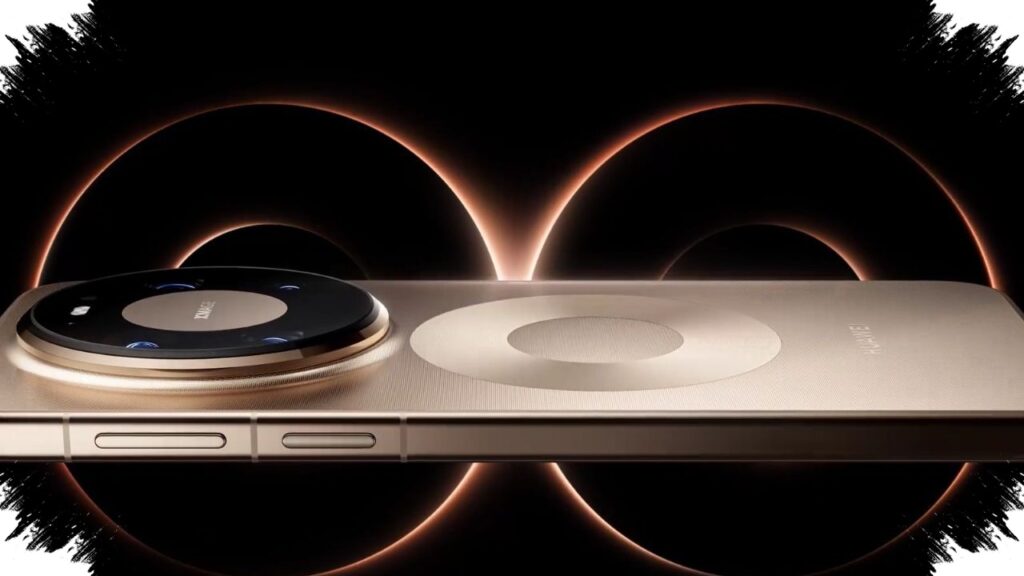
Huawei’s Mate 80 Series has drawn attention for more than its flagship status. The lineup is being discussed as a symbol of Huawei’s push toward technological independence, with the Kirin 9030 at the center of that story.
The chip is described as developed without reliance on U.S. technology, a detail that gives the device broader significance in the global smartphone market. Alongside claimed performance gains of 21 percent to 42 percent over the previous generation, the series has quickly become one of Huawei’s most closely watched releases.
A chip strategy built around independence
Huawei launched the Mate 80 Series at the end of November 2025, using the Kirin 9030 and its Pro variant as the main engines behind the devices. The processor is produced by SMIC and is said to have been made without using technology from the United States.
That positioning matters because it reflects Huawei’s effort to reduce dependence on the traditional semiconductor supply chain long dominated by American players. Rather than treating the phone as a routine refresh, the company is presenting the series as proof that key components can be developed within a more self-reliant ecosystem.
Technically, the Kirin 9030 uses a 9-core configuration and reaches CPU speeds of up to 2.75GHz. Huawei pairs it with the Maleoon 935 GPU, which is intended to strengthen graphics performance for demanding tasks.
Performance gains are not limited to the chipset
The company’s performance claims do not stop at the processor itself. Huawei has also equipped the Mate 80 Series with a new-generation vapor chamber cooling system to help keep temperatures under control during heavy use.
Some variants even include an internal cooling fan, showing that stability is a priority as much as speed. That approach is aimed at maintaining consistent output during gaming sessions, multitasking, and other intensive scenarios.
Battery capacity also supports that direction. Reference specifications place the battery range between 5750 mAh and 6000 mAh, giving the devices a strong base for daily use.
Premium hardware remains part of the package
Huawei has still kept the Mate 80 Series aligned with flagship expectations in display and imaging. The phones use LTPO OLED panels with a 120Hz refresh rate, a combination designed to deliver smooth visuals while preserving efficiency.
That specification should support fluid scrolling, responsive navigation, and comfortable media consumption without excessive battery drain. On the camera side, Huawei brings its latest 50MP XMAGE system, with attention placed on detail capture and low-light performance.
Those elements help position the lineup as a premium product in more than one category. The company is not leaning on the self-developed chip story alone, but on a complete mix of performance, display quality, and photography capability.
HarmonyOS NEXT reinforces Huawei’s broader direction
Another major part of the Mate 80 Series identity is its software. The devices run the latest version of HarmonyOS NEXT, which is described as fully independent and without Google services.
That move signals Huawei’s intention to build a digital ecosystem that no longer depends on the platforms that have long shaped the global smartphone market. For users, the experience may feel more tightly integrated across Huawei services and applications.
At the same time, the lack of Google services can still create an adjustment period. App habits may change, and some users may view the transition as a practical challenge, even as Huawei pushes ahead with its standalone system.
Why the launch matters beyond Huawei
The arrival of a smartphone line built around a chip developed without U.S. technology has prompted concern in the United States. The reference material states that U.S. authorities view this progress as a threat to their technological dominance.
That reaction is understandable in a sector where semiconductors determine much of the competitive balance. If a major company can build its own chip and ecosystem without old dependencies, the global smartphone landscape can shift in ways that extend far beyond one product launch.
The Mate 80 Series is expected to begin global sales in April 2026, making it an important test of Huawei’s new direction. Its reception will help show how far a flagship built on in-house chips and a Google-free operating system can go in the wider market.