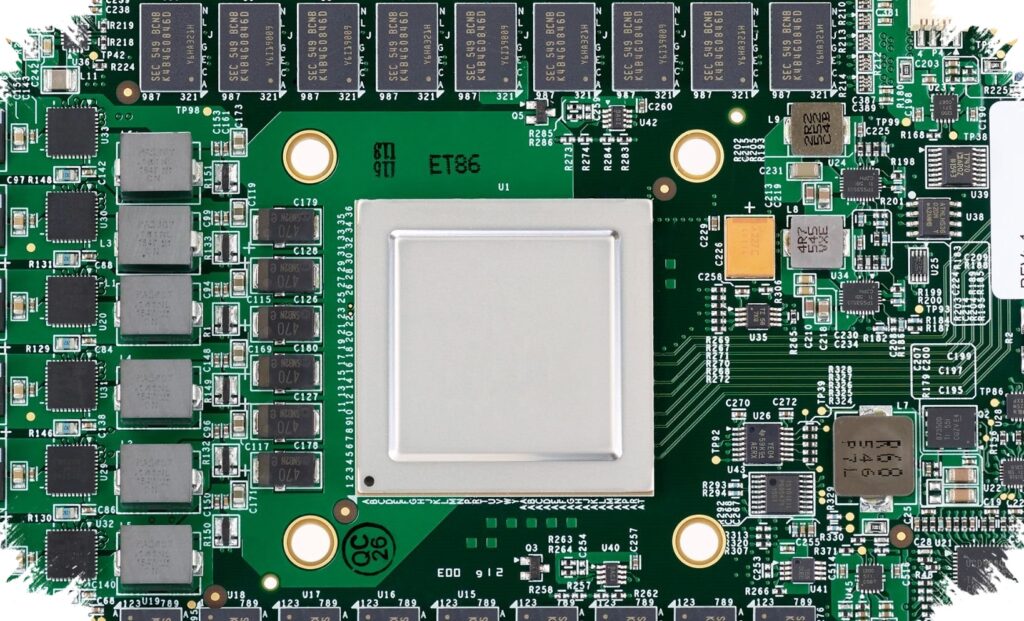
Google’s newest TPU update is less about raw power and more about specialization. By splitting its eighth-generation Tensor Processing Units into separate chips for training and inference, Google is signaling that AI infrastructure now needs to be built around different kinds of work, not one universal design.
That shift matters because the benefits are not limited to engineering teams inside data centers. Lower energy use can also affect operating costs, cooling demands, and, potentially, the economics of AI services that millions of users interact with every day.
A split designed around two different jobs
At Cloud Next 2026, Google introduced two new architectures: TPU 8t for training and TPU 8i for inference. The distinction reflects a basic reality of AI systems, where model training and model use place very different demands on hardware.
Training is the heavier workload. It requires large clusters, high-bandwidth memory, and constant updates across billions of parameters. Inference, by contrast, is the stage where a trained model produces answers or predictions, including the real-time responses seen in chatbots and AI assistants.
Because those tasks are not equivalent, using the same hardware for both can force inference to run on infrastructure that is more expensive than it needs to be. Google’s new approach tries to address that mismatch directly.
Why efficiency is now the main selling point
Google says the separated design can help data centers reduce electricity use and lower operating expenses. That claim is logical, since inference is generally lighter and does not always require the same level of computing depth as training.
The company’s framing also goes beyond energy bills. More efficient chips can reduce the strain on data center cooling systems, which matters for large-scale AI services. In environments powered by products such as Gemini, even small efficiency gains can have broader effects on power and water usage.
This is one reason the announcement has drawn attention. In the current AI boom, chip design is no longer judged only by speed, but also by how much power a system consumes while doing the job.
A greener message, but not a clear win for users
Google is presenting the update as part of a more environmentally conscious strategy. That positioning fits a wider industry conversation, where AI infrastructure is under pressure because of the resources required to keep it running.
The company has also been moving in this direction before. TPU v5e already used the “e” label to signal efficiency for smaller-scale operations, and TPU 8i appears to continue that direction at a larger and more relevant level for today’s AI workloads.
Still, lower operating costs do not automatically mean lower prices for customers. The source material does not say Google has committed to passing the savings on to users, which leaves open the question of who benefits most from the efficiency gains.
The real value may sit with the cloud provider
Inference is the part of AI hardware that users feel most directly, because it powers everyday interactions with chatbots, text generators, and similar services. If the hardware behind those responses becomes cheaper to run, the cost structure of AI services could improve.
But that improvement may not necessarily reach the customer. If a cloud provider cuts its own expenses while keeping service pricing unchanged, the largest gain may remain with the platform operator rather than the end user.
That tension is central to Google’s new TPU strategy. Efficiency can reduce waste, but it does not guarantee cheaper access to AI tools.
The industry is moving in the same direction
Google is not alone in chasing more specialized AI hardware. Amazon has taken a similar path with AWS Inferentia, which is also designed for inference workloads.
That trend suggests the cloud market is moving toward a more segmented model, where providers build chips for specific tasks instead of trying to make one design handle everything. The goal is simple: match hardware more closely to the job and avoid spending more energy than necessary.
For now, Google’s eighth-generation TPU family shows that environmental efficiency has become part of the core chip design conversation. What remains unclear is whether those savings will ease costs for customers or mainly strengthen the economics of the cloud platforms that run AI at scale.
Source: www.androidauthority.com