


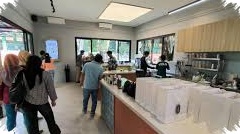
Tedja Coffee is positioning its Bandung outlets as more than places to buy drinks. The local brand is leaning into a model that connects coffee, healthy habits, productivity, and community activity in one space.
That approach is most visible at its outlet on Jalan Saparua, an area close to sports activity and gathering points. The location gives visitors a reason to stay longer, whether they come for coffee, work, events, or social time.
Chief Executive Officer Putra Ilham said the company’s main target remains Gen Z, but the customer base has expanded beyond that group. Milled paths, professionals, and even international business communities are also using the space regularly.
“Segmentasi kami memang Gen Z, tapi milenial dan profesional juga banyak. Bahkan komunitas bisnis internasional cukup aktif di sini,” Putra said on Saturday (25/4/2026).
That broader usage has helped shape Tedja Coffee’s basecamp concept. The outlets are designed as active meeting points where people can work, gather, and hold community agendas rather than simply stop in for a quick purchase.
A coffee shop built around activity
Community activity has become part of the business model, not just an added feature. Tedja Coffee supports growth through sports sessions, events, and gatherings that create extra value beyond daily drink sales.
One outlet can accommodate up to 150 people in a single event, opening room for revenue sources outside ordinary transactions. In practice, this turns the shop into a recurring activity space that can draw people back for different occasions.
The strategy matches the behavior of younger consumers who increasingly look for experience, not only products. Social interaction, in this setting, becomes part of the appeal of the store itself.
Price as an entry point
Tedja Coffee sets its products from Rp20 ribuan, using affordability as a gateway to a wider market. The pricing is paired with the atmosphere and product quality so customers are encouraged to return, not just try the brand once.
In Bandung’s crowded café scene, that mix of price, experience, and functional space helps the brand stand out. The company is careful not to rely on price competition alone, instead balancing value with quality.
Health-focused menu choices
The product side of the business also reflects the brand’s lifestyle direction. Each product comes with calorie information, giving customers a clearer basis for choosing drinks that fit their needs.
Menu innovation plays a central role as well. Offerings such as Power Latte, which contains protein, along with Dirty Latte, Mont Blanc, and Tiger Boom, are designed to attract specific customer segments while keeping the menu competitive.
That product approach shows that coffee value is not built only through low pricing. Ingredient composition, presentation, and alignment with consumption trends also shape how the brand is received.
Supply chain, digital channels, and loyalty
Behind the outlets, Tedja Coffee works with around 50 coffee farmers. Of that number, 15 are from West Java, helping the company maintain bean quality while also supporting economic activity upstream.
For promotion, the brand relies on Instagram and TikTok to stay connected with customers. It also builds loyalty through “Warga Teja,” a membership-based identity that strengthens the sense of community around the brand.
Tedja Coffee now operates seven outlets in Bandung after first expanding in East Bandung areas such as Margahayu and Antapani. Its move into the city center, including Saparua, has been done step by step to keep growth measured.
Putra Ilham said the biggest challenge in food and beverage business is staying relevant over time. He noted that many businesses fail because they lack long-term planning and cannot build a strong customer community.
“Bisnis ini harus terus inovasi dan peka terhadap kebutuhan konsumen. Komunitas dan kualitas SDM jadi kunci utama agar bisa bertahan,” he said.
With prices starting at Rp20 ribuan, health-oriented menus, and a space built for community use, Tedja Coffee is showing how a coffee business can operate as part of Bandung’s creative economy ecosystem.