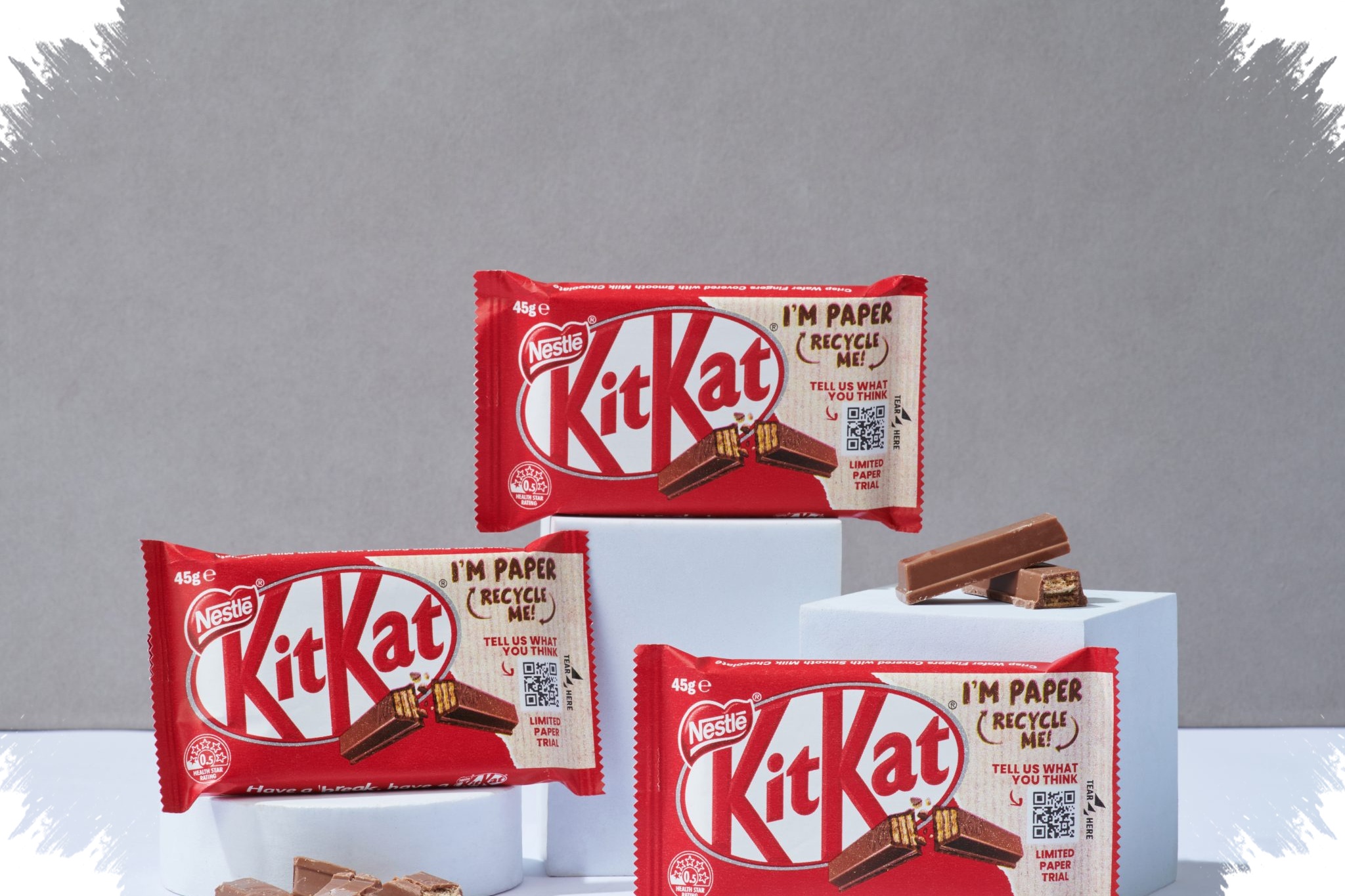
KitKat has turned a simple chocolate wrapper into a tool meant to interrupt digital habits. The brand’s new package is designed to block mobile signals, giving consumers a more deliberate break from notifications, streaming messages, and the urge to keep checking a screen.
The idea sits at the center of KitKat’s “break mode” campaign, which aims to make time off feel more physical and less abstract. Instead of relying on software settings or screen-time reminders, the brand uses packaging itself to create a temporary barrier between a person and their phone.
A wrapper that works like a Faraday cage
KitKat says the package functions like a Faraday cage, a structure known for blocking electromagnetic signals. In practice, that means the material can prevent cellular, Wi-Fi, and radio signals from entering or leaving the enclosed space.
The method is straightforward. A metal layer on the surface disperses signal energy, so a device placed inside cannot receive or send calls, messages, or internet access.
For this version of the packaging, KitKat used copper, polyester, and polypropylene. The company says the wrapper remains effective for up to one year before it can be recycled.
Turning a break into a physical ritual
The campaign was developed by KitKat Panama together with Ogilvy Colombia. Both sides framed the concept as a practical way to help people fully step away from digital interruptions during a break.
In the campaign video, the package is shown as an extension of the brand’s long-standing “Take a Break” message. A phone goes into the wrapper, and the moment shifts from checking the device to focusing on the present.
Nestlé marketing director Kim Waigel described the idea as an upgraded ritual. “Our goal is to elevate that ritual: you unwrap your KitKat fingers, place your smartphone inside, separate the fingers, and immerse yourself in the moment,” Waigel said.
She added that the desired effect is immediate. “Your digital world silences, and your break truly begins,” Waigel said.
Why the concept stands out
The timing of the campaign connects with a wider conversation about digital fatigue. Constant alerts, endless scrolling, and the pressure to stay reachable have made many people more aware of how difficult it can be to disconnect.
KitKat’s response is different from app-based limits or built-in phone controls. The brand is not asking users to manage screen time through settings alone. It offers a wrapper that physically cuts off signal once the device is placed inside.
That approach makes the message easy to understand. The consumer is not only told to rest, but also given a visible tool that supports the break.
Old technology, new setting
The Faraday cage is not new technology. It is commonly used in medical environments, research laboratories, and cybersecurity and data security facilities.
Its traditional role is to prevent interference, reduce the risk of signal leakage, and protect sensitive spaces. KitKat’s campaign reintroduces that principle in a consumer-friendly form that is easy to grasp at a glance.
In this case, the purpose is not advanced data protection. The focus is a short but firm pause from the phone during the break itself.
A campaign with limited rollout so far
KitKat has already released a promotional video for the “break mode” concept. A wider commercial launch, however, is still under consideration.
That means the signal-blocking wrapper currently functions more as a creative campaign than a mass-market product. Even so, the idea has drawn attention because it combines chocolate, resting habits, and digital distraction in one memorable format.
By making a phone lose signal inside the package, KitKat gives new meaning to the word break. The message is not only about enjoying chocolate, but also about stepping away from digital noise long enough for attention to return to the moment at hand.
Source: www.indiatoday.in-

-
-

-