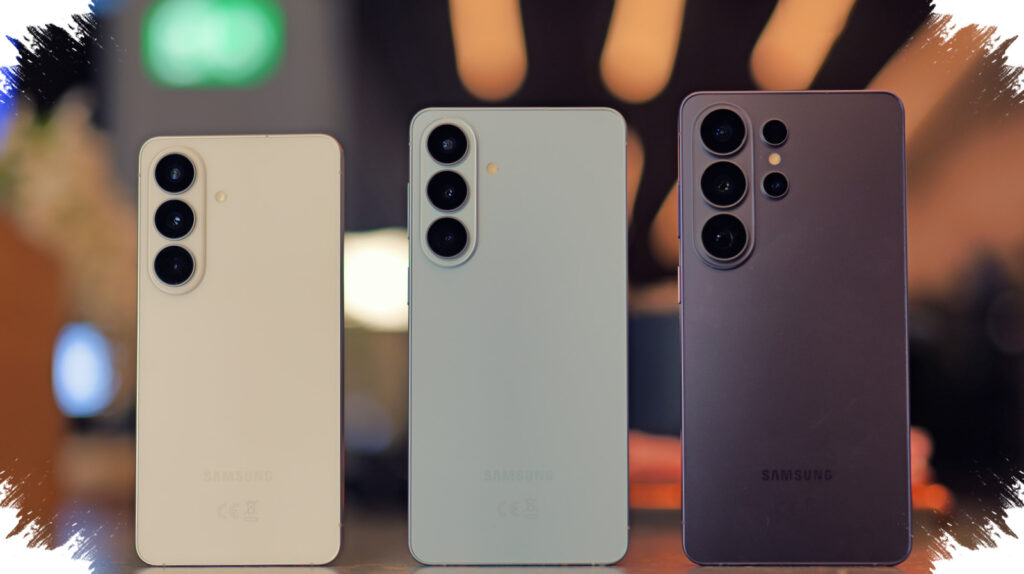
Samsung’s Galaxy S26 is shaping up as a compact flagship for users who want premium performance without carrying a large handset. It is not positioned as the most expensive model in the lineup, yet it still combines a refined design, strong hardware, and modern features in a way that keeps it highly relevant in the premium smartphone segment.
The appeal is easy to understand: the Galaxy S26 aims to balance comfort, power, and practicality. While many rivals push larger bodies and more aggressive specifications, Samsung’s approach is more restrained, focusing on a device that feels easier to hold while still delivering a true flagship experience.
Compact design with a premium finish
Samsung keeps its minimalist design language on the Galaxy S26, and the result is a phone that looks clean and modern. Its compact size makes one-handed use more convenient, especially for people who prefer a device that does not feel bulky in daily use.
The premium impression does not come only from the shape of the phone. Solid materials and neat build quality help the Galaxy S26 maintain the flagship feel that buyers expect from the S Series, even though this model is not the top-tier variant.
A display built for everyday comfort
The 6.3-inch Dynamic LTPO AMOLED 2X panel is one of the key reasons the Galaxy S26 stands out. It offers sharp detail, accurate color, and smooth scrolling, which should make both daily tasks and content viewing feel more refined.
Brightness reaches up to 1400 nits, improving outdoor visibility when the screen is used in direct light. The adaptive refresh rate also adds value by helping maintain visual smoothness while supporting better power efficiency.
Performance aims to stay ahead in compact form
Under the hood, Samsung equips the Galaxy S26 with the Exynos 2600 built on a 2nm process. The chip is designed to improve both performance and energy efficiency, which matters especially for a compact flagship that cannot rely only on a large battery.
That combination is meant to support multitasking and gaming at a high level. Reference material indicates that demanding titles such as Genshin Impact and Wuthering Waves can run smoothly and stably, reinforcing the idea that the Galaxy S26 is not just about size but also serious capability.
Camera tuning focuses on consistency
Samsung does not appear to chase big spec jumps in the camera department. Instead, the Galaxy S26 uses a familiar triple-camera setup consisting of a 50MP main camera, 12MP ultrawide, and 10MP 3x telephoto.
The more notable improvement lies in software refinement rather than dramatic hardware changes. Colors are said to look more natural, while results appear more stable overall, and Horizon Lock helps keep video footage steady and more polished.
Battery and charging reflect the compact strategy
The Galaxy S26 carries a 4300 mAh battery, which is smaller than some competing models that already move beyond 5000 mAh. Even so, the 2nm chipset plays a major role in keeping endurance strong enough for daily use.
In normal usage, the phone is described as capable of lasting a full day. In certain scenarios, its efficiency can even approach phones with much larger batteries, which makes the compact format less of a compromise than it first appears.
Modern connectivity and long software support
Samsung also includes several features that keep the Galaxy S26 current for modern users. Wi-Fi 7, dual eSIM, and USB 3.2 Gen 2 with display output support give the phone flexibility for both daily needs and productivity use.
Another major selling point is long-term software support, with up to seven years of operating system updates. For many buyers, that adds a strong sense of security because the device is built to remain usable and current for a long period.
Pricing that stays below the Ultra tier
In Indonesia, the Galaxy S26 is offered in two memory configurations. The official price starts at Rp16.499.000 for the 12GB/256GB model and Rp19.499.000 for the 12GB/512GB version.
Those figures still place it firmly in premium territory, but they remain below the Ultra model. Market pricing can also drop by several million rupiah depending on available promotions, which helps the compact flagship feel more accessible for buyers who want high-end features without moving to the most expensive option.
Trade-offs remain part of the package
The Galaxy S26 is not without limitations. Charging speed is still capped at 25W, so it does not match some rivals that offer much faster top-ups.
It also does not include an S-Pen like the Ultra model, and the retail box stays minimal because the charger is not provided. Even with those compromises, the Galaxy S26 keeps a clear identity as a premium compact phone that combines comfort, flagship power, and long support in a form that remains easier to handle than many competitors.