


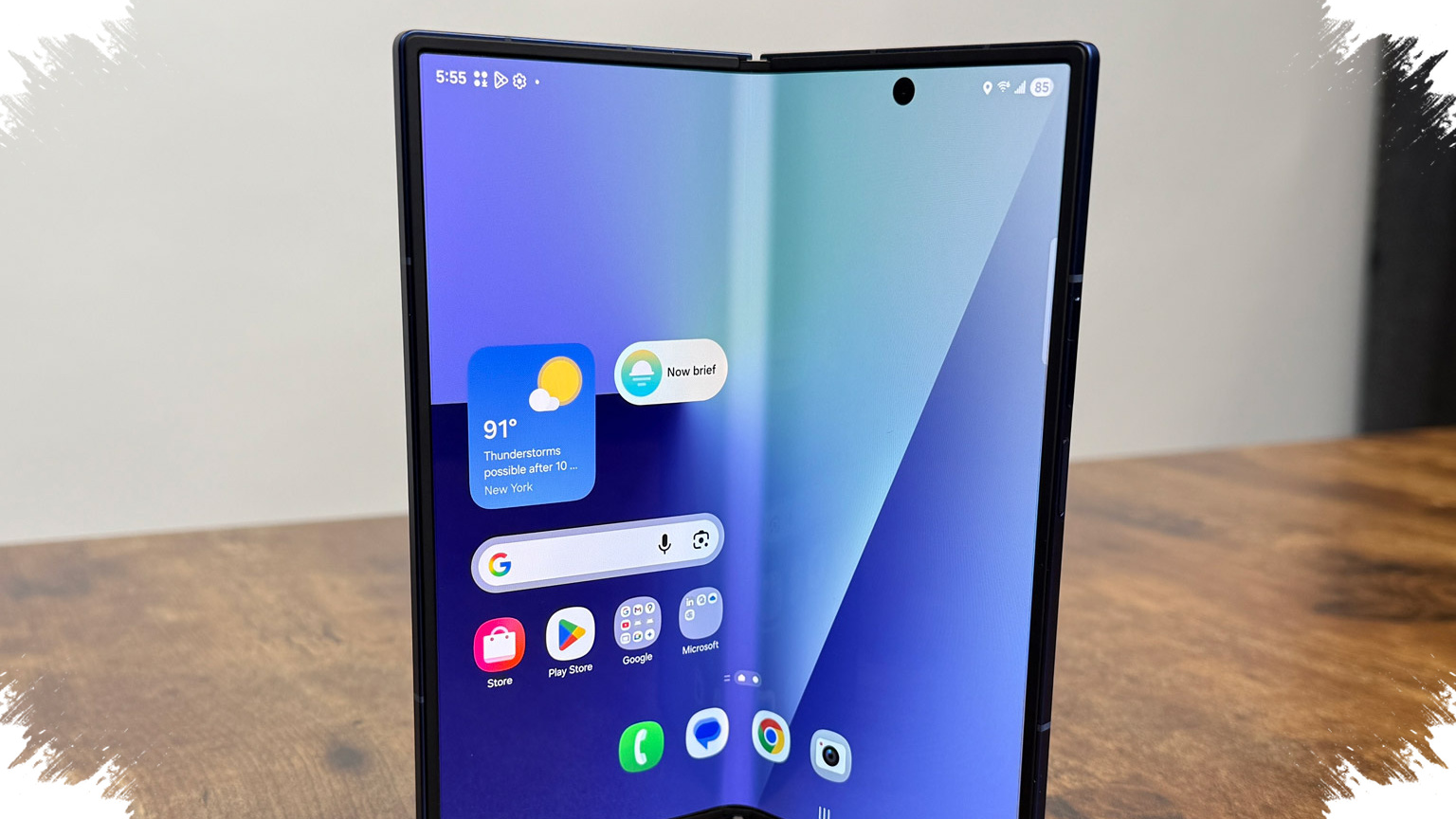
The foldable market is starting to split into two clear philosophies, and Samsung and Apple appear to be taking opposite sides. One is pushing the category toward a wider, more work-friendly format, while the other is keeping things compact and familiar.
That contrast becomes especially visible in Galaxy Z Fold 8 Wide and iPhone Fold. Samsung is leaning into a larger display experience, while Apple is reportedly prioritizing portability and everyday convenience in a passport-style form factor.
Samsung pushes the Fold line toward a larger workspace
Galaxy Z Fold 8 is said to arrive in two versions: a standard model and the Z Fold 8 Wide. Both are described as thinner, lighter, and equipped with uniform bezels for a cleaner look.
Among the two, the Wide version stands out most because it offers a bigger screen without losing the sense of mobility. That choice suggests Samsung wants the Fold family to feel even more useful for visual work and multitasking.
The standard model is also expected to keep a key distinction in the form of S Pen support. That detail reinforces the idea that the Fold series is still aimed at users who value note-taking, productivity, and a more capable multitasking setup.
Apple keeps the first foldable closer to a familiar phone shape
On the other side, iPhone Fold is described as taking a more compact route. Its passport-like design is paired with a 5.5-inch outer display and a 7.8-inch inner display, dimensions that point more toward comfort in hand and ease of storage than toward maximum screen expansion.
That approach makes Apple look cautious as it enters the foldable category. Instead of chasing the largest possible display, the company appears to be shaping a device that feels closer to what mainstream iPhone users already know.
For many users, that could be attractive because it promises a foldable that remains practical in daily use. Still, when placed next to Galaxy Z Fold 8 Wide, Apple’s direction looks notably more conservative.
The design language also sends a different message
The contrast between the two devices is not limited to screen size. Samsung is reportedly using a more angular body with a sharper, modern appearance, while Apple is favoring softer curves and a simpler overall feel.
Those differences matter because they shape how each product is understood before a user even opens the device. Galaxy Z Fold 8 Wide comes across as a mobile productivity tool with generous screen real estate, while iPhone Fold feels more like a foldable built for convenience and everyday portability.
Samsung’s approach suggests it wants to challenge assumptions about what a premium foldable should prioritize. Apple’s design, by comparison, indicates a focus on making the format less intimidating for users who want foldable benefits without an oversized device.
Core specifications underline the split in strategy
The hardware details also point to different goals. The standard Galaxy Z Fold 8 is said to carry a 5,000mAh battery, while the Wide variant uses a 4,800mAh unit.
For Apple, the reported package includes the A20 Pro chip, 12GB of RAM, and storage up to 1TB. The device is also said to support Touch ID, a dedicated camera control button, and 5G satellite internet.
These details suggest Samsung is trying to balance thinner hardware with a larger display and strong battery endurance. Apple, meanwhile, appears to be building a feature set that emphasizes performance and practical tools for a more versatile foldable experience.
Small changes help define each product’s identity
Samsung is also said to be reducing the front camera cutout on Galaxy Z Fold 8. While that may seem minor, it contributes to a cleaner and more modern-looking display.
Apple is taking a different route by adding features that feel more functional in daily use. Touch ID, the dedicated camera control button, and 5G satellite internet point to a product identity built around security, camera handling, and connectivity.
That contrast shows how both companies are shaping premium foldables in very different ways. Samsung is refining the visual experience and making the folded device feel more expansive, while Apple is leaning on familiar features that may make the transition to foldables easier for its users.
Why this rivalry matters for the foldable market
The source material suggests foldable adoption may expand further in 2026, and that makes this split in strategy important. Samsung and Apple are not just launching new devices; they are also helping define what consumers may expect from high-end foldables in the future.
Price, durability, and feature integration will still play major roles in broader adoption. Even so, the contrast between Galaxy Z Fold 8 Wide and iPhone Fold already shows that the category does not need to move in only one direction.
Samsung is pushing toward a bolder, larger-screen foldable that feels closer to a mobile workstation. Apple is choosing a safer, more compact path that may appeal to users who want portability first, even if it sacrifices some of the ambition that the wider Fold format represents.