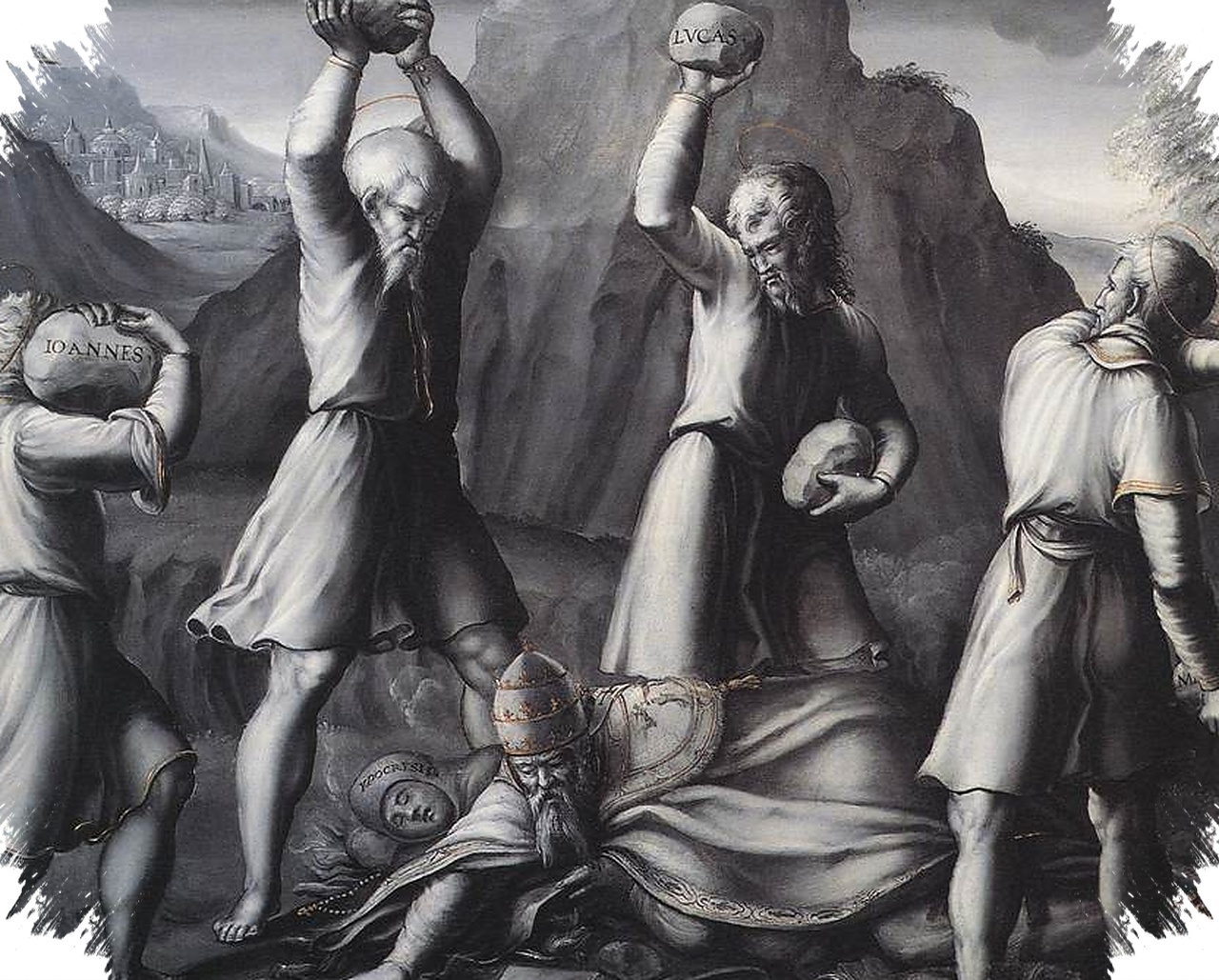
A painting by Denny JA that was once blessed by Pope Francis has drawn unusual attention because its estimated value may reach as high as Rp34 miliar in a special scenario. The figure does not come from speculation alone, but from an assessment that connects religious art, historical context, and the symbolic weight attached to the work.
The key issue is not only who created the painting, but also what happened around it. When Pope Francis passed in front of the National Gallery of Jakarta in September 2024, a brief moment turned the artwork into something far more than a visual object.
A spontaneous moment that changed the meaning of the work
According to Dr. Satrio Arismunandar, an academic and cultural observer, the Pope opened the vehicle window, greeted the painting, offered a blessing, and then blessed the work. The interaction was spontaneous and unplanned, which is why visual documentation and additional witnesses are considered important for future historical validation.
From an art and culture perspective, that kind of event can create symbolic elevation. A work of art gains a different status when it becomes linked to a rare historical moment that carries strong meaning beyond the canvas itself.
The painting is then read not only as an artwork, but also as an artifact carrying an interfaith narrative. It brings together a Muslim artist, a Catholic leader, and a message framed around universal humanity.
Why the value can rise sharply
Satrio described the painting as having several layers of value at once. It contains visual art, religious symbolism, an event-based artifact, and an interfaith story that reinforce one another.
That view aligns with Pierre Bourdieu’s idea of symbolic capital. In that framework, the price of art is shaped not only by aesthetics, but also by the social and historical context surrounding it.
Because of that, the estimated value is not determined by the size of the canvas or visual quality alone. The story behind the piece, the reputation of the figures involved, and the emotional appeal for a certain buyer also matter.
How ChatGPT mapped the price range
The AI-based model used in the analysis compared transactions of religious artworks from international auction houses such as Sotheby’s and Christie’s. The comparison period covered 2015 to 2024, giving the estimate a broad market basis.
From that calculation, ChatGPT produced several value scenarios. A conservative range was placed at USD 150,000–400,000 or around Rp2,5 miliar–Rp6,5 miliar.
A middle scenario was estimated at USD 400,000–900,000 or around Rp6,5 miliar–Rp14 miliar. In the premium range, the value was said to reach USD 1 million–1.5 million or around Rp16 miliar–Rp24 miliar.
There was also a special scenario that placed the price at as much as USD 2 million or around Rp34 miliar. That highest figure depends heavily on factors outside the general market, especially emotional closeness, religious value, and the relevance of the narrative to a particular buyer.
The narrative effect in the global art market
What stands out most in the analysis is the story embedded in the work. The combination of a Muslim artist, a Pope as the subject, and a spontaneous blessing creates a narrative that can cross community boundaries.
That interfaith dimension adds value that is difficult for other works to replicate. In the international art market, stories like this often become the main differentiator because they carry meaning beyond the physical object.
As a comparison, Vatican-themed works in the same period were recorded in the range of USD 200,000 to USD 1.8 million. Even so, those numbers cannot be treated as final transaction prices because they still depend on curation, documentation, and international exposure.
Satrio said any further assessment should involve international curators and certified appraisers. That step is important so the historical facts remain strong and the economic value can be tested against objective data.
Beyond its possible selling price, the case shows how art can move far beyond its aesthetic role. A painting can become a meeting point for symbol, history, and interfaith dialogue, and that combination is what gives the work its unusual weight in the global market.
-
-
-

-