


Indonesia’s next step in artificial intelligence is no longer being framed as a question of interest, but as a question of structure. The government is pushing for a national AI roadmap that can turn broad enthusiasm into a clear policy foundation, so the technology develops in a way that is practical, inclusive, and accountable.
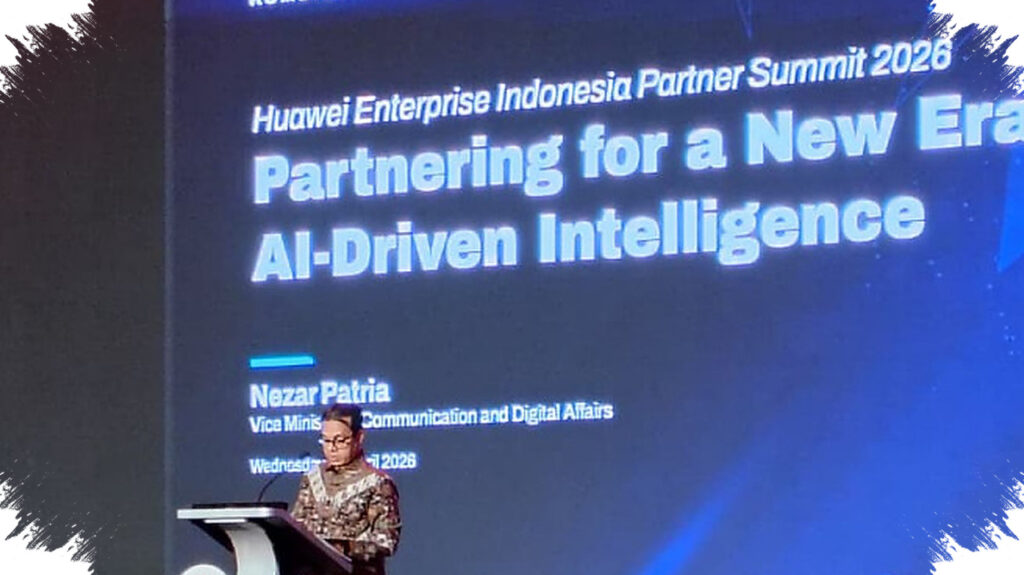
That message was reinforced by Deputy Minister of Communication and Digital Nezar Patria during the Huawei Partner Summit 2026 in Jakarta on Wednesday, April 29, 2026. He argued that AI adoption is moving too quickly for Indonesia to rely on momentum alone, especially as generative AI has reached 53 percent of the global population in just three years.
A Policy Framework Before the Hype
Nezar emphasized that the central issue is no longer whether AI has promise. The more urgent issue is how Indonesia can convert that promise into concrete outcomes that are useful for society.
For that reason, the national AI roadmap is being positioned as a strategic base for the country’s AI transformation. The goal is not simply to encourage adoption, but to shape development so the technology becomes more accessible and more inclusive.
The direction also reflects a broader concern over how fast AI is spreading across sectors. Without a stronger framework, rapid adoption risks moving faster than governance, leaving the public with technology that is powerful but not properly guided.
Governance as the Main Guardrail
Nezar also placed strong emphasis on governance, saying that AI development cannot be separated from a solid regulatory foundation. In his view, a responsible system is necessary so AI serves people rather than developing in a vacuum.
The government, he said, needs to ensure that AI grows within clear rules. That approach is meant to keep innovation fast while also making it safe and aligned with public needs.
This balance matters because the technology is already reshaping how services and industries operate. The challenge is not only scale, but also how to make sure the benefits are delivered in a controlled and trustworthy way.
From User to Architect
Indonesia, according to Nezar, has a chance to move beyond being a consumer of AI tools. With the right policy direction, the country can also become an architect in the development of the technology.
He pointed to strategic sectors such as healthcare, education, and public services as areas where AI can deliver direct value. These sectors are seen as important test cases for showing how AI can strengthen national capacity while improving services for citizens.
That shift from user to architect depends on more than technology access. It requires a national approach that can support innovation while giving the country a stronger role in shaping how AI is used.
Digital Skills Cannot Be Left Behind
Alongside governance, Nezar stressed that digital literacy and skills development must move in step with AI adoption. He said the benefits of AI should not be concentrated in only certain regions or groups.
A wider skill-building effort is needed so communities across the country can take part in the digital transition. In that sense, literacy is not a separate issue from AI policy, but one of its core components.
The aim is to make sure that AI becomes a shared opportunity rather than a narrow advantage. That requires preparing people to understand and use the technology as it becomes more embedded in daily life.
Building an Open Ecosystem
Nezar also called for broader collaboration to support an AI ecosystem that is ethical, inclusive, and impactful. He noted that the digital landscape is now highly interconnected, making cooperation more necessary than ever.
In his view, Indonesia and the international community need stronger collaborative systems to create synergy. Such cooperation is expected to reinforce governance while supporting a more responsible direction for AI development in Indonesia.
The stakes are growing as AI adoption accelerates. What will define Indonesia’s position is not only how quickly the technology enters more sectors, but how well the country builds the rules, skills, and partnerships needed to make its benefits reach more people.