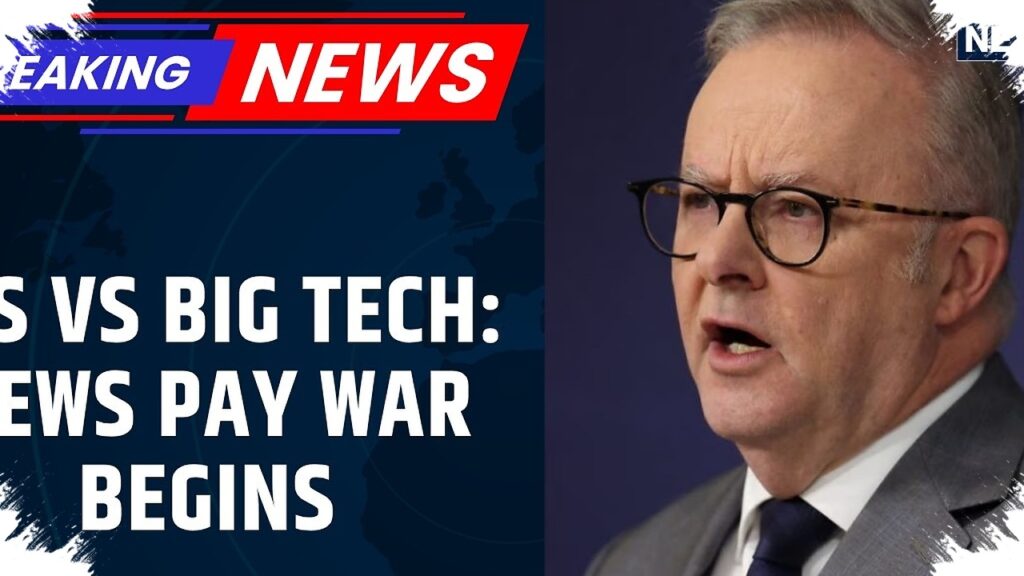
Australia is moving to tighten the pressure on Big Tech by linking news access to a financial penalty. Under a new plan, Meta, Google, and TikTok could face a 2.25% levy on local revenue if they do not strike payment agreements with Australian media outlets.
The proposal puts Canberra back at the center of a global debate over how digital news should be valued. Officials argue that major platforms benefit from journalism inside their feeds and search results, while local newsrooms still need reliable funding to keep operating.
How the new incentive would work
The government is calling the measure the News Bargaining Incentive. Instead of treating it as a standard tax, Canberra is framing it as a push for commercial deals between platforms and news organizations.
If a platform reaches agreements with Australian media companies, it can reduce its exposure to the levy. If it fails to do so, the higher charge applies.
The rule is set to begin in the 2025-26 fiscal year, which starts on 1 July. It will apply to companies with a significant social media or search service in Australia and local revenue above A$250 million.
That threshold brings Meta, Google, and TikTok into scope. The government has also said the policy will not cover artificial intelligence platforms, which are being handled under separate legislation.
Why Canberra says the change is needed
Communications Minister Anika Wells said more people now get news directly through Facebook, TikTok, and Google. In her view, large digital platforms should help support the journalism that fills those feeds and drives their own earnings.
The policy also aims to channel money back into Australian newsrooms. The government says the funds collected through the levy would go to news companies to strengthen journalism in the country.
Wells said the distribution model would take into account how many journalists a company employs. Canberra is also trying to push platforms toward direct agreements with smaller publishers by offering a larger offset for deals with smaller news organizations.
Support from media groups, resistance from tech firms
The plan has received backing from major Australian media organizations. Nine Entertainment, ABC, and News Corp Australia said in a joint statement that the move was important for securing the future of Australian news.
They argued that journalism becomes unsustainable if digital platforms do not pay for the content that helps them generate profit. That support reflects strong industry pressure for a more durable funding model.
Tech companies, however, are pushing back. A Meta spokesperson said the idea that Meta takes news content from publishers is simply wrong, and argued that using the levy to fund local media would create a news industry dependent on government-managed subsidies.
Google also rejected the need for the charge. A spokesperson said the company was reviewing the bill but was already clear in its opposition to the tax.
TikTok did not comment on the proposal, though it remains within the policy’s scope because of its size and presence in the Australian market.
A shift away from the 2021 framework
The News Bargaining Incentive is designed to replace the 2021 law that required technology companies to pay for news content. Canberra считает the earlier system no longer works effectively.
When that earlier framework was introduced, Meta briefly blocked users from sharing news articles. The company later signed agreements with several Australian media businesses, but those deals ended in 2024.
Their expiry added pressure on the government to create a new model that would provide steadier funding for newsrooms. The latest proposal is meant to make negotiations more direct and more economically binding.
The plan also carries political weight beyond Australia. It comes as Donald Trump’s administration has opposed digital services taxes aimed at major American technology companies, and Washington has previously threatened tariffs against countries that kept such policies in place.
When asked about possible backlash from Trump, Prime Minister Anthony Albanese said Australia would make decisions based on its own national interest. He described Australia as a sovereign country.