


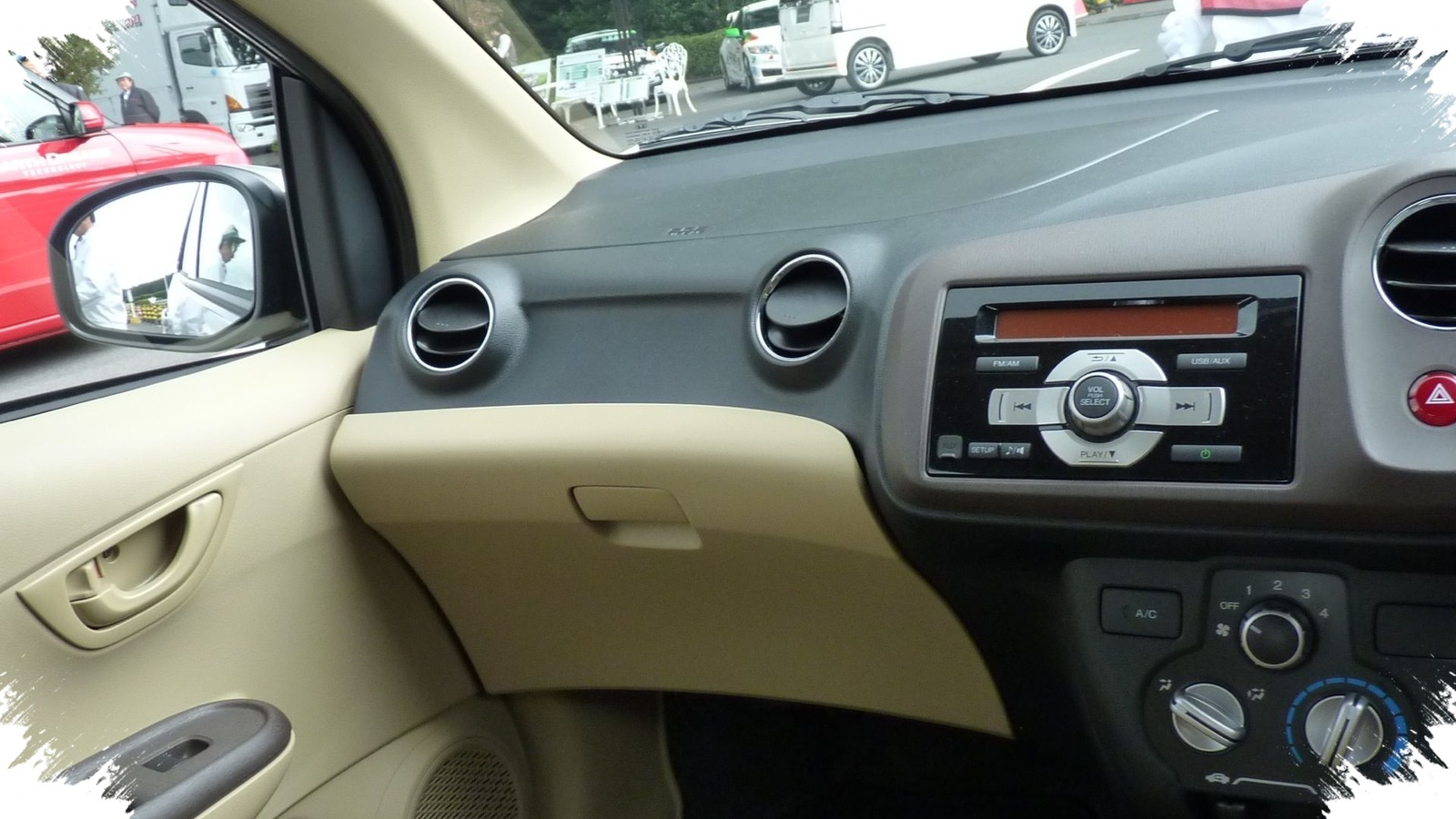
Honda Brio 2026 enters the compact-car fight with a clear message: the cabin now matters as much as the car’s everyday practicality. The biggest update is not hidden under the hood, but right where drivers and passengers interact most, with a more digital and more upscale interior layout.
That shift gives the Brio a stronger appeal in a crowded segment. Instead of relying only on basic function, Honda has pushed the model toward a more premium feel, especially for younger buyers and small families who want a compact car that looks and feels more modern.
A cabin built to stand out
The most visible change sits in the dashboard. Honda replaces the conventional analog instrument cluster with a full digital meter cluster based on a TFT screen, giving the driving information a sharper and more contemporary presentation.
At the center of the dashboard, a floating 9-inch touchscreen adds to the updated look. It supports wireless Apple CarPlay and Android Auto, while the touch-based AC controls help create a cleaner and tidier center console.
This approach makes the interior feel less utilitarian than before. The result is a cabin that aims to deliver a more premium visual experience without moving the Brio away from its compact-car identity.
Designed for everyday urban users
The update fits the needs of drivers who want a small car with a more refined atmosphere. Honda keeps the Brio’s role as an agile daily vehicle, but the cabin upgrades make it more appealing to buyers who now pay closer attention to interior quality.
That positioning is important in a segment where practicality alone is no longer enough. By focusing on the part of the car that occupants see and touch most often, Honda gives the Brio 2026 a stronger edge in perceived value.
A more mature look outside as well
The changes are not limited to the interior. Honda gives the Brio 2026 a Solid Wing Face design language that makes the car look more mature while still preserving a sporty character.
The front end now features slimmer headlamps with LED technology and DRL, while the rear receives a light bar-style rear combi lamp for a more futuristic impression. The RS variant also gets new two-tone 15-inch wheels, which help the car appear more planted and reinforce its sporty personality.
Powertrain stays familiar
Under the hood, Honda sticks with the 1.2L i-VTEC 4-cylinder engine. The setup remains one of the Brio’s strongest points because it is known for responsive performance and efficient fuel use.
Output is rated at 90 PS and is described as delivering its best feel in the mid-range. The CVT uses G-Design Shift tuning to keep shifts smooth and engine speed in the optimal range.
Honda also retunes the setup to target fuel consumption of 22-24 km/liter on out-of-town routes. That figure remains a major selling point for buyers who want a compact car with controlled running costs.
Safety and trim choices
Honda also raises the safety baseline for the LCGC class. Vehicle Stability Assist, or VSA, is included to help the car stay stable during sudden maneuvers on slippery roads.
Some variants also come with dual airbags as standard equipment. That combination shows that safety remains part of the package even as the model continues to compete in an affordable segment.
The lineup is spread across several variants with different levels of equipment. Satya S MT is priced at an estimated OTR of Rp 175.000.000 and includes Digital AC and dual airbags, while Satya E CVT is estimated at Rp 198.000.000 and adds keyless entry and a digital meter.
For buyers who want the most complete package, the Brio RS CVT sits at the top of the range with an estimated OTR of Rp 255.000.000. It brings full LED lighting, a 9-inch display, and sporty kit details that give the model a more premium and performance-oriented presence.