Indonesia’s 5G rollout is increasingly being framed as a race over economic competitiveness, not just network speed. Ericsson says a faster build-out could help strengthen the country’s digital economy as industries adopt more advanced connectivity and AI-driven services.
5G as a foundation for growth
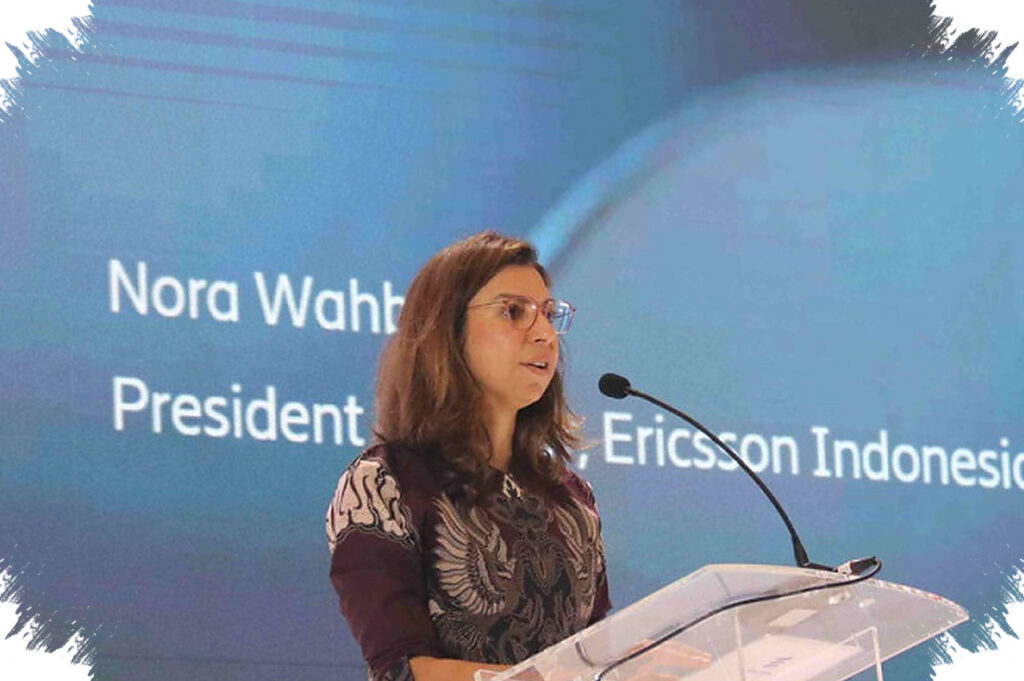
Ericsson has positioned 5G as critical infrastructure for Indonesia’s long-term digital ambitions, including the vision of Indonesia Emas 2045. At the Indotelko Forum 2026 in Jakarta, the company stressed that the network must be expanded in a way that is secure, resilient, and intelligent if its benefits are to reach more people and sectors.
The scale of the opportunity is large. GSMA estimates that 5G investment could contribute up to USD41 billion to Indonesia’s GDP during 2024–2030.
Global momentum is already accelerating
The case for faster deployment is also shaped by worldwide adoption trends. Ericsson Mobility Report describes 5G as the fastest-adopted connectivity generation in the world.
Global 5G subscriptions are projected to reach 2.9 billion by the end of 2025 and rise to 6.4 billion by 2032. Over the same period, mobile data traffic is expected to more than double, increasing pressure on networks that need to stay stable and responsive.
Industries that stand to gain
Ericsson highlights manufacturing, logistics, energy, and public services as sectors that could benefit strongly from 5G. High-speed, low-latency connectivity can make operations more efficient and improve productivity in environments that depend on reliable digital systems.
The need becomes even more pressing as more advanced digital applications spread. AI-based services require stable and dependable network performance, which is why 5G is being treated as an important enabler for industrial transformation.
Nora Wahby, President Director Ericsson Indonesia, said secure, resilient, and intelligent 5G networks are an urgent need. She said the technology will accelerate Indonesia’s digital transformation by supporting new technologies across sectors.
Adoption still has room to catch up
Despite the promise, Indonesia is still at an early stage in adopting both AI and 5G compared with several neighboring countries in Southeast Asia. Ericsson says that gap does not close the door on progress, as long as spectrum policy is handled properly and ecosystem collaboration remains strong.
Ronni Nurmal, Head of Government and Industry Relations Ericsson Indonesia, pointed to those early-stage conditions as evidence that there is still room to accelerate. In Ericsson’s view, the market can move forward if the policy environment supports sustained deployment.
Spectrum and investment remain decisive
The government, through the Ministry of Communication and Digital, is preparing auctions for the 700 MHz and 2.6 GHz spectrum bands. Ericsson sees that step as an important part of building a more sustainable 5G rollout.
Regulatory certainty, adequate spectrum availability, and a healthy investment climate are described as essential prerequisites. Without those three factors, network expansion would be harder to scale, and the broader gains for the digital economy could remain limited.
As digitalization continues across industries, 5G is being cast as the base layer for greater efficiency and more advanced services. That makes the speed of deployment a key factor in whether Indonesia can keep pace in the global digital economy.