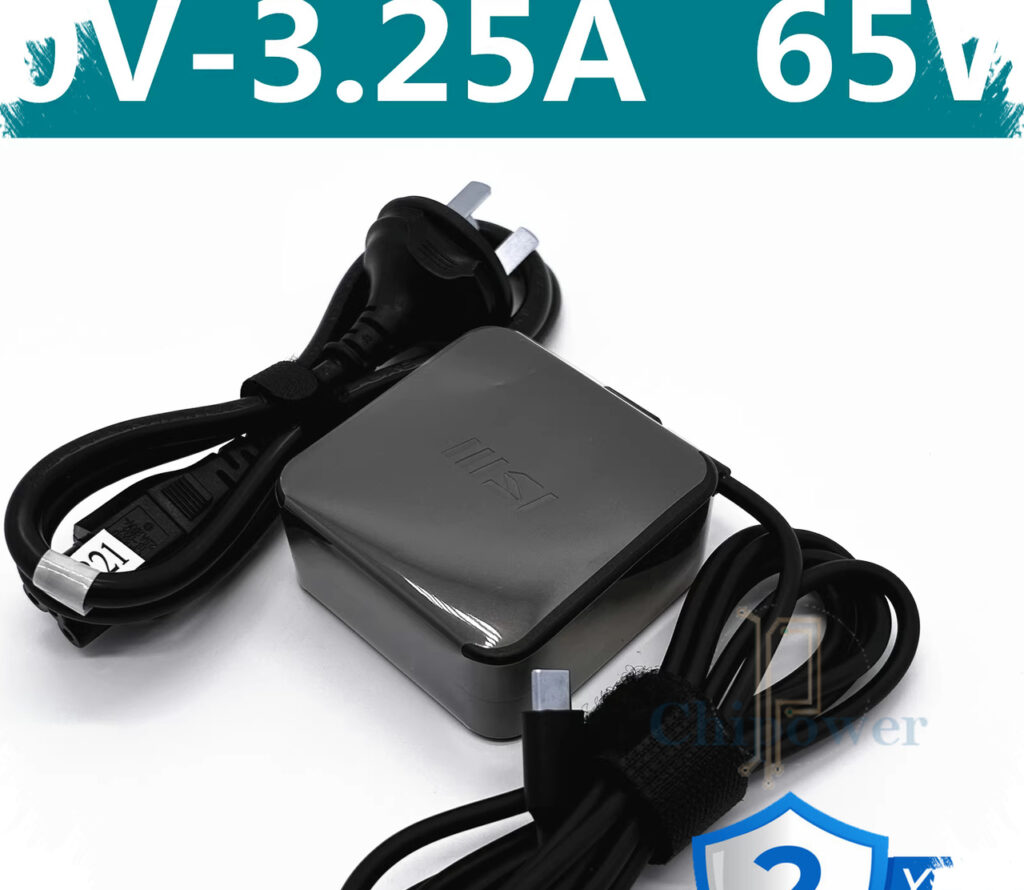
The MSI Prestige 16 AI+ shows a clear difference between having enough power on paper and having enough power under real workload pressure. The stock 65 W adapter can remain adequate for light use, but it starts to lose ground once the laptop is asked to charge while handling demanding tasks.
That gap becomes visible not in benchmark scores alone, but in charging behavior during heavy loads. When the system was pushed hard, the smaller adapter had little room left to refill the battery, while the 140 W unit restored that margin and allowed charging to move at a usable pace.
Small performance gains, bigger charging impact
Benchmark results suggest that a larger adapter does not dramatically change raw compute performance. In CineBench R15 Multi-Thread, the 65 W adapter reached 2937 points, while the 140 W adapter posted 3033 points, or about 3 percent higher.
A similar pattern appeared in CineBench 2024 Multi-Thread. The 65 W setup scored 980, while the 140 W setup reached 1030, a difference of roughly 5 percent. These results indicate that the adapter size is not the main driver of performance gains in CPU-heavy tests.
Where the 65 W adapter starts to fall short
The more important difference appears when the laptop is used heavily and charged at the same time. Under those conditions, the 65 W adapter can become the bottleneck that slows charging to a crawl, or prevents it from progressing at all.
Cyberpunk 2077 made that limitation especially obvious. With the battery at 56 percent, the notebook held steady at the same level when running on the bundled 65 W adapter. After switching to the 140 W adapter, charging began moving at a much more reasonable rate.
That behavior suggests the workload can consume nearly all available power. Once that happens, very little remains for the battery, so charging becomes ineffective even though the laptop is connected to a wall charger.
Heavy workloads consume most of the available power
Cyberpunk 2077 was already drawing more than 60 W on its own. That leaves almost no headroom for a 65 W charger to both sustain the system and recharge the battery at the same time.
For users who regularly run games or other demanding software, that matters more than benchmark differences of a few percent. In those scenarios, a 100 W-class adapter makes more sense because it offers a more reliable charging rate while the laptop stays busy.
A larger adapter also helps prevent the battery from gradually draining during intense workloads. Even when the device is plugged in, low power overhead can leave the battery to cover the gap.
The bundled charger is still useful for lighter use
The 65 W adapter is not obsolete. It remains suitable for lighter day-to-day use, where the system is not under sustained heavy load and the charger can still do its basic job.
Its main advantage is portability. The smaller size makes it easier to carry than a larger power brick, which matters for users who travel often and prefer a lighter bag.
For the MSI Prestige 16 AI+, the lesson is straightforward: the adapter’s size matters more for charging stability than for raw performance gains. The included 65 W unit remains fine for casual use, but heavier workloads leave much more breathing room for the battery when paired with 140 W power.