


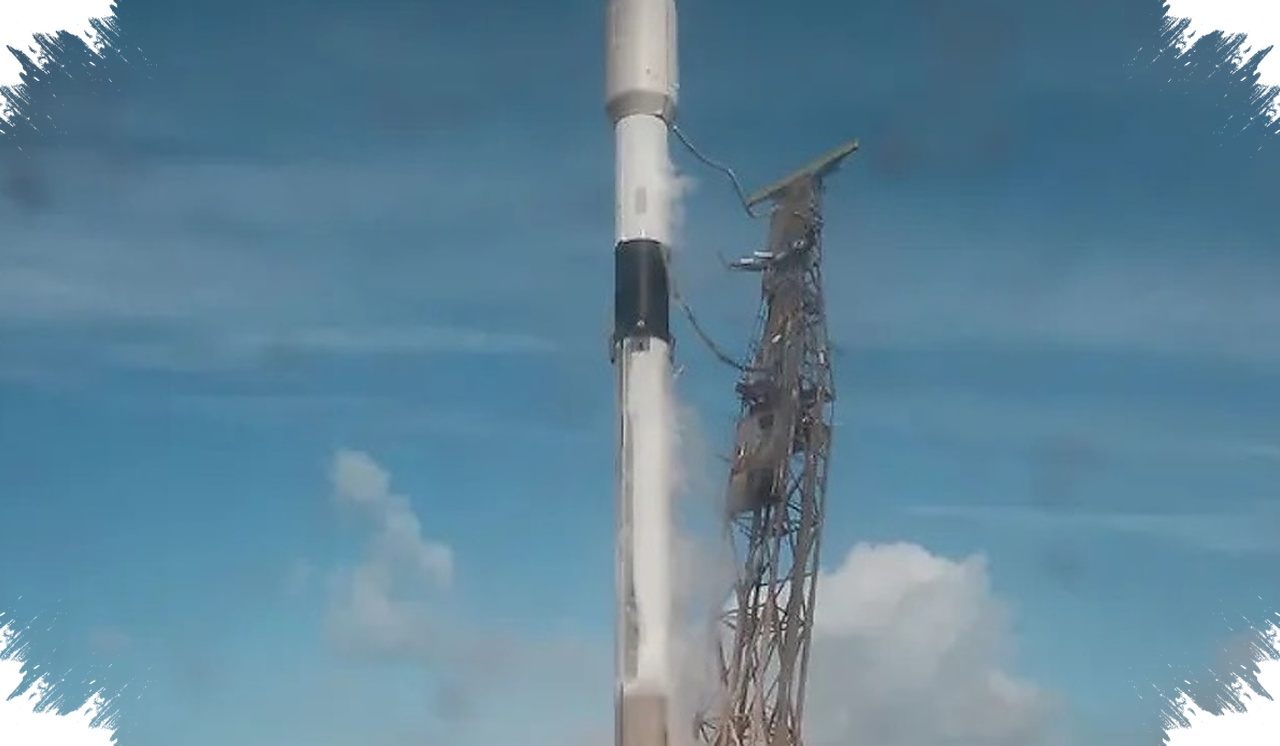
A large piece of SpaceX hardware is now on a path that may end on the Moon. Bill Gray of Project Pluto says the Falcon 9 upper stage from a January launch is projected to strike the lunar surface near Einstein Crater, adding an unusual new chapter to the growing problem of space debris.
The object in question is about 13.7 meters long. Gray’s calculations point to an impact on 5 August 2026, with the predicted collision area lying on the Moon’s western side, the side that faces Earth.
From a launch mission to a lunar impact
The debris came from the 15 January 2025 launch that carried the Blue Ghost and Hakuto-R landers. After separating from the main mission, the upper stage spent 26 days in an elliptical orbit before gravity pulled it back into a path that now appears to intersect the Moon.
Gray said his software used orbit observations to project the impact date. He also noted that the landing point could shift slightly from the initial prediction, even though the overall trajectory still points toward the same general region.
What the impact could look like
The predicted collision is expected at 13:44 WIB, with a speed of about 8,700 km/h. Even with that speed, the event is not expected to be easy for amateur observers to spot.
Experts say the impact would happen under sunlight, which means it would not stand out sharply to casual observers. The location near the Moon’s western edge also makes the event harder to follow than a more dramatic impact on the visible surface.
A debris problem that is no longer confined to Earth orbit
The lunar prediction has drawn attention because it shows that space debris is no longer only an issue around Earth. ESA says about 35,000 trackable objects are currently orbiting Earth, ranging from dead satellites to rocket fragments.
Scientists also worry about Kessler Syndrome, the scenario in which a chain of collisions creates even more debris. If that happens, future space missions could face greater risks, and managing crowded orbits would become even more difficult.
Why the case matters for Moon exploration
The timing is notable because NASA and private companies are pushing ahead with the Artemis program to build a more permanent human presence on the Moon. In that context, old mission hardware becoming a potential lunar impactor serves as a reminder that space activity leaves a footprint.
The Falcon 9 debris near Einstein Crater shows that discarded hardware can affect the surface of another world, not just Earth orbit. That makes tracking spent rocket stages and managing their paths increasingly important for the safety of future exploration.