Google Translate is edging toward a feature many users have wanted for a long time: real-time conversation translation that works without an internet connection. The latest signs suggest that Live Translate offline is moving from an idea inside the app code to something much closer to a usable product.
That matters because Live Translate is most useful in the moments when connectivity is least reliable. Conversations happen on the move, in busy transit, or in places where mobile signals are weak, and that is exactly where an online-only feature becomes harder to depend on.
Offline support is starting to take shape
Google Translate already supports offline use, but only for text and image translation. Live Translate still refuses to run without internet access, and the app currently warns users when they try.
A teardown of Google Translate version 10.17.48.914427315.6-release for Android, conducted by Android Authority, found strong evidence that Google is building offline support for Live Translate. The signs were described as more than leftover interface text, suggesting the feature has moved beyond an early concept stage.
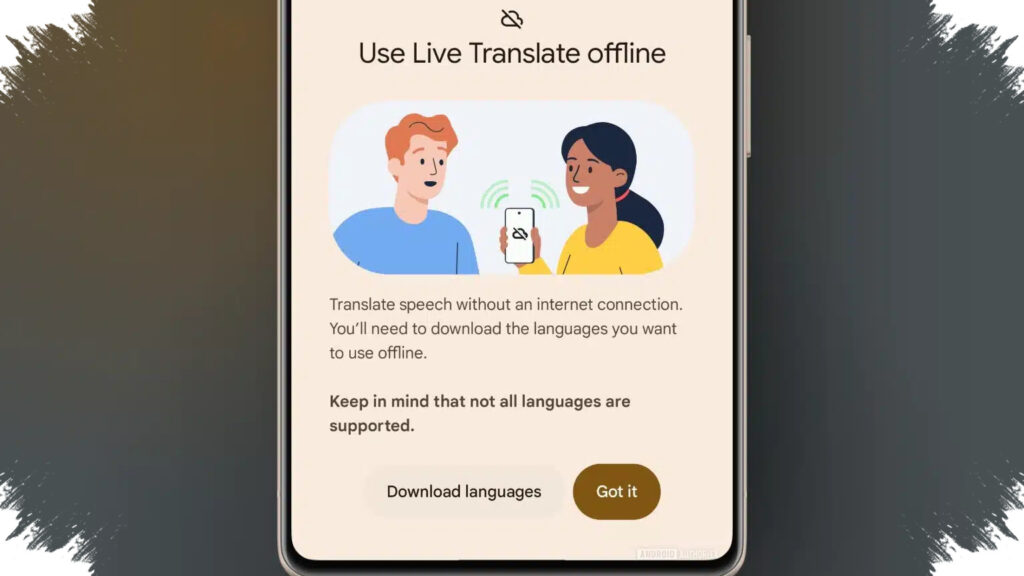
Android Authority also managed to trigger an early onboarding screen for the feature. That kind of polished introduction usually indicates active development rather than a rough internal placeholder.
Language packs appear to be the key
The clearest requirement for the new mode is a language pack download before use. Once the packs are stored on the phone, Live Translate should be able to process conversations without depending on an active data connection.
Google also appears to be preparing special indicators to show which languages will support the offline version. That points to a limited rollout at first, rather than immediate support across the full language list.
The languages that appear likely to be included in the initial group are English, French, German, Portuguese, Italian, and Spanish. That list is not final, but it gives a strong hint about the first wave of support.
Why the rollout may stay limited at first
Real-time spoken translation is harder to run offline than static text translation. It needs fast handling of voice input, language processing, and translated output directly on the device.
That added complexity helps explain why Google may start with only a small set of languages. It also explains why the feature’s visible interface does not automatically mean release is imminent.
Android Authority noted that it is still difficult to judge how ready the feature is from the current state of development. APK teardowns only reveal what is happening in the app code, and features can still change before they ever reach public users.
What users stand to gain
If it arrives, offline Live Translate could become especially useful for travel, commuting, and other situations where connectivity is unstable. It would also help users avoid relying on mobile data for a feature meant for immediate conversation.
Google Translate already offers Live Translate, and its capabilities have been described as improving with Gemini. Offline support would remove one of the biggest limits on the experience and bring the feature closer to the kind of real-world use many people expect.
Small interface changes are also being tested
Android Authority also spotted minor interface adjustments in Google Translate beyond the offline work. Google is reportedly considering moving the paste, handwriting, and voice input buttons into a shared area for easier access.
That change is modest compared with offline Live Translate, but it could still make the app feel more efficient in daily use. For now, the stronger signal remains the same: Google is working to make one of its most ambitious translation tools usable even when the internet is not available.