In a home network, the real question is not whether DHCP or static IP is “faster.” The more useful question is which devices actually benefit from a fixed address and which ones are better left to the router’s automatic handling.
For most households, DHCP is the more practical choice because the router assigns IP addresses on its own. That keeps phones, laptops, TVs, and smart home devices connected without requiring manual setup each time they join the network.
Why DHCP fits everyday use
DHCP is built for devices that move in and out of the network often. When a device reconnects, the router can hand out a new address, and it can do the same again after a power cycle.
That approach reduces the amount of maintenance needed from the user. The tradeoff is that the address may change, which can make it harder to track a specific device, but for routine home use that is often a small price to pay.
When a fixed address makes sense
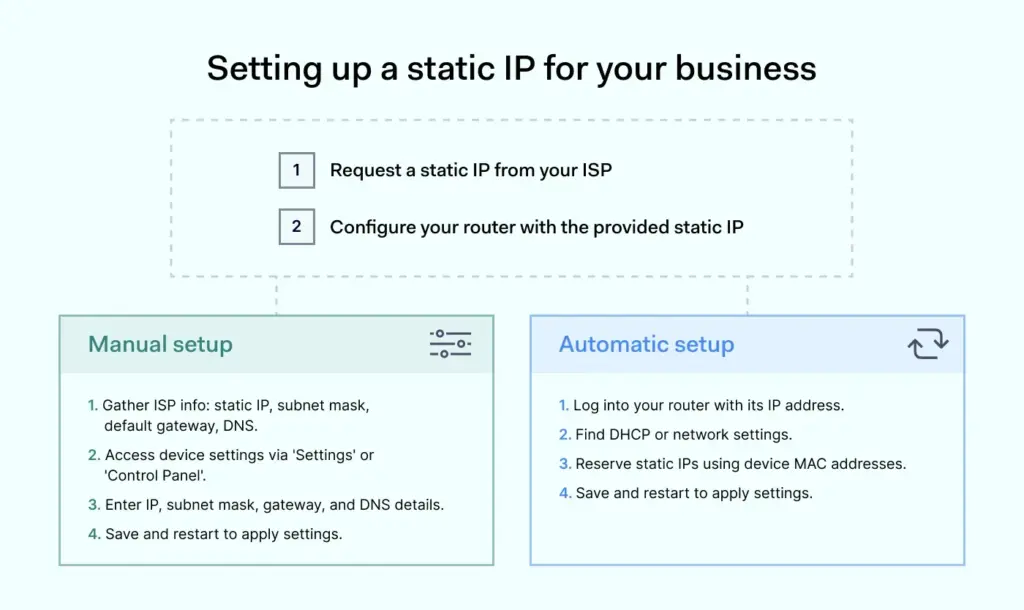
Static IP works differently because the address does not change. On a local network, it can be set through the router’s admin panel so the device keeps the same identity after the router or the device is rebooted.
That stability matters for hardware that needs to be easy to find again. Shared media servers are a clear example, since users do not need to keep searching for a new address every time they want to connect.
Other devices that can reasonably benefit from a fixed address include game consoles, gaming desktops, media servers, and smart home hubs. In those cases, a consistent IP makes identification, tracking, and management on the local network easier.
Performance is not the deciding factor
Static IP and DHCP are not meaningfully different in everyday speed. Latency, connection quality, throughput, and overall performance depend much more on the ISP’s network, the bandwidth provided, and the capabilities of the router itself, whether wired or wireless.
There is one narrow exception involving public IP addresses that have been blocked by a platform or service. In that situation, traffic to that address can be stopped on the server side.
For a public IP, a static address can offer a small advantage when a connection is established and maintained between sessions. Even then, the difference is minor because the device already knows which address it is using from the start.
Where static IP is genuinely useful
A permanent address becomes more valuable when a device is accessed often from other devices or across multiple sessions. It also helps with remote connection and file sharing between devices.
That is why static IP can feel more convenient for a home hub or a device that acts as a central service point. It makes it faster to identify what is connected and how to reach it.
Getting a static public IP from an ISP is not always simple, though. In many cases, that type of service is reserved for premium accounts or business-class plans.
The limits and risks to keep in mind
A fixed address also has drawbacks because it never changes. If other parties know the address, it can be easier to target, and some routers limit how many static IPs can be assigned.
DHCP reduces the hassle, but it does not remove every need for remote access. If a device or router loses its connection, the DHCP address still has to be found again before reconnection.
For most home internet setups, the most practical approach is to let the router handle DHCP for devices that move around or are used by different people. Static IP is more appropriate for devices that need a consistent address and are accessed repeatedly from other devices.