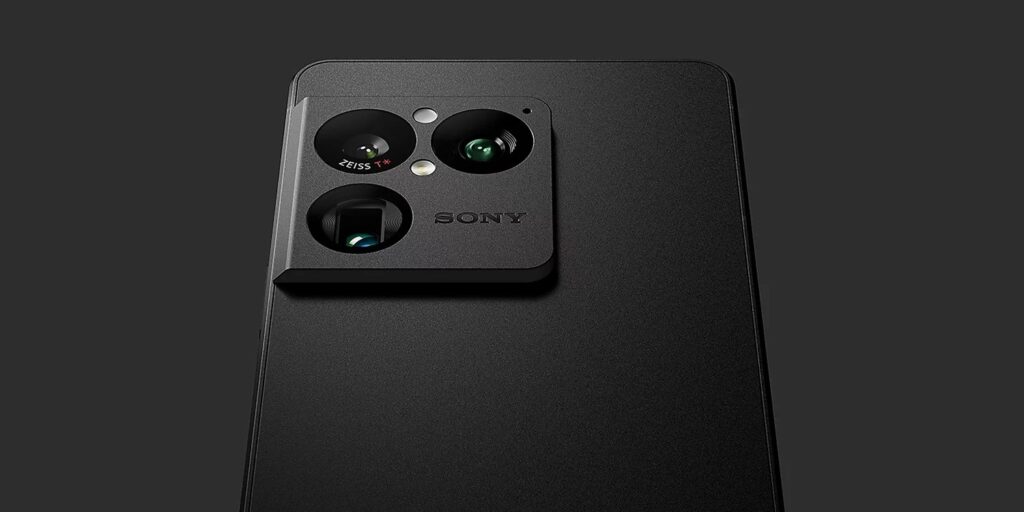
Sony Xperia 1 VIII stands out in a flagship market where many premium phones have abandoned some of their most practical hardware features. While rivals continue to remove expandable storage and wired audio support, Sony keeps both microSD and a 3.5 mm headphone jack on this device.
That choice gives the Xperia 1 VIII a very different identity from most current flagships. Sony also preserves a physical shutter button, reinforcing a design approach that still prioritizes camera control, storage flexibility, and wired listening needs.
Expandable storage remains a key differentiator
One of the clearest advantages of the Xperia 1 VIII is the continued presence of a microSD slot. Sony supports expansion up to 2TB, which adds considerable room beyond the built-in storage options.
For users who carry large video files, high-resolution photos, or work documents on their phones, that feature is especially useful. In a flagship segment where expandable memory is becoming rare, this remains one of Sony’s strongest points of distinction.
Wired audio and camera control are still here
Sony does not follow the same trend as many manufacturers that have removed the analog audio connector. The Xperia 1 VIII still includes a 3.5 mm audio jack on the top frame, making it suitable for users who prefer wired headphones.
The phone also keeps a physical shutter key. That addition gives the device a more camera-focused character and adds another feature that is increasingly uncommon in premium smartphones.
A compact-style display layout with front-facing speakers
On the front, the Xperia 1 VIII uses a 6.5-inch OLED display with a 1080 x 2340 pixel resolution and a 120Hz refresh rate. The panel is protected by Gorilla Glass Victus 2 and is framed by thick bezels at the top and bottom.
Those bezels are not only a design choice. Sony uses them to house front-facing stereo speakers, which direct sound toward the user. The upper bezel also holds the 12MP selfie camera with an f/2.0 aperture.
A new rear camera layout replaces the old Xperia format
The biggest visual change appears on the back, where Sony abandons the vertical camera arrangement it had used since 2019. In its place, the Xperia 1 VIII adopts a square camera module with three lenses arranged in a triangular pattern.
Each of the three rear cameras uses a 48MP sensor, but each serves a different role. The main camera uses an Exmor T sensor with a 24 mm lens, f/1.9 aperture, 84-degree field of view, and OIS.
The ultrawide camera uses an Exmor RS sensor with a 16 mm lens, f/2.0 aperture, and 104-degree field of view. The telephoto camera also uses an Exmor RS sensor, paired with a 70 mm lens, f/2.8 aperture, 34-degree field of view, and 3x optical zoom.
Sony says the telephoto sensor is four times larger than the one used before. The company also claims that this change improves sharpness and detail when photographing distant subjects.
Flagship power, battery life, and durability
Under the hood, the Xperia 1 VIII is powered by Qualcomm’s Snapdragon 8 Elite Gen 5. Sony offers four global memory configurations: 12/256GB, 12/512GB, 16/512GB, and 16GB/1TB, although availability may differ by market.
The phone carries a 5000 mAh battery and supports 30W charging through USB Type-C, along with 15W wireless charging. It runs Android 16 and uses a fingerprint scanner built into the power button.
Sony also promises 4 years of software updates and 6 years of security updates. For durability, the device carries IP65 and IP68 ratings, meaning it is protected against dust, low-pressure water jets, and immersion up to 1.5 meters for 30 minutes.
The Xperia 1 VIII is offered in graphite black, iolite silver, garnet red, and native gold. In Europe, pricing starts at 1,499 euros for the 256GB version and 1,999 euros for the 1TB model, while in the UK it starts at 1,399 pounds sterling for 256GB and 1,849 pounds sterling for 1TB.