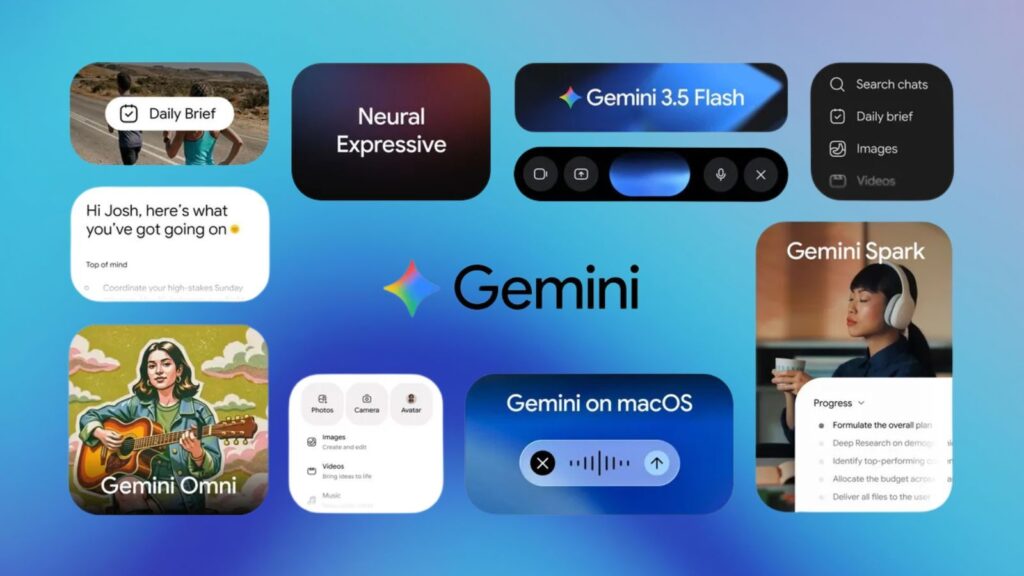
Google is pushing Gemini beyond the role of a simple chatbot with Gemini Spark, a new AI system designed to keep working even when the phone is off or the laptop is closed. The feature is positioned as an always-on personal agent that can carry out instructions, collect results, and continue running in the background without constant supervision.
At the core of Gemini Spark is a cloud-based workflow built for autonomy. Google says the system can handle multiple instructions at once, work through them one by one, and remain active on Google Cloud so the main device does not need to stay open or in use.
A cloud agent built to keep moving
Google has equipped Spark with Gemini 3.5 Flash and a newly announced Antigravity harness. That combination allows the system to run on a dedicated virtual machine in Google Cloud, which means processing continues even when the user is not actively using the device.
Sundar Pichai said this setup keeps Spark active while the user’s device is not being used. Once a task is complete, the system sends a notification so the user can review the result.
Google also shows a list of tasks running in the background. That visibility is meant to make it easier to track what the AI is doing at any given moment.
Designed to follow users across devices
One of Spark’s main selling points is cross-device continuity. Users can start and monitor AI work from more than one device without losing track of the task flow.
Google is also preparing Spark for both Android and iPhone. That move expands the reach of Google’s agentic AI approach to a much broader mobile audience.
The company is not limiting Spark to phones. Google Workspace is also part of the plan, including Docs, Gmail, Sheets, and other products in its productivity ecosystem.
Support for third-party apps is in development as well. That matters because an AI agent becomes more useful when it can operate beyond Google’s own services.
Moving into browser and desktop use
Google says Spark will arrive in Chrome this summer. With browser access, the system could handle web-based tasks directly.
A standalone version for the Gemini app on Mac is also scheduled for this summer. On that platform, Spark is said to be able to interact with local files and automate desktop tasks.
This direction shows that Google wants Gemini Spark to appear in more places where work happens. The system is being prepared for phones, browsers, desktops, and productivity tools rather than a single device category.
Examples point to always-on monitoring
Google highlighted Spark as a search agent that can keep tracking a news story over time. In that use case, the AI can follow updates and send changes when something important happens.
The same approach also applies to stock tracking, apartment searches, and other ongoing monitoring tasks. In practice, that shifts AI from waiting for a question to continuing work after a command has already been given.
Google still says users should supervise sensitive tasks. That warning suggests the company is not treating full automation as something to use without oversight.
Limited early access for now
For the first phase, Gemini Spark is available only to trusted testers this week. It will then move into beta for Google AI Ultra customers in the United States starting next week.
Google has not announced a global rollout timeline. For now, access remains limited and tied to a premium tier.
Alongside the announcement, Google also changed the pricing structure for AI Ultra, which now starts at $100 per month. The launch makes it clear that Google wants Gemini to evolve into a personal AI agent that works continuously in the cloud, across devices, and across everyday productivity apps.
Source: gadgets.beebom.com