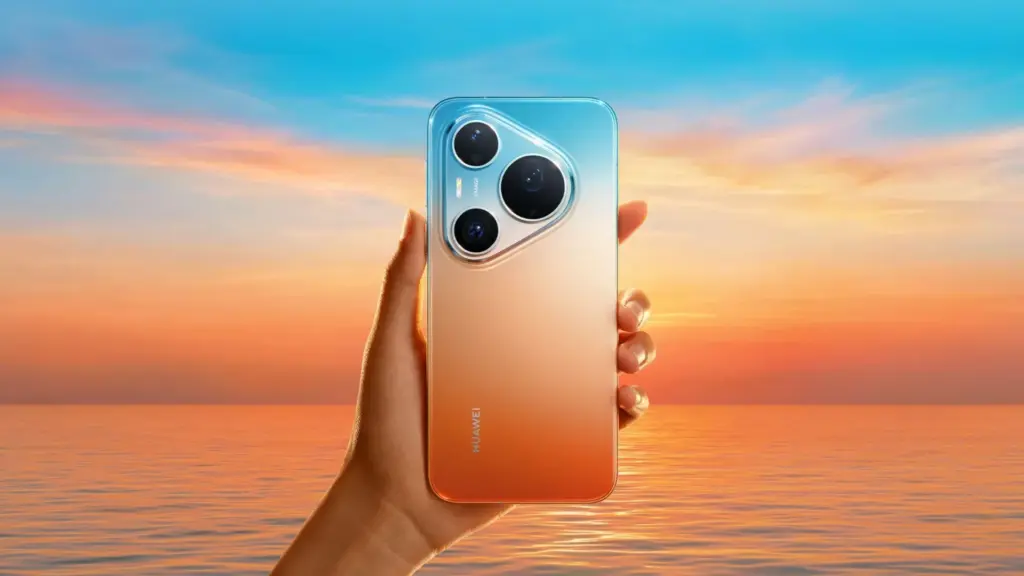
Huawei is reportedly testing a camera approach that treats multiple lenses as one coordinated system rather than as separate tools for different shooting modes. If it reaches a commercial device, the result could change how smartphone photography handles detail, color, and zoom in a single shot.
The idea goes beyond simply adding more cameras to the back of a phone. Instead, Huawei is said to be working on multi-camera fusion that combines input from the main, ultrawide, and telephoto sensors at the same time to produce one final image.
A more unified camera pipeline
The leak first surfaced through Digital Chat Station on Weibo. According to the tip, Huawei is developing an imaging system that merges data from several sensors into one frame, instead of relying on only one active lens when a photo is taken.
That approach matters because many flagship phones still show visible shifts when users move between focal lengths. Changes in color tone, exposure, and detail often become obvious as the camera switches from one lens to another.
Huawei’s test is aimed at reducing those gaps. By allowing multiple sensors to contribute simultaneously, the company is trying to make the final image look more consistent across the camera system.
What the fusion system is meant to improve
The reported system is designed to strengthen detail, color accuracy, and zoom quality in a more integrated process. Rather than choosing one camera as the main source and treating the others as backups, the fusion model would let several sensors feed information into the final output.
If that works as intended, the differences in color tone and sharpness between lenses could become less noticeable. That would also make transitions between zoom levels feel smoother for users.
The leak also mentions the possibility of multispectral imaging being integrated into the system. That technology could help improve color reproduction and scene accuracy under different lighting conditions.
More than software alone
Huawei is not said to be working only on the software side. The company is also linked to custom CMOS sensors and a new lens design, both of which would give it tighter control over image processing.
That matters because modern smartphone photography depends on more than just sensor quality. The interaction between sensors, lenses, and processing algorithms now shapes much of the final image result.
A system built around fusion could also help narrow the quality gap between the main camera and secondary cameras. That remains one of the hardest problems for smartphone makers to solve consistently.
Possible role in future flagship devices
Huawei Central says the technology could appear in a future Pura flagship line. The Pura 100 series has been mentioned in connection with the idea, although Huawei has not confirmed anything publicly.
The link is believable because the Pura lineup has often served as Huawei’s showcase for camera hardware and imaging development. If custom sensors, new lenses, and fusion processing are all combined, the company would have greater control over the entire camera experience.
That could make the camera system behave more like a single unit instead of a collection of separate lenses. In practice, that may lead to more even results across the main camera, ultrawide, and telephoto modules.
For now, the project remains in testing and has not been officially announced. Even so, the concept is drawing attention because it targets one of the biggest challenges in smartphone photography: making every lens work together as part of a coherent imaging system.