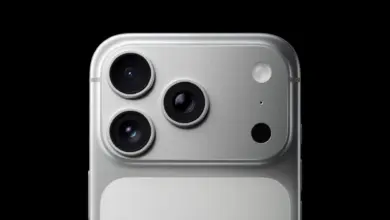
DxOMark’s latest flagship camera rankings have produced an unexpected result for Vivo’s premium imaging lineup. The more expensive Vivo X300 Ultra finished just behind the Vivo X300 Pro, even though the Ultra is positioned as the bolder and more hardware-focused model.
The gap was extremely narrow. Vivo X300 Pro scored 171 points, while Vivo X300 Ultra followed closely with 170 points, and both remained behind the Huawei Pura 80 Ultra at the top of the list with 175 points.
A one-point gap, but a meaningful story
A single point is not a dramatic difference for everyday use, yet it becomes notable because the X300 Ultra carries a larger camera setup and a much higher price. That contrast makes the result especially interesting for anyone who assumes the most expensive model will always come out ahead in camera testing.
The ranking also reinforces a familiar lesson in smartphone imaging: the most extreme hardware does not automatically guarantee the strongest overall result. In DxOMark’s evaluation, consistency across many scenarios can matter more than the most impressive specifications on paper.
Video appears to separate the two phones
DxOMark’s scoring suggests that video performance is where the two Vivo models diverged most clearly. The X300 Ultra received a lower video score than the X300 Pro, and low-light video was highlighted as one of its weaker areas.
In those difficult conditions, noise became more visible and scene handling was judged less consistent. The X300 Pro, by contrast, was described as better at balancing exposure, dynamic range, and noise reduction in challenging situations.
That difference matters because the overall camera score is not built on still photography alone. Video quality, especially in low light and other complex scenes, carries significant weight in the final result.
Where the Ultra still stands out
The smaller total score does not mean the X300 Ultra is weak across the board. It was designed to push hardware limits, and DxOMark gave it very high marks in several areas tied to that ambition.
Its strongest results came in telephoto, ultra-wide, portrait, and zoom testing. Those strengths show that the Ultra remains highly capable in specific shooting scenarios, even if the overall ranking puts it just behind the Pro model.
For users who often shoot portraits, wildlife, distant subjects, or travel scenes, those category strengths may matter more than the final total. In those cases, the Ultra can still be the more appealing choice.
Why the score gap should be read carefully
This result also highlights how camera rankings should be interpreted. A top score does not always reflect every user’s needs, because different people care about different shooting conditions and output styles.
DxOMark evaluates balance across many situations, and the X300 Pro appears to deliver that balance more convincingly. The X300 Ultra looks more specialized, with standout strengths in areas prized by photography enthusiasts, but also with compromises that affect the final score.
DxOMark also noted occasional image artifacts on the X300 Ultra, along with moments where image processing looked somewhat less natural. That kind of trade-off is common in modern smartphones, where computational photography and AI-driven processing can improve some results while making others appear more aggressive.
For that reason, the Vivo X300 Ultra still reads as one of the most ambitious camera phones in recent years, while the Vivo X300 Pro emerges as the more evenly judged package in DxOMark’s testing. The final numbers suggest that the more balanced model can outrank the more expensive one, even when the latter brings larger hardware and stronger category wins.
Source: www.gizmochina.com-

-

-

-