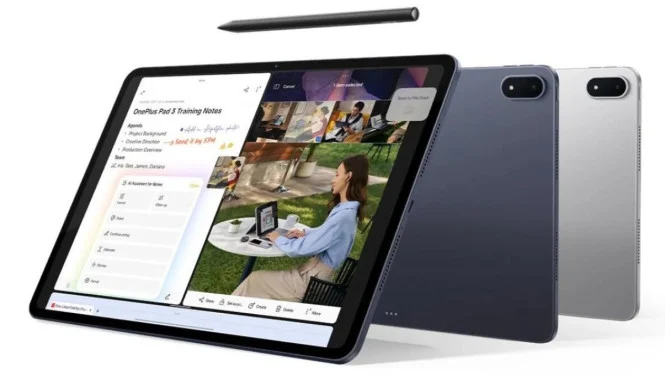
OnePlus Pad 3 is shaping up as a tablet that does more than simply offer a large screen. It is being positioned for users who want gaming performance, AI-assisted optimization, and hybrid productivity in a single device.
That positioning matters because the Android tablet market is moving toward more versatile hardware. OnePlus is clearly aiming at a space where a tablet can serve as a work tool during the day and a gaming or entertainment device later on.
Built for speed and sustained performance


At the center of the device is the Snapdragon 8 Elite chipset, paired with a large vapor chamber cooling system. That combination is meant to keep performance stable during long sessions, including heavy games and multitasking workloads.
The tablet also comes with up to 16GB of RAM and up to 512GB of internal storage. Together, those specifications place it firmly in premium territory and support the idea that the device is meant to handle demanding use without feeling limited.
A 13-inch 3K display with 144Hz refresh rate
One of the most visible selling points is its large display. The panel measures around 13 inches and uses a 3K resolution with a 144Hz refresh rate.
Thin bezels help the screen feel even larger, which should benefit streaming, gaming, and running several apps at once. For users who value smooth visuals, the 144Hz panel is one of the features that separates the Pad 3 from more ordinary tablets.
AI is part of the pitch, not just a buzzword
OnePlus is also leaning on AI as a core feature of the tablet. The company has built in an AI optimization engine that is said to manage gaming performance, power consumption, and thermal stability automatically.
That approach reflects how tablet usage has changed. Many users now expect a device that can handle video editing, cloud gaming, AI multitasking, and mobile work, not just media playback and video calls.
Battery and charging aim to support long sessions
Power should not be a weak point either. OnePlus Pad 3 carries a battery of around 12,000mAh and supports 80W to 100W fast charging.
That setup is intended to match the tablet’s performance focus and large display. It also fits a device designed for longer use across work and entertainment without constant concern about charging.
Accessories strengthen the hybrid angle
Support for a stylus and keyboard gives the tablet a more laptop-like role. That makes the Pad 3 more relevant for users who want one device for work, note-taking, and content consumption.
The result is a product that tries to blur the line between tablet and thin laptop, but without giving up portability. In a market where buyers often look for more value from premium devices, that kind of flexibility can be a strong advantage.
Pricing puts it in a competitive premium bracket
For the global market, the OnePlus Pad 3 is expected to start at US$499 to US$699. Based on that range, it sits around Rp8 jutaan to Rp11 jutaan depending on RAM and storage configuration.
That pricing would place it in a serious position against models such as the Samsung Galaxy Tab FE and the Xiaomi Pad series. For buyers looking at a premium Android tablet, the Pad 3 is aiming squarely at one of the most contested segments.
| Specification | Detail |
|---|---|
| Chipset | Snapdragon 8 Elite |
| Display | Around 13 inches, 3K, 144Hz |
| RAM | Up to 16GB |
| Storage | Up to 512GB |
| Battery | Around 12,000mAh |
| Charging | 80W to 100W |
| Cooling | Large vapor chamber |
| AI features | AI optimization engine, AI Gaming Optimization |
| Accessories | Stylus and keyboard support |
The overall package shows that OnePlus is not treating the Pad 3 as a basic large-screen tablet. It is building it as a high-performance device for gaming, productivity, and mobile entertainment in one streamlined form factor.