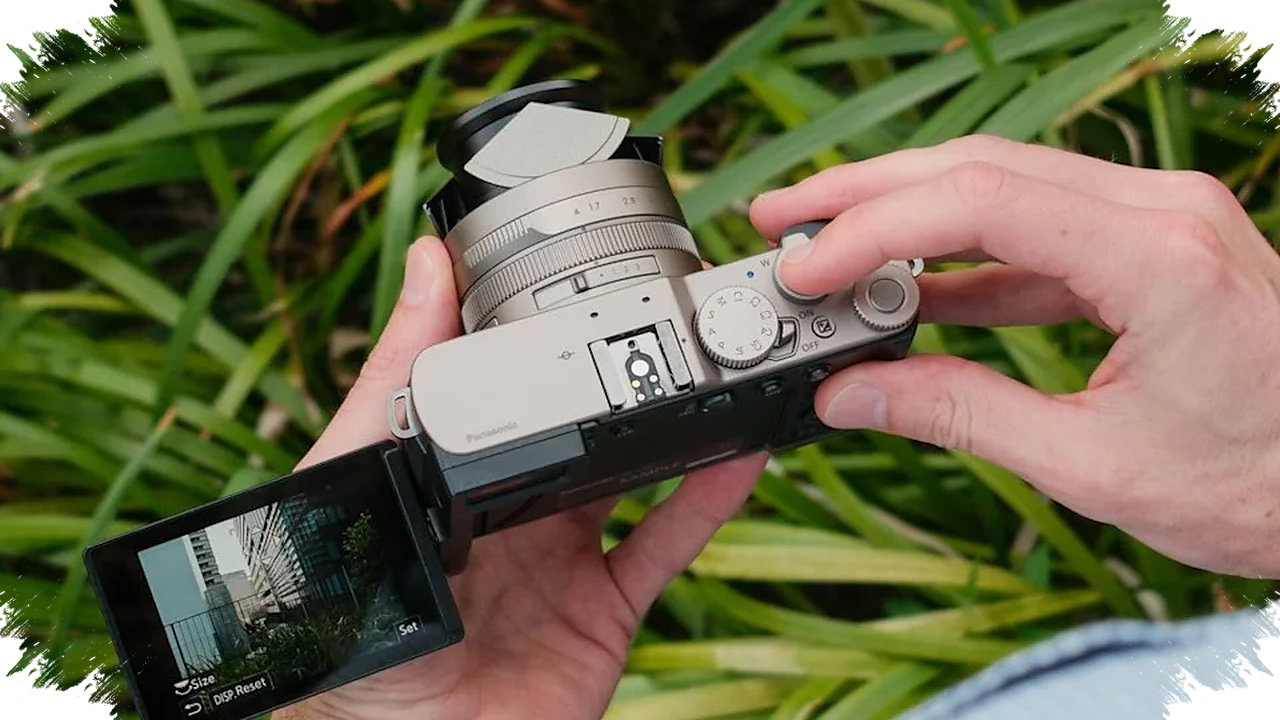
In a market where compact cameras often win attention with nostalgia or viral status, Panasonic’s Lumix L10 is drawing interest for something far more practical: zoom. The new Micro Four Thirds model has quickly climbed into B&H’s trending list for May 2026 and has already reached bestseller status, a notably fast start for a camera class that is usually dominated by buzzier names.
That early momentum matters because the L10 is arriving in a segment crowded with fixed-lens premium compacts. While many of the most talked-about sensor-heavy cameras rely on a prime lens, Panasonic has taken a different route by giving the L10 a zoom lens equivalent to 24-70mm on full-frame, which makes it more adaptable for a wider range of scenes.
Zoom is the main selling point


The clearest appeal of the Lumix L10 is the freedom it gives users when framing a shot. Its zoom range covers both wider compositions and tighter framing without forcing the photographer to depend on digital crop, something that remains common on smartphones.
That flexibility also sets it apart from models like the Fujifilm X100VI and Ricoh GR IV, which sit in the same general compact space but use fixed-lens designs. For buyers who want one camera to handle different situations, the L10 offers a more versatile option.
Why the timing works for Panasonic
Panasonic has also positioned the L10 at a competitive price point for the compact premium category. That combination of zoom capability and attractive pricing appears to have helped the camera gain attention quickly in an increasingly crowded market.
The L10 is not the only compact camera with a zoom lens. Leica D-Lux 8 follows a similar idea, but Panasonic seems to be pairing its feature set and price more effectively to pull in a broader wave of interest.
Smartphones still leave room for compact cameras
The renewed interest in zoom-focused compacts also reflects a weakness that smartphones have not fully solved. Zoom remains one of the hardest areas for phones to match dedicated cameras, especially when users want more framing control without relying on cropping.
A longer focal length can also benefit portrait work. That perspective typically creates a more flattering look than the wide lenses commonly used on phones, which gives the L10 another practical advantage beyond convenience.
Demand is already showing up beyond one market
The early response has not been limited to the United States. Panasonic Japan says stock is limited because of strong pre-order volume, suggesting that demand is coming from more than one region.
Reaction to the camera has been somewhat mixed, though, especially because the L10 is larger than the Fujifilm X100VI and Ricoh GR IV even though all of them sit in the fixed-lens compact conversation. Still, the sales momentum shows that size has not stopped shoppers from paying attention.
Other compact cameras still dominate the trend charts
Despite the L10’s quick rise, the top of the trending list is still led by earlier viral models. Kodak Charmera remains in first place, helped by its tiny keychain-style body, retro design, and low price rather than image quality.
Canon’s PowerShot G7 X Mark III 30th Anniversary edition is also holding its place in the trend rankings. Its visibility is boosted by the popularity of the original model, which continues to be difficult to find in stock, while the standard version and cameras such as the X100VI and Ricoh GR HDF still maintain a presence in the market.