Honor is positioning the Robot Phone as something more ambitious than a flashy concept. The company wants the device to make mobile video capture easier for everyday users, not just for experienced creators who already know how to handle complex settings.
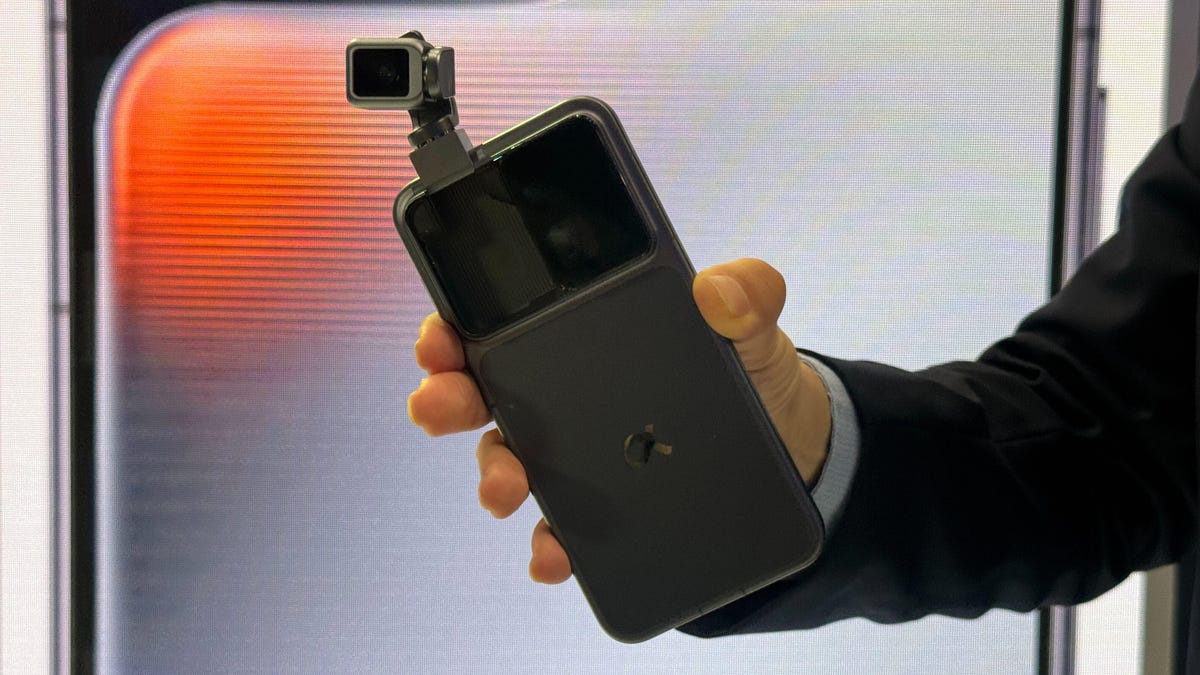
That goal helps explain why the phone looks so different from a conventional handset. Instead of treating the camera as a fixed module on the back, Honor has built the idea around a video-first device with a moving gimbal system at the top.
A camera system built for motion, not just looks

Honor’s imaging team says the Robot Phone was designed from the beginning as a video-first product. The concept starts with the needs of mobile recording, rather than the usual smartphone approach of adding a camera array as a secondary feature.
At the center of that idea is a motorized three-axis gimbal camera. The system is meant to address the limits of standard smartphone camera modules while opening room for new hardware improvements and new shooting techniques in the future.
The camera unit carries a 200-megapixel sensor and can rotate forward or backward depending on the scene. That flexibility is one of the clearest differences between Robot Phone and typical phones, which usually rely on a fixed rear camera layout.
Honor has also worked with ARRI, a name widely recognized in the professional film industry. The collaboration is intended to bring more advanced imaging technology into the mobile device.
Software is meant to lower the barrier
Honor is not relying only on the unusual moving camera to carry the product. The Robot Phone is also being prepared with AI subject tracking, intelligent shooting assistance, automatic camera movement, and AI-based video editing tools.
Those software features are important because they support a simpler filming experience. Honor appears to want to make advanced video recording less intimidating for users who are not used to manual camera control.
Preset shooting templates are also part of that approach. Combined with automatic tracking, they are meant to help users create smoother and more cinematic footage without spending much time adjusting settings.
This direction fits Honor’s broader attempt to make advanced video creation more accessible through a smartphone form factor. It also targets a long-standing problem in mobile videography, where more capable tools often come with a steep learning curve.
Durability remains part of the challenge
The moving camera design naturally raises questions about long-term durability. Mechanical parts inside a phone usually create concerns about daily wear, drop resistance, and water protection.
Honor says the first generation already has drop resistance on par with the company’s flagship phones. Even so, the company has acknowledged that there is still room to improve water resistance.
That does not seem to signal a short-lived experiment. Honor says durability will continue to be improved in later generations, suggesting the concept is being developed as a long-term product line rather than a one-off showcase.
The engineering effort behind it has also been more difficult than expected. Engineers reportedly spent about a year refining the concept, including the creation of a compact custom motor, balancing the gimbal system, and solving issues related to stability and rotational force.
Several design revisions were needed before the current prototype could be shown. That process helps explain why the device is being presented as a serious hardware effort instead of a simple gimmick.
A clearer product path is starting to emerge
The commercial direction for Robot Phone is already taking shape. Honor CEO James Li previously confirmed that the device is scheduled to launch in the third quarter of 2026.
That timeline suggests the company has moved beyond the early concept stage and into product preparation. After its first showing at MWC 2026, Honor appears to be building the case that Robot Phone is meant for the market, not only for exhibition.
If the strategy stays on track, the device will enter the market with a very specific identity. It is being shaped around one clear promise: making smartphone video recording easier, steadier, and more cinematic for a wider range of users.
Source: www.gizmochina.com