


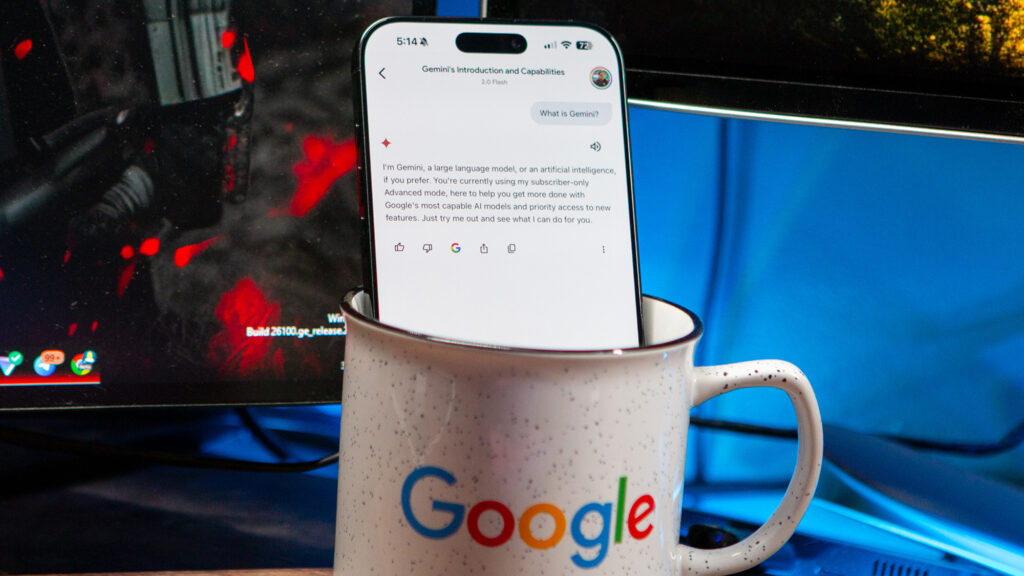
Google is extending Gemini to a part of its Android lineup that has often been left behind: low-end phones with limited hardware. Through Gemini Go, devices with as little as 2 GB of RAM can now access a generative AI experience that was once associated mainly with more powerful phones.
That move matters because many budget Android devices are still used for simple daily tasks such as messaging, social media, web browsing, and video playback. With Gemini Go, Google is trying to make AI useful on phones that have not traditionally been seen as strong enough for modern generative features.
Built for Android Go devices
Google says Gemini Go can run on Android Go smartphones starting at 2 GB of RAM. That is well below the level usually associated with AI-heavy features, which often require stronger hardware and more memory.
Even with those lower requirements, Google says Gemini Go still includes the main functions available in the regular Gemini experience. Users can interact with it in natural conversation and use it as a general assistant for everyday needs.
More than a lightweight chatbot
The service is designed to handle a wide range of practical tasks. Users can ask it to make phone calls, send text messages, search for local information, and offer recommendations based on specific needs.
Google also points to examples that fit common daily routines. Gemini Go can estimate travel time to the office, find restaurants that are still open at a certain hour, help set alarms, create calendar events, and play music based on the user’s activity or mood.
File uploads remain supported
One of the more notable parts of Gemini Go is its support for file uploads. Users can add documents, photos, or other files to give the AI more context during a conversation.
That capability suggests Google is not treating Gemini Go as a stripped-down chatbot only. Even on devices with limited resources, the assistant is positioned to work with richer input and broader context.
The change is especially relevant for Android Go phones, which have often struggled to keep up with newer AI features. Gemini Go gives that segment a more current way to access Google’s AI tools without needing a more expensive device.
Assistant Go is being replaced
Alongside Gemini Go, Google is also changing the virtual assistant experience on Android Go. The new app will replace Assistant Go, which previously served as the lighter version of Google Assistant for these devices.
Assistant Go had fewer capabilities than the standard Google Assistant. With this shift, Google is moving Android Go users toward Gemini Go as the new assistant layer on their phones.
Google has not explained in detail why Assistant Go is being discontinued. Even so, the change appears to simplify the company’s AI and assistant lineup while steering budget devices toward the Gemini platform.
Google has also not outlined every difference between Gemini Go and the standard Gemini version. Details about what has been reduced or adjusted to fit Android Go hardware have not been fully disclosed.
Rolling out gradually worldwide
Once available on a device, Gemini Go can be opened by pressing and holding the Home button. On supported phones, it can also be launched with the Power button.
Google says the rollout has started and will reach Android Go devices around the world gradually from this week. That means the feature will not appear on every compatible phone at the same time.
Users who want to check availability can update the Google app through the Play Store to the latest version. Compatible devices should then receive access according to the staged release schedule.
Gemini Go shows that Google is now extending AI beyond midrange and flagship phones. For Android Go users, that opens the door to a modern AI assistant without requiring a move to a more expensive handset.
Source: tekno.kompas.com