Xiaomi is trying to win attention in the premium mid-range segment by leaning hard on photography, and the Xiaomi 17T makes that strategy unusually clear. Instead of competing only on raw performance or battery size, it brings a Leica-tuned periscope camera to a price band where that feature is still rare.
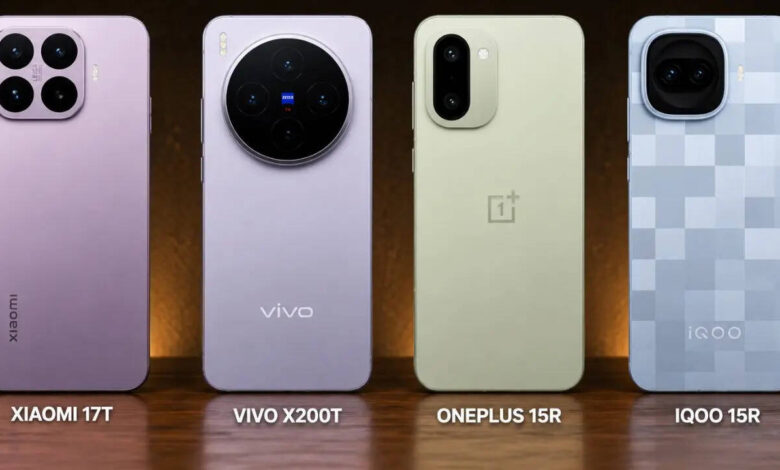
That choice immediately places the phone against the OnePlus 15R and iQOO 15R in India. Both rivals focus more aggressively on speed, charging, and battery capacity, while Xiaomi is positioning the 17T as the more camera-forward option in the same crowded class.
A Leica-tuned camera setup that stands out
The main attraction on the Xiaomi 17T is its triple rear camera system tuned by Leica. It combines a 50MP main camera, a 50MP periscope telephoto camera with 5x optical zoom, and a 12MP ultra-wide camera.
The periscope telephoto lens is the detail that gives the phone its strongest identity. Xiaomi says the configuration is meant to deliver better zoom performance without sacrificing image quality, and that helps the 17T stand apart from rivals that do not offer the same kind of rear-camera flexibility.
On the front, the phone uses a 32MP selfie camera. It also supports 4K video recording, which adds value for users who care about content creation and video calls.
Display and everyday usability
Beyond the camera system, Xiaomi has fitted the 17T with a 6.59-inch AMOLED display with 1.5K resolution. The panel supports a 120Hz refresh rate, HDR10+, Dolby Vision, and a peak brightness level of up to 3,500 nits.
The company has also added eye-care features to the screen, along with TÜV Rheinland certification. That combination is aimed at people who spend long hours looking at their phones and want a display that is easier to live with every day.
Performance and software package
Inside, the Xiaomi 17T runs on the MediaTek Dimensity 8500 Ultra. It is paired with LPDDR5X RAM and UFS 4.1 storage, while the software side is handled by HyperOS 3 based on Android 16.
Xiaomi also includes AI features such as Xiaomi HyperAI and Google Gemini integration. That makes the phone feel more aligned with current software trends, even though the more obvious pitch is still centered on hardware and imaging.
Battery, charging, and practical features
Battery life is another major part of the package, with a 6,500mAh battery inside the Xiaomi 17T. Xiaomi says that is larger than the battery in its predecessor, and the phone supports 67W fast charging along with reverse wired charging.
The rest of the feature list is broad as well. The phone includes stereo speakers with Dolby Atmos, an in-display fingerprint scanner, NFC, 5G connectivity, and an IR blaster.
Price and availability in India
In India, the Xiaomi 17T comes in two versions. The 12GB + 256GB model is priced at Rs 59,999, while the 12GB + 512GB version costs Rs 64,999.
Xiaomi is also offering an instant bank discount of Rs 5,000. With that offer applied, the effective starting price drops to Rs 54,999, and sales begin on 10 June through Amazon, mi.com, and Xiaomi retail stores.
How it compares with OnePlus 15R and iQOO 15R
The comparison with OnePlus 15R and iQOO 15R is not straightforward, because those two phones are built to push harder on performance and battery. OnePlus 15R uses a 6.83-inch AMOLED display with a 165Hz refresh rate, Snapdragon 8 Gen 5, a 7,400mAh battery, and 80W charging, with the 12GB + 256GB variant priced at Rs 54,999.
iQOO 15R also uses Snapdragon 8 Gen 5, but it comes with a 6.59-inch AMOLED display at 144Hz, a 7,600mAh battery, 100W charging, and a lower starting price of Rs 46,999 for the 8GB + 256GB model.
That leaves Xiaomi 17T without the biggest battery, the fastest charging, or the lowest entry price. Its clearer advantage is the rear camera arrangement, especially the 50MP 5x periscope telephoto lens, since the OnePlus 15R and iQOO 15R in this comparison both use 50MP + 8MP rear camera setups.
Xiaomi also gives the 17T a more complete rear-camera package overall by adding the 12MP ultra-wide lens, while the other two phones do not match that level of flexibility in the same comparison. All three devices have 32MP front cameras, so the real difference comes from how much room each brand gives users on the back.
Source: www.techlusive.in