


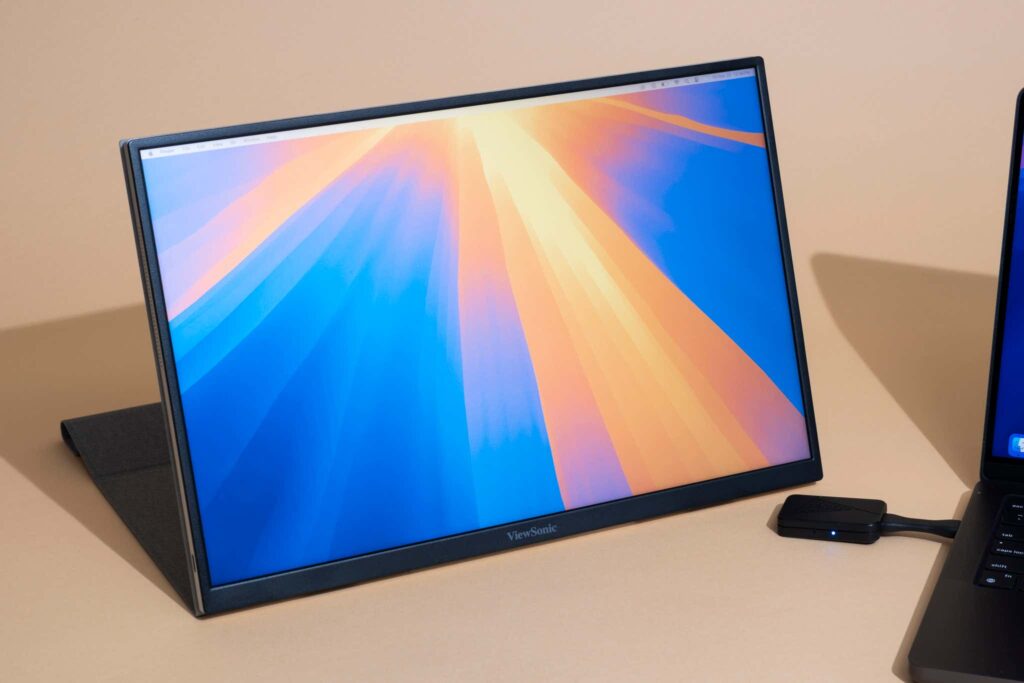
Portable monitors are moving from niche accessories to practical everyday tools as more people split their time between work, travel, and entertainment. A thin second screen can turn a laptop, smartphone, or handheld gaming device into a far more flexible setup without the bulk of a desktop monitor.
The appeal is straightforward: more screen space, less friction. For users who often work from hotel rooms, airport lounges, cafes, or temporary desks, that extra display can reduce constant tab switching and make mobile setups feel much closer to a proper workstation.
Why the category is growing so fast
The rise in demand is tied to modern workflows that expect mobility without compromise. A single laptop screen can feel restrictive when a user needs documents, spreadsheets, browser tabs, and messaging apps open at the same time.
Portable monitors answer that problem with simple connectivity and easy setup. Many models support USB-C and Mini HDMI, allowing both video and power to travel through one cable, which matters most when people are on the move.
That convenience is also being fueled by more powerful phones and handheld devices. Modern smartphones and gaming handhelds now have enough capability to handle far more than basic tasks, but they still benefit from a larger external display.
When paired with a keyboard and mouse, a docked smartphone can become a compact portable computer. In practice, that setup gives users a broader workspace without forcing them to carry a heavy monitor or full desktop rig.
Not just a work accessory
The category has also gained attention from gamers. Devices such as Steam Deck, ROG Ally, and modern smartphones become much more versatile when connected to a larger screen.
As long as power is available, users can enjoy a wider display for gaming or work almost anywhere. That flexibility has made portable monitors useful for students, professionals, and anyone who wants a multi-display experience while moving between locations.
Display quality is improving too
The momentum is not driven by mobility alone. Portable monitors are no longer associated only with dim panels, poor viewing angles, or washed-out colors.
At the lower end, models in the Rs 8000 to 10000 range are said to offer at least 80% sRGB color coverage. At higher budgets above Rs 15000, buyers can find more appealing options with better IPS panels and, in some premium cases, OLED.
| Price Range | What Buyers Can Expect |
|---|---|
| Rs 8000 to 10000 | At least 80% sRGB color coverage |
| Above Rs 15000 | Higher-quality IPS panels, with OLED available in premium models |
Better panel quality changes how these devices are used. Sharper resolution, stronger color reproduction, and refresh rate support on certain models make them relevant not only for office tasks, but also for content creation, programming, photo editing, and video production while traveling.
For laptop users whose built-in screens are underwhelming, a portable monitor can even become the main work display or the main gaming screen on the road. That shift explains why a product once treated as an accessory is now seen as a serious productivity and entertainment tool.
A practical answer to a mobile lifestyle
The growing interest in portable monitors reflects a broader shift in how people use devices. Work, study, and entertainment now happen in more fluid spaces, and users increasingly want tools that can follow them without adding much weight to a bag.
Portable monitors fit that need by offering multi-screen convenience in a form that stays light, easy to carry, and simple to connect. For many users, that combination is turning a second screen into one of the most useful mobile upgrades available.