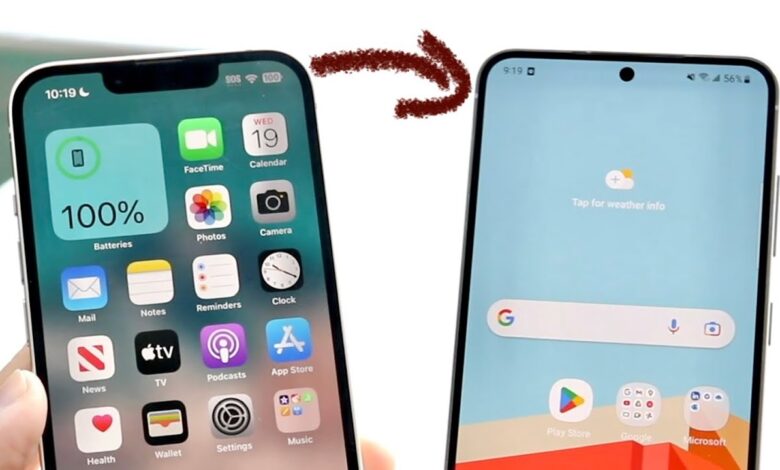
Switching phones is getting less painful for users who rely on eSIM. With iOS 26 and Android 16, Apple and Google are moving cross-platform eSIM transfers closer to a direct, system-level process.
The change matters because eSIM migration has long been one of the most frustrating parts of changing devices. Different activation methods on iPhone and Android often forced users to ask their carrier to reissue a profile every time they moved to a new phone.
Transfer now happens through the device
According to Apple’s latest documentation and guidance highlighted by Android Central, the new process can use Wi-Fi and QR code scanning to move an eSIM between platforms.
When moving from iPhone to Android, the user starts eSIM activation on the Android device. The system then shows a QR code or pairing code, which is scanned by the iPhone before the eSIM profile is transferred after verification.
The reverse path has also been simplified. When moving from Android to iPhone, the process starts from the cellular settings menu on the iPhone. The iPhone then displays a QR code that is scanned by the Android device still holding the active eSIM.
Once authorization is complete, the mobile number moves to the new device without a trip to the carrier store. The approach is part of Apple and Google’s wider effort to reduce friction for users moving between ecosystems.
Carrier support still decides availability
The transfer feature is available on devices running iOS 26 and Android 16, but carrier compatibility remains a key condition. Apple says availability may differ depending on carrier policies and regional service coverage.
That means support can still vary from one market to another, even if the operating system itself is ready. Google has also updated device migration in Android 16, including broader data transfer support without additional apps.
More than just eSIM migration
Apple and Google are not limiting the upgrade to cellular profiles. Both companies are also expanding migration support for contacts, messages, photos, device settings, and call history.
Apple has even added a dedicated “Transfer to Android” menu in iOS 26.3. The menu allows users to move eSIM data together with messages, photos, contacts, and call history directly to an Android device.
That addition marks a notable shift for Apple, which has often been seen as more closed to users leaving its platform. Google’s broader migration improvements in Android 16 point in the same direction, making device switching feel more seamless.
Why eSIM is becoming more important
eSIM, short for embedded SIM, is a digital SIM technology built directly into the device. Unlike a physical SIM card, it allows carrier activation without inserting a card into a slot.
The technology has become more relevant as several smartphone makers reduce or remove physical SIM trays on certain models. For users who change phones often, easier cross-platform eSIM transfer is becoming increasingly important.
For the telecom industry, the move from Apple and Google suggests that eSIM is maturing into a more established connectivity standard. The trend also aligns with the direction taken by several smartphone brands that are leaning more heavily on eSIM, especially in premium devices and selected markets.
With a simpler process in place, users now have a clearer path when moving from Android to iPhone or the other way around. As long as the device, operating system, and carrier support the latest standard, activating a mobile number no longer has to begin with a physical card or a carrier-driven reissue process.