


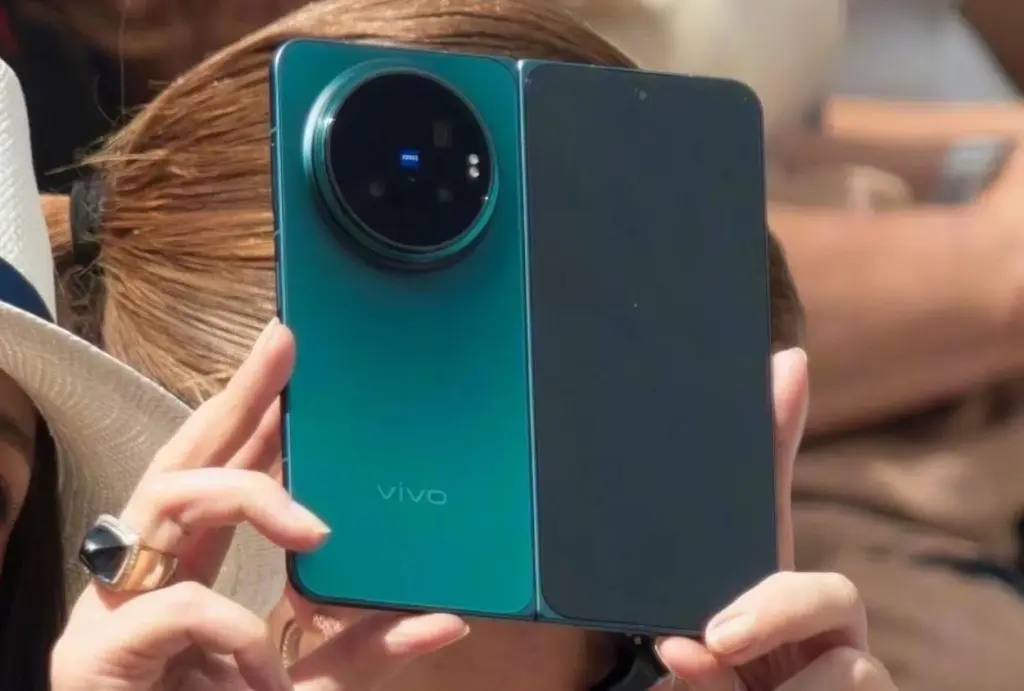
Vivo is setting a clear direction for the X Fold 6 before launch in China: this foldable is being shaped to stand out on the two areas that matter most in the premium category, imaging and display quality. The company has already confirmed a 200MP main camera and an 8.02-inch inner foldable screen.
That combination puts the device squarely in the spotlight among flagship foldables, especially because Vivo is pairing high-resolution hardware with accessories and processing tools that are usually reserved for its top camera phones. The result is a foldable that looks designed to compete on more than just the size of its screen.
Camera hardware takes the lead
The X Fold 6 will use a quad rear camera system led by a 200MP main sensor with optical image stabilisation, according to Vivo. The primary sensor is a 1/1.4-inch unit from a Blueprint and Samsung collaboration, paired with an f/1.68 aperture for better light capture.
Vivo is also including a 50MP rear camera with an equivalent focal length range of 23mm to 100mm. That module uses Sony’s LYT-602 periscope telephoto sensor, giving the phone a more serious zoom setup than many foldables in the same class.
Zeiss accessories and image processing add more depth
Beyond the core camera hardware, Vivo has confirmed support for the Zeiss G2 teleconverter lens. The X Fold 6 is also compatible with the same telephoto converter kit used on the Vivo X300 Ultra, extending its appeal to users who want more flexible long-range shooting.
Image processing is handled by the Blueprint Image Chip V3+, which suggests Vivo wants the camera experience to rely on both sensor quality and computational tuning. On a premium foldable, that approach can matter as much as raw megapixel counts.
A larger inner display built for work and comfort
The inner screen measures 8.02 inches, giving the X Fold 6 a spacious panel for multitasking and productivity. Vivo says the display uses Samsung M14 luminous material and can reach a peak brightness of 5,000 nits.
The panel is also said to drop as low as 1 nit in ultra-dark mode, a detail that points to more flexible viewing in both very bright and very dark environments. Vivo has additionally said the device carries TÜV Rheinland Global Eye Protection 3.0 certification.
That focus on eye comfort fits the demands of a foldable device, where the inner screen is expected to handle longer reading, browsing, and split-screen sessions. In practical terms, it makes the large display feel aimed at daily use rather than only at media consumption.
Productivity features are part of the plan too
Vivo Product Vice President Huang Tao said the X Fold 6 will come with an upgraded Atomic Workbench feature. It allows multiple apps to run on the same screen, which is one of the more useful software functions for foldable phones.
The phone will run OriginOS 6 Fold based on Android 16, along with Vivo’s new AI Light Office Tool package. While Vivo has not detailed every function in that AI set, the naming alone signals a push toward lighter office tasks and everyday efficiency.
Chipset and design details complete the package
Vivo has also confirmed a custom 3nm octa-core MediaTek Dimensity 9500 Super Edition chipset for the X Fold 6. The company says its peak NPU performance is up 111 percent compared with the Vivo X Fold 5.
The same standard SoC family is used in the Vivo X300 Ultra and Vivo X300 Pro, linking the foldable to Vivo’s current flagship hardware strategy. On the design side, the X Fold 6 will use a 2.5D vertical metal frame and will be offered in a Blue Hole colour scheme.
With camera hardware, display quality, software productivity, and chipset upgrades all already in view, the X Fold 6 is being positioned as a foldable flagship with a very specific ambition. Vivo is not just chasing a bigger screen here, but a device that can also compete in imaging, comfort, and multi-app work once it reaches the market in China.