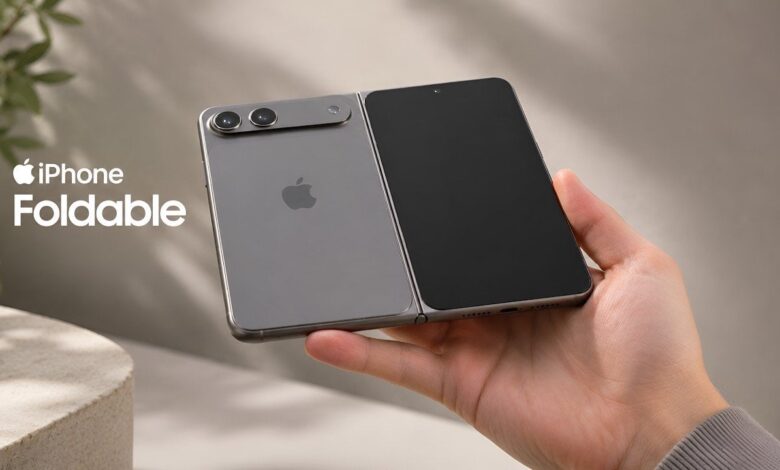
The first foldable iPhone from Apple is still being discussed as a September unveiling, but the signals around its readiness are far from uniform. Some reports suggest the project remains on track, while others point to technical pressure and a launch timeline that could still move.
That tension matters because the iPhone Ultra is shaping up as one of Apple’s most closely watched premium products. The device may arrive with a familiar Apple pattern: announced with the rest of the lineup, then sold later if production is not fully ready.
Conflicting signals from the supply chain
The latest confusion comes from inconsistent predictions among industry watchers. One side says the device is facing serious hurdles that could push its debut to 2027, while Fixed Focus Digital says there is no major delay and that September remains the target, with only about a one-month shift possible if plans change.
Mark Gurman has also described a launch approach that fits this type of rollout. He said Apple may introduce the iPhone Ultra alongside the iPhone 18 Pro series in the fall, even if the actual sale date comes later than standard iPhone models.
Apple has used that playbook before. In 2017, the company introduced the iPhone 8 and iPhone X close together, but the iPhone X did not go on sale until months later.
Why the supply chain looks uneasy
One of the clearest signals comes from Largan Precision. Chairman and CEO Lin En-ping said that a major U.S. customer had postponed new product launches, and that the fourth quarter would be busier because of schedule changes from customers.
He added that some devices would launch in the third quarter, while others would shift into the beginning of the following year. That remark quickly triggered speculation that the iPhone Ultra was part of the delay, although some observers think the comment may instead refer to the standard iPhone 18.
The uncertainty is understandable because Apple is also said to be considering a split launch schedule. Under that plan, the iPhone 18 Pro and iPhone Ultra would arrive in the fall, while the iPhone 18 standard model, iPhone Air 2, and iPhone 18e would follow in the spring.
| Rumored timing | Products mentioned |
|---|---|
| Fall | iPhone 18 Pro, iPhone Ultra |
| Spring | iPhone 18, iPhone Air 2, iPhone 18e |
Production is still the main challenge
Even the more cautious views agree that Apple’s foldable phone development is not simple. The hinge is one of the most frequently cited concerns, and durability remains a common problem across nearly all modern foldables.
Apple is reportedly setting a higher bar for mechanical durability, thinness, and the folding display’s resilience. Technical development and mass production are said to be unfinished, but not necessarily to the point of forcing a major retreat.
The most likely issue may be early volume, not the project itself. If Apple cannot scale output fast enough, the number of iPhone Ultra units available at launch could be very limited.
That would not be unusual for a high-end Apple product. With an expected price of around $2,000 and a relatively narrow target audience, an initial shortage could fit the company’s premium positioning rather than signal a failure.
Scarcity may be part of the plan
Apple is already familiar with demand that outruns supply on its most expensive iPhone models. Even weeks after the iPhone 17 Pro Max launched, reports still pointed to long delivery times and tight stock.
For that reason, a short delay of a few weeks or months for the iPhone Ultra would not automatically be a serious setback. Apple could still use a September announcement to generate momentum, then adjust availability afterward if production needs more time.
For now, the most plausible scenario still points to the iPhone Ultra being introduced with the iPhone 18 Pro lineup at a September event. The bigger question is whether Apple’s first foldable will be ready to ship soon after the announcement, or whether it will follow the familiar pattern of limited early availability.