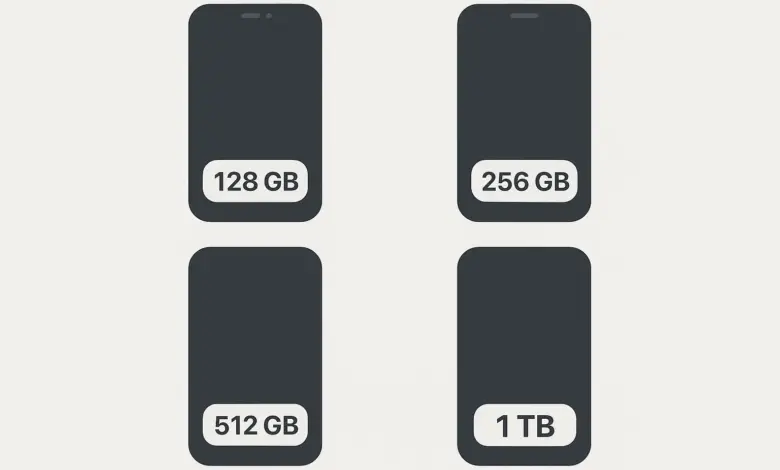
For many iPad buyers, the real question is not whether 128 GB works, but how quickly that space will run out. The answer depends less on the number itself and more on how long the tablet will be kept and how intensely it will be used.
Apple does not offer expandable storage on iPhone and iPad models. That means internal storage, cloud subscriptions, and external drives are the only ways to stretch capacity once space starts to feel tight.
Who Runs Out of Space First
Users who treat an iPad as a productivity device usually need more storage than people who mainly stream video or play light games. Apps, games, high-resolution photos, video files, documents, email, and messages can fill the storage pool much faster than many buyers expect.
For average users, 128 GB can still be enough. For creators working with music, video, photo editing, or sketches at high resolution, the ceiling arrives much sooner, and some of them are better served by the iPad Pro line.
What the Upgrade Really Costs
The price gap between 128 GB and 512 GB is significant on the standard iPad and iPad Air. The base iPad starts at $349 for 128 GB and reaches $649 for 512 GB, while the 11-inch iPad Air begins at $599 and climbs to $899 for 512 GB.
The iPad Pro does not offer a 128 GB option at all. It starts at 256 GB for $999 and rises to $1,199 for 512 GB, which makes the jump easier to justify only if the extra room will actually be used.
| Model | 128 GB / Starting Price | 512 GB Price |
|---|---|---|
| iPad | 128 GB, $349 | $649 |
| iPad Air 11-inch | 128 GB, $599 | $899 |
| iPad Pro | No 128 GB option, starts at 256 GB for $999 | $1,199 |
Cloud Storage Helps, But It Is Not Free
Every iPad includes 5 GB of iCloud storage at no charge. After that, Apple charges $0.99 per month for 50 GB, $2.99 for 200 GB, $9.99 for 2 TB, $29.99 for 6 TB, and $59.99 for 12 TB.
An iPad with 128 GB plus a 200 GB iCloud plan gives an effective total of 328 GB. Over eight years, that subscription adds up to $287.04, or $35.88 per year, which is still slightly below the price jump to a 512 GB iPad but comes with a monthly bill.
The 2 TB tier changes the math much more dramatically. Over eight years, it adds $959.04 in subscription cost, even though it also provides far more headroom for users with large libraries and active sync habits.
Apple One and External Drives Are Limited Alternatives
Apple One begins at $19.95 per month and includes Apple Music, Apple TV, Apple Arcade, plus 50 GB of iCloud storage. The Premier plan costs $37.95 per month and adds Apple News, Apple Fitness, and 2 TB of storage.
That bundle only makes sense if most of the included services are already being used. Otherwise, the long-term cost can outweigh the simplicity of paying more for storage at the start.
External drives remain another option, with a basic 1 TB drive starting around $100 and premium versions reaching about $250. The limitation is convenience, since files must be moved manually and are only as easy to access as the last time they were copied back to the tablet.
The Most Practical Choice
For light users, 128 GB can still be a reasonable choice, especially if the iPad will mainly handle streaming and modest app use. For buyers planning to keep the device for years, however, the added headroom of 512 GB often feels like the more comfortable decision.
In the end, the better option comes down to storage habits rather than raw capacity alone. For anyone who wants to avoid constant storage management, 512 GB remains the safer long-term bet.