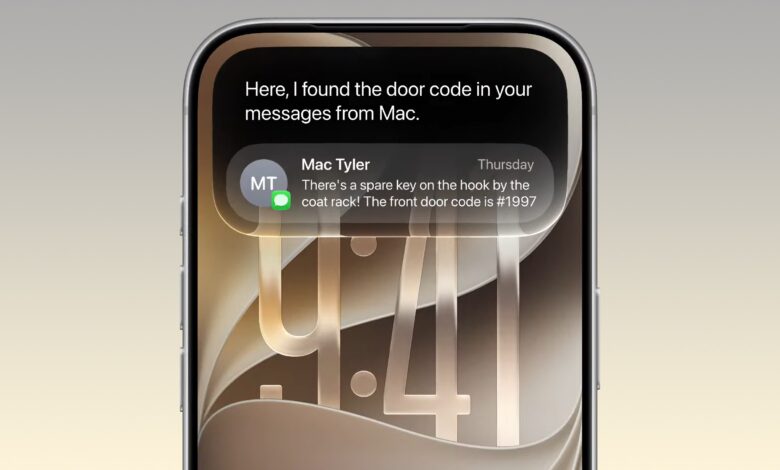
Apple has placed AI at the center of iOS 27, turning the next iPhone software update into a broader push for smarter daily use. The biggest shift comes through Siri AI, which is designed to understand context more naturally and respond in a way that feels closer to a real conversation.
That direction matters because smartphone competition is no longer defined only by cameras and chipsets. With iOS 27, Apple is clearly framing intelligence, personalization, and speed as the features that will shape the next phase of the premium phone market.
Siri AI takes the lead
Siri AI is powered by the latest Apple Intelligence system built on Google Gemini-based AI models. Apple says this allows the assistant to understand personal context from photos, messages, emails, and activities stored on the device.
The assistant is also built to feel more natural in conversation and more deeply connected to iPhone apps. That means users can rely on it for tasks such as managing music, editing messages, and searching for up-to-date information in real time.
Apple Intelligence expands beyond Siri
Apple is also extending Apple Intelligence into several built-in apps, including Photos, Safari, Passwords, Image Playground, and Shortcuts. This shows that the company is not treating AI as a chat feature alone, but as a layer that supports everyday tasks.
In Photos, Apple adds Clean Up for removing distracting objects, Extend for widening an image, and Spatial Reframe for adjusting composition and perspective. These tools are meant to make editing feel faster and more practical without leaving the app.
Safari gets more useful for daily browsing
Safari also gains AI-based improvements that organize tabs by topic and track changes on selected websites through Notify Me. For users who keep many tabs open or follow frequent updates on certain pages, the browser becomes more adaptive to routine habits.
Apple’s approach here reinforces the idea that iOS 27 is about embedding intelligence into familiar actions, not only introducing flashy new features.
Family safety tools are strengthened
The update also brings stronger parental controls. Parents can set device protection based on a child’s age through a dedicated account, giving families more control over how devices are used.
Ask to Buy lets parents approve app installations before they happen, while Ask to Browse requires children to ask permission before opening certain websites. Communication Safety is also expanded to block violent and cruel content, in addition to pornography.
Liquid Glass and performance receive refinements
Apple is not making a dramatic visual overhaul, but it is refining the Liquid Glass design introduced earlier. The interface now has better contrast, sharper app icons, and more flexible transparency settings.
Performance has also been improved in practical ways. Apple says apps can open up to 30 percent faster, newly loaded photos in the gallery are 70 percent quicker, and AirDrop transfers are up to 80 percent faster.
The company also says switching between Wi-Fi and cellular connections is smoother, which should make the overall experience feel more responsive for everyday use.
AirPods gain new options too
Apple is pairing iOS 27 with new AirPods capabilities as well. One of them is Custom EQ, which lets users shape sound to match personal preference.
AirPods Pro 3 also gains GymKit support for syncing heart-rate data with compatible cardio fitness equipment. The addition shows how tightly Apple continues to connect the iPhone, AirPods, and fitness devices inside its ecosystem.
Which devices are eligible
Apple says iOS 27 is available for devices using the Apple A13 Bionic chip or newer. That includes the iPhone 11 series through the latest iPhone 17 line, along with the newest iPhone SE.
With this update, Apple is making a clear statement about where the iPhone is headed. The premium smartphone race is moving toward devices that are not only faster on paper, but also more capable of helping users through AI-driven personalization and automation.