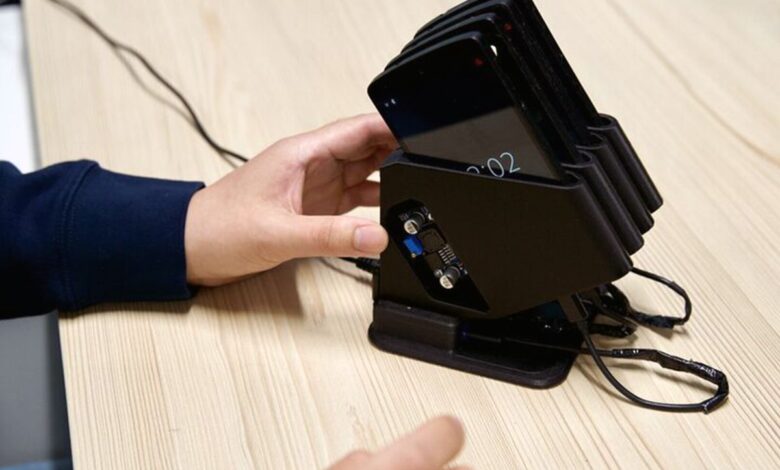
Old smartphones may soon do far more than sit unused in a drawer. Google, working with researchers at the University of California San Diego (UCSD), is testing whether aging handsets can be turned into low-cost server brains for small-scale data centers.
The idea addresses two pressures at once: rising computing costs and the environmental burden of devices that are discarded too early. Google Research says phones still carry the carbon footprint of their production, so extending their usable life could be a more sustainable path.
Why older phones still matter
Researchers found that smartphones around three years old still have meaningful computing power. In specific SPEC benchmark tests, their single-core performance was recorded above several data center server processors.
| Device / Platform | Comparison Point | Key Takeaway |
|---|---|---|
| Three-year-old smartphones | SPEC benchmark | Single-core performance exceeded several server CPUs |
| Pixel and server platforms | Asus RS720A-E11, Nvidia H200, Nvidia RTX Pro 6000, AMD EPYC | Showed that phones can remain useful for certain workloads |
The comparison included Pixel devices and server hardware such as the Asus RS720A-E11, which can be paired with Nvidia H200 or Nvidia RTX Pro 6000 GPUs, along with two AMD EPYC processors. That does not mean smartphones outperform servers overall, but it does show that older hardware can still handle selected tasks.
Even so, the researchers stressed that traditional servers remain far superior in total performance. The point of the project is not to replace modern data centers, but to find practical roles for devices that are no longer used as phones.
How a phone becomes a server node
To convert a smartphone into a server component, the device is first stripped of parts that are no longer needed. The screen, battery, camera, speaker, and outer frame are removed, while the motherboard and its system-on-chip, or SoC, are kept in place.
The operating system is then replaced. Android gives way to Linux, which is widely used in server environments, and that allows the device to run orchestration software such as Kubernetes.
This approach turns the phone into a node inside a computing cluster rather than a consumer device. In practice, one handset does not work alone, but becomes part of a shared system that divides tasks across multiple devices.
Test results suggest that roughly 25 to 50 used smartphones can provide computing power comparable to one dual-socket server processor. That figure helps explain why the concept may work best when many devices are grouped together.
Why campuses may benefit first
Educational environments appear to be the most realistic use case. UCSD says a cluster of 20 used smartphones is enough to run one learning application for more than 75 students at the same time without relying on paid cloud services.
This model could help universities, schools, research labs, and small organizations that have tight budgets. As the cost of components such as memory chips and storage continues to rise, reusing existing devices offers an alternative way to keep computing expenses down.
UCSD also plans to build a local data center made up of about 2,000 used smartphones. A cluster of that size is said to be able to serve hundreds of classes at once.
For institutions that cannot keep depending on commercial cloud platforms, a local setup like this could provide a more independent path for basic computing needs. The appeal lies in using hardware that already exists rather than buying new infrastructure from scratch.
Not meant for tech giants
Despite its promise, the system is not aimed at major technology companies. Researchers acknowledge that a smartphone-based setup is unlikely to suit Google, Microsoft, or Nvidia, which need highly reliable specialized hardware.
Large companies face a very different set of demands. They need greater performance, stronger consistency, and infrastructure built for massive workloads.
That is why the project’s value is not in replacing modern hyperscale data centers. Its real strength is in giving a second life to devices that still have computing ability but no longer serve as everyday phones.
The UCSD team aims to have a full system operating this year. Until then, the group continues testing how well smartphone motherboards can survive long-term use as server hardware.
Durability remains the key question, because phone motherboards were never designed to run continuously like conventional servers. If stability holds up, used smartphones could become a low-cost and more environmentally friendly foundation for smaller institutions that need dependable computing power.