


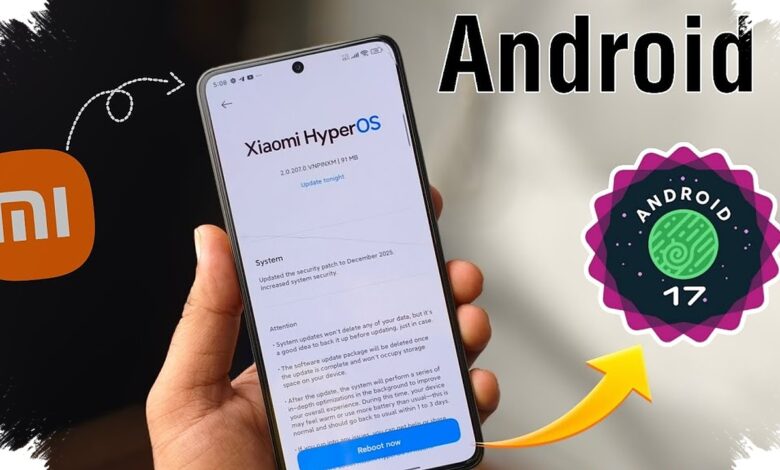
Xiaomi appears to be testing its next major software update on Android 17, but the naming may not follow the path many users expected. Internal firmware leaks suggest the company is working on HyperOS 3.3 rather than HyperOS 4, signaling a possible shift in how the next release will be positioned.
That detail matters because version names often shape expectations about how big an update will feel. If the leak is accurate, Xiaomi may keep the current HyperOS numbering even while moving to a newer Android base.
What the firmware leak shows
The information surfaced from internal firmware files tied to two of Xiaomi’s latest flagship phones. Ximitime reported that the Xiaomi 17 and Xiaomi 17 Ultra have been spotted running an unreleased HyperOS 3.3 engineering build.
| Device | Build | Status |
|---|---|---|
| Xiaomi 17 | OS3.0.330.11.XPCCNXM | Engineering internal build |
| Xiaomi 17 Ultra | OS3.0.330.8.XPACNXM | Engineering internal build |
Both builds are described as engineering software, which means they are used for behind-the-scenes testing rather than public release. At this stage, the firmware can still change before Xiaomi settles on a final version.
Why HyperOS 4 is not showing up
The most notable part of the leak is the absence of HyperOS 4. Earlier expectations pointed to a new interface generation arriving alongside the Android 17-based update.
That does not automatically mean HyperOS 4 is off the table. Because the builds are still internal, Xiaomi could still revise the naming before the official rollout begins.
Even so, the appearance of HyperOS 3.3 on two flagship models suggests the company may be exploring a different numbering approach. In other words, a major Android jump may not necessarily bring a matching jump in HyperOS branding.
Release timing is already clearer
While the final name remains uncertain, Xiaomi has already confirmed the broader release window. The next major HyperOS update based on Android 17 is scheduled to arrive in July or August.
That timeline leaves little room for a long wait, and official teasers are expected to appear ahead of launch. Those teasers should clarify whether Xiaomi chooses HyperOS 3.3 or HyperOS 4.0 for the public release.
What users can expect from the update
Beyond the naming question, the upcoming release is expected to focus on stronger personal intelligence features. Xiaomi is also expected to bring new interface elements and deeper integration of a liquid glass UI.
The update should not be limited to visual changes. Reports indicate that Xiaomi is also aiming for faster, more responsive, and smoother everyday performance.
That would fit the role of a major Android 17-based release, especially since testing is already underway on the Xiaomi 17 and Xiaomi 17 Ultra. Those two devices appear to be central to the software’s early rollout phase.
Still, early engineering software should be read carefully. Features, labels, and final branding can all shift before a public announcement is made.
What the naming choice could signal
If Xiaomi keeps the update under HyperOS 3.3, the move could point to a more gradual software strategy. The company may want to highlight refinement and core feature improvements instead of making a large branding leap.
If HyperOS 4 does arrive later, the current builds may simply represent a testing stage before the final identity is locked in. For now, the leak should be treated as a sign of direction rather than a confirmed endpoint.
What is already clear is that Xiaomi is preparing its next generation of software for its newest flagships. With the launch window set for July or August, the company’s official explanation of the update name and feature set should not be far away.