


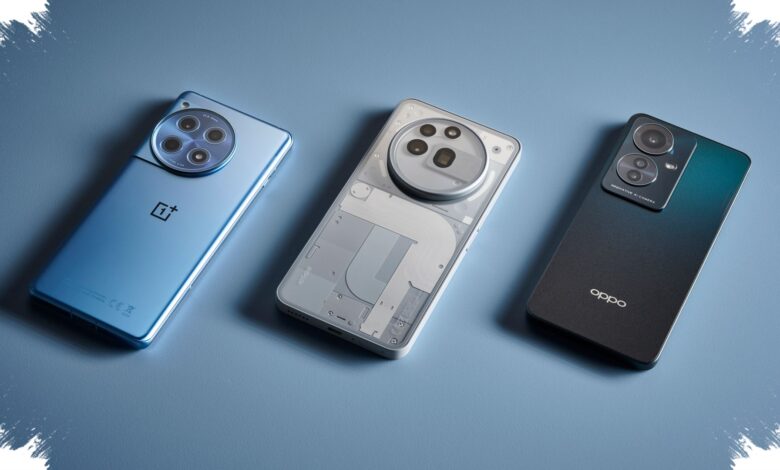
Large storage is no longer reserved for premium phones. In 2026, several affordable models will bring 256 GB into the Rp2 million to Rp4 million range, giving buyers more room for apps, high-resolution photos, videos, and AI features without moving into flagship pricing.
The appeal is not only capacity. Across this group, manufacturers are pairing generous storage with large batteries, faster charging, tougher protection, and features that are usually associated with higher-priced devices.
1. Realme C100i and C100x
Realme C100i is one of the most affordable 256 GB options at around Rp2.799.000. It uses the Unisoc T7250 chipset and comes with a 7.000 mAh battery, 45W fast charging, reverse charging, Hyper Cooling, GT Boost, Flux Engine, IP64 protection, and military-grade shock resistance.
Realme C100x sits above it at around Rp3,7 jutaan and increases the battery to 8.000 mAh while keeping the same Unisoc T7250 platform. It also adds microSD expansion, 45W fast charging, and reverse charging for users who want more endurance.
2. Realme C100
Realme C100 is the top model in the same family and is priced at around Rp4,3 jutaan. It carries 8 GB of RAM, 256 GB of storage, and a MediaTek Helio G92 Max processor.
The phone also brings a 6,8-inch display with a 120Hz refresh rate and an 8.000 mAh battery with 7-Year Battery Health. Its durability package includes ArmorShell Protection, ArmorShell Glass, IP69 certification, and a claim of surviving drops from up to two meters.
| Model | Price | Main Highlights | Battery |
|---|---|---|---|
| Realme C100i | Around Rp2.799.000 | Unisoc T7250, IP64, military-grade shock resistance | 7.000 mAh |
| Realme C100x | Around Rp3,7 jutaan | Unisoc T7250, microSD expansion, reverse charging | 8.000 mAh |
| Realme C100 | Around Rp4,3 jutaan | Helio G92 Max, 120Hz display, ArmorShell Protection, IP69 | 8.000 mAh |
3. Infinix Note Edge
Infinix Note Edge is positioned around Rp3,5 jutaan with 8 GB of RAM and 256 GB of internal storage. It uses a 6,78-inch AMOLED display with 1.5K resolution and the MediaTek Dimensity 7100 chipset.
Its battery reaches 6.500 mAh despite a body thickness of only 7,2 mm. Other features include a 50 MP main camera, NFC, JBL-tuned stereo speakers, eSIM, Bluetooth 5.4, an IR blaster, and IP65 certification.
4. Infinix Hot 70
Infinix Hot 70 is sold at around Rp3,39 juta and combines 6 GB of RAM with 256 GB of storage. That capacity can be expanded by up to 2 TB through microSD, which makes it practical for users with large media libraries.
The phone uses the MediaTek Helio G100 Ultimate, an IPS LCD with a 120Hz refresh rate, and a 6.000 mAh battery with 45W fast charging. It also includes Folax AI, a 50 MP autofocus main camera, and IP65 protection.
5. Redmi Note 15 4G
Redmi Note 15 4G is listed at around Rp3.099.000 with 8 GB of RAM and 256 GB of storage. Its main selling point is a 108 MP rear camera, supported by an AMOLED Full HD+ display and the MediaTek Helio G100 Ultra chipset.
It also carries a 6.000 mAh battery, a microSD slot supporting up to 1 TB, and IP64 certification. For buyers focused on storage and camera resolution, it offers a balanced mix at its price point.
6. Redmi Note 15 5G
Redmi Note 15 5G is the more connected option, priced at around Rp3.799.000. It uses the Snapdragon 6 Gen 3, pairs it with 8 GB of RAM and 256 GB of storage, and adds 5G support.
Its feature list also includes a 108 MP main camera with Optical Image Stabilization, a 5.520 mAh battery with 45W fast charging, Wi-Fi 6E, NFC, an IR blaster, a hybrid microSD slot supporting up to 1 TB, and software update support for up to four years.
| Model | Price | Chipset | Key Extras |
|---|---|---|---|
| Redmi Note 15 4G | Around Rp3.099.000 | MediaTek Helio G100 Ultra | 108 MP camera, AMOLED FHD+, microSD up to 1 TB, IP64 |
| Redmi Note 15 5G | Around Rp3.799.000 | Snapdragon 6 Gen 3 | OIS, Wi-Fi 6E, NFC, microSD up to 1 TB, four years of OS updates |
With more brands pushing 256 GB into lower price brackets, buyers in 2026 have more room to choose based on battery size, display quality, durability, and software support rather than storage alone. That shift makes the midrange far more competitive than it used to be.