


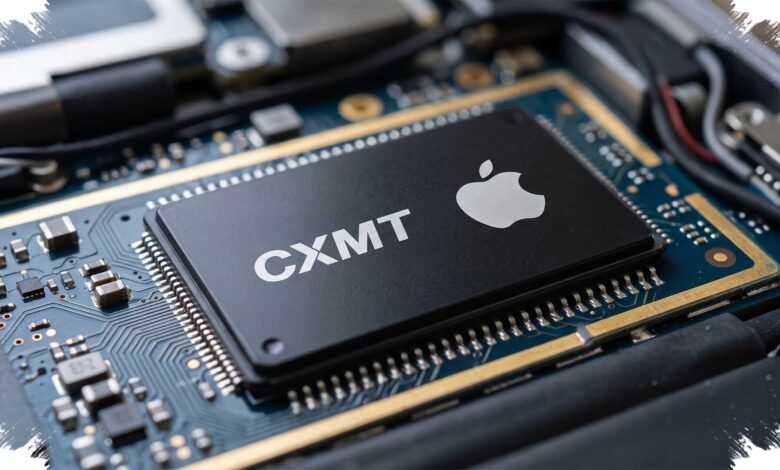
Apple has reportedly begun testing DRAM chips from CXMT, a Chinese memory maker, in a move that could help it navigate one of its most politically sensitive supply-chain decisions. If the plan goes forward, the RAM would be used only in devices sold in China.
The limited rollout would give Apple a way to reduce the risk of backlash in the United States while still exploring a new memory source at a time when supply conditions remain tight. According to the report, doing business with CXMT and YMTC is not banned outright, but both companies remain controversial because of their inclusion on the U.S. Entity List.
A cautious test, not a full commitment
The latest development follows earlier reports that Apple was considering RAM from ChangXin Memory Technologies, or CXMT, alongside NAND storage from Yangtze Memory Technologies, or YMTC. Apple has now reportedly taken the next step by testing CXMT DRAM directly.
That testing phase does not guarantee commercial adoption. It does, however, suggest Apple is actively evaluating whether a China-only strategy could give it more flexibility without creating a larger political problem outside the market it is trying to serve.
| Company | Memory Product | Status in the Report | Notable Detail |
|---|---|---|---|
| CXMT | DRAM | Being tested by Apple | Reportedly limited to devices sold in China |
| YMTC | NAND | Long monitored by Apple | Also listed on the U.S. Entity List |
Why Apple is looking at China now
The timing is closely tied to a broader memory shortage. AI data centers are absorbing nearly all supply from non-Chinese manufacturers, leaving fewer options for companies that depend on large volumes of memory components.
That pressure appears to be pushing Apple toward alternatives it had already been watching for some time. The company has reportedly been evaluating NAND chips from YMTC since 2022, which shows its interest in China’s memory sector is not a sudden shift.
Even so, the path forward remains uncertain. Apple may continue testing CXMT DRAM for China-bound devices, but any commercial decision would still need to balance supply needs, political scrutiny, and the reputational risk of working with companies tied to the U.S. Entity List.