
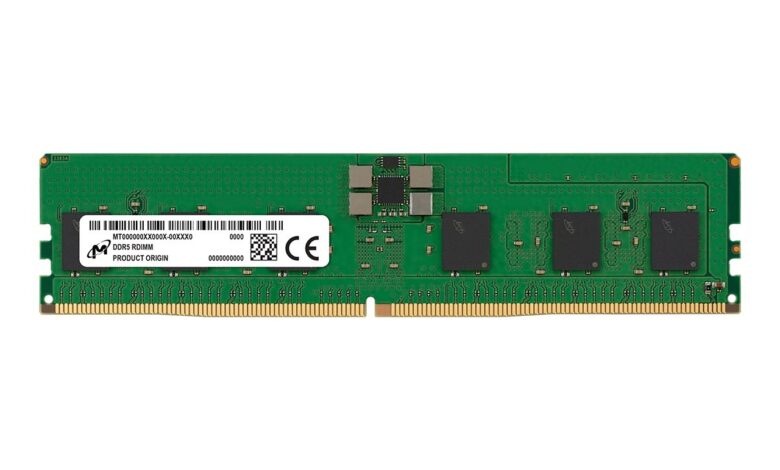
The memory market is going through an unusual reversal: DDR4 has jumped more than 50% in just one quarter, while DDR3 is now more expensive per gigabit than DDR5. The shift reflects a sharp squeeze in global supply, and the pressure is already spreading across PCs, laptops, servers, and storage devices.
Industry analysts cited by gadget.viva.co.id say the price trend is not likely to fade quickly. They expect memory component costs to stay elevated through 2028 as supply keeps shrinking even though demand has not eased.
Old Memory, New Price Reality
One of the clearest signs of the market distortion is the price gap between legacy and newer memory generations. DDR3 4Gb is reported at $3.19 per gigabit, while DDR5 16Gb stands at $2.94 per gigabit.
That comparison shows how older memory is no longer automatically cheaper. The main reason is the production shift among the biggest semiconductor suppliers, which have moved away from lower-margin parts.
| Memory Type | Capacity | Price per Gigabit |
|---|---|---|
| DDR3 | 4Gb | $3.19 |
| DDR5 | 16Gb | $2.94 |
AI Has Changed What Gets Made
Samsung, SK Hynix, and Micron are now focused almost entirely on higher-margin products such as HBM for AI, DDR5 for data centers, and LPDDR5X for flagship smartphones. That shift has left DDR4 and DDR3 with far less production capacity than before.
The explosion in AI demand is a major driver of that change. GPUs such as NVIDIA H100 and Blackwell need large amounts of HBM, with each unit able to use 120–192 GB of that memory.
As more manufacturing lines are redirected to those products, the supply of DDR4 and DDR3 continues to tighten. At the same time, demand in legacy segments remains steady enough to keep pressure on the market.
DDR4 Still Has Plenty of Users
DDR4 is far from obsolete because it remains widely used in active systems. Older servers, entry-level PCs, mid-range laptops, and much of the enterprise SSD market still rely on it.
Enterprise SSDs, for example, still need DRAM cache to maintain performance and endurance. Many mid-range consumer devices also continue to choose DDR4 because the platform cost is lower than newer alternatives.
This combination of shrinking supply and stubborn demand is what keeps prices under pressure. In that environment, large manufacturers have little incentive to restore high-volume production of cheaper memory.
| Main Factor | Impact | Market Direction |
|---|---|---|
| AI demand surge | HBM becomes the priority | DDR4 supply shrinks |
| Production shift | DDR3 and DDR4 are deprioritized | Prices rise sharply |
| Legacy demand stays strong | Servers, PCs, and SSDs still need DDR4 | Price pressure continues |
Consumers Are Starting to Feel It
The price increase is not expected to stay inside the supply chain. PC builds and laptops under Rp15 million are among the segments most exposed to the impact.
A 16GB module that previously sold for around $40 could rise to $60. If that increase flows through to the finished product alongside other components, retail prices could climb by around Rp300,000 to Rp500,000 or more.
The effect could also reach mid-range smartphones that still use LPDDR4X, the mobile variant of DDR4. Manufacturers may raise prices, reduce RAM capacity, or move to cheaper platforms with performance trade-offs.
Storage Products Are Not Safe Either
Storage devices are under the same pressure. SSDs with DRAM cache, including models such as Samsung 980 and WD Blue SN580, may be affected because their memory components have become more expensive.
If the upward trend continues, some vendors may shift to DRAM-less SSDs. That option is cheaper, but it is typically slower and less durable than models that include DRAM cache.
Limited Relief Is Emerging
There is a small amount of supply-side relief. Micron has reportedly resumed mass production of DDR4 and LPDDR4 at its Manassas, Virginia plant using a more efficient 1α node process.
Even so, the move is not enough to close the global gap. Samsung and SK Hynix have not shown signs of returning to large-scale DDR4 production, so market pressure remains significant.
Who Benefits From the Tight Market
Nanya Technology and Winbond are in a stronger position because they remain major suppliers of DDR4 and DDR3. That allows them to charge premium prices and choose long-term partners more selectively.
Their room to expand is still limited. Access to advanced fabrication equipment and raw materials remains constrained, which means capacity gains are likely to arrive slowly.
As long as the largest fabs continue prioritizing HBM, DDR5, and LPDDR5X, the DDR4 market is likely to stay tight. For buyers, that means a memory standard once seen as ordinary may now be one of the most expensive parts of a system.