DJI has added a dedicated safety system to its enterprise lineup with the AP100 Parachute, a standalone parachute built specifically for the Matrice 400. The goal is straightforward: reduce the impact of a failure in flight and lower the risk to payloads and people on the ground.
The timing matters because the Matrice 400 is not a lightweight drone. It is used in inspection work, public safety operations, surveying, and cargo delivery, often in dense or sensitive environments where a loss of control could create serious damage.
A safety option built for heavier enterprise missions
That context helps explain why AP100 is more than a simple accessory. For operators carrying heavy payloads over populated areas, the parachute offers a recovery option that is designed to work when the drone can no longer continue flying safely.
| Aspect | Detail |
|---|---|
| Primary target | DJI Matrice 400 for enterprise use |
| System weight | About 935 grams including bracket |
| Flight impact | Reduces flight time by about 6 minutes at full load |
| Operating range | -20°C to 50°C, up to 4,500 meters |
| Protection | IP55, weather-resistant |
DJI says the system does not meaningfully affect the Matrice 400’s maximum takeoff weight of 15.8 kg. That makes the added protection easier to adopt without changing the drone’s core mission profile.
Emergency response is built to happen quickly
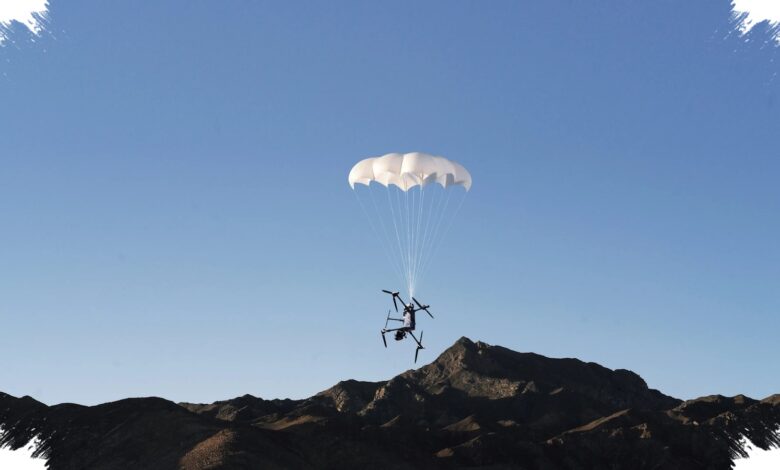
The AP100 is notable for its speed in an emergency. According to DJI, it can detect a problem, cut motor power through an independent Flight Termination System, and fully deploy the parachute in less than 600 milliseconds.
In calm conditions, and when released from 30 meters or higher, it can slow the drone to less than 5 m/s. That significantly reduces the chance of major damage and lowers the risk of injury compared with an uncontrolled fall.
The system also includes an independent flight controller and backup power that can last up to one hour. DJI adds smart protection to prevent unnecessary deployment, while sound and visual alarms activate after landing so the drone can be found more easily.
Built to support stricter operational approval
Beyond safety, the AP100 may also help operators work within tighter regulatory frameworks. When paired with the Matrice 400, it supports EASA C5/C6 standards in Europe and UK CAA requirements in the United Kingdom.
That could make it easier to conduct flights over populated areas and to support beyond visual line of sight, or BVLOS, operations. For enterprise users, that regulatory fit can matter as much as the hardware itself.
DJI has also kept the AP100 practical for field use. The battery can be swapped without removing the parachute, and the system still fits in the standard carrying bag.
Pricing is set at about $1,050. For an enterprise drone ecosystem where the Matrice 400 often sells for more than $10,000, the parachute is a relatively small investment, and it is now available through DJI Enterprise distributors.