
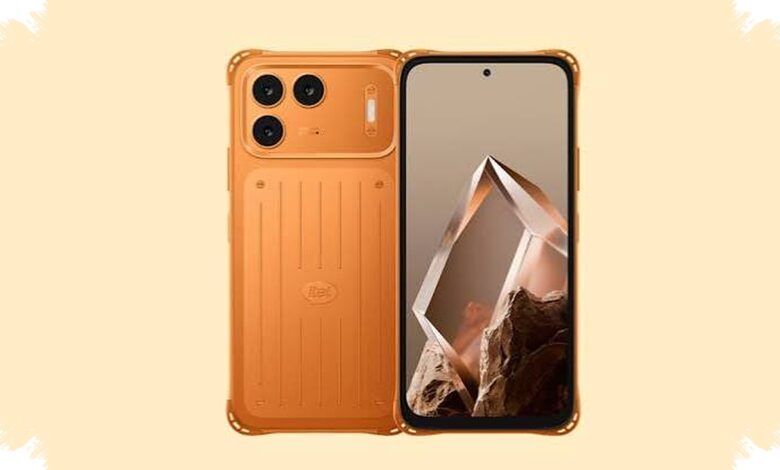
itel Power 80 stands out in the entry-level segment by making a clear bet on endurance rather than flash. At a price of Rp2,399,000, it pairs a 7,000 mAh battery with rugged protection that is unusual in this class.
That combination makes the phone more relevant for users who value reliability in demanding environments than for those chasing premium styling or gaming power. The device is also built on a Silikon Karbon battery design, which helps keep the body at 8.5 mm despite the large capacity.
Durability First, Then Everything Else
The strongest selling point is its toughness. itel Power 80 carries IP68, IP69, and MIL-STD-810H certification, while SGS 5-Star Drop Protection adds another layer of reassurance for impact resistance.
According to techno.viva.co.id, the phone is designed for users who need a sturdier device rather than one that mainly looks attractive in a display case. It is claimed to survive immersion in water up to 2 meters for 30 minutes, high-pressure water spray at 100 bar and 85°C, and drops from 2 meters.
Big Battery, Modest Charging
The 7,000 mAh battery is the headline feature, with claimed standby time reaching 67.8 days. That figure is paired with 18W charging, which means the battery can take more than 2 hours to top up fully.
The hardware choice shows the same pattern throughout the device. The phone uses eMMC 5.1 storage, so app loading and data transfers are slower than on higher-end storage standards.
| Component | itel Power 80 Specification | Practical Effect |
|---|---|---|
| Display resolution | HD Plus 720 × 1600 pixels | Lower pixel density on a 6.78-inch screen |
| Storage | eMMC 5.1 | Slower app loading and file transfer |
| Charger | 18 Watt | Charging the 7,000 mAh battery takes more than 2 hours |
| NFC | Not available or not mentioned | No instant e-money balance check or top-up |
Large Screen, Familiar Performance Tier
On the front, the phone offers a 6.78-inch display with a dynamic refresh rate of up to 120 Hz. The size should feel comfortable for scrolling and watching content, although the HD Plus panel keeps it away from sharper-screen territory.
Power comes from the Unisoc T7250 chipset, and the phone runs Android 16 at launch. That positions it as a practical daily device rather than a model built for demanding gaming or high-end multitasking.
Where the Compromise Becomes Clear
The compromises are easy to spot once the rugged focus is understood. The display remains HD Plus, the storage is still eMMC 5.1, and the 18W charger is not especially fast for a 7,000 mAh battery.
The rear design may suggest more than it delivers at first glance, with three circular elements in the camera module that lean heavily on appearance. In practice, only the 50 MP main camera is fully functional.
For field workers, ride-hailing drivers, and users who often operate in harsh conditions, those trade-offs may be acceptable. For buyers who want faster charging, sharper visuals, or stronger gaming performance, other options in the same price range may be more suitable.