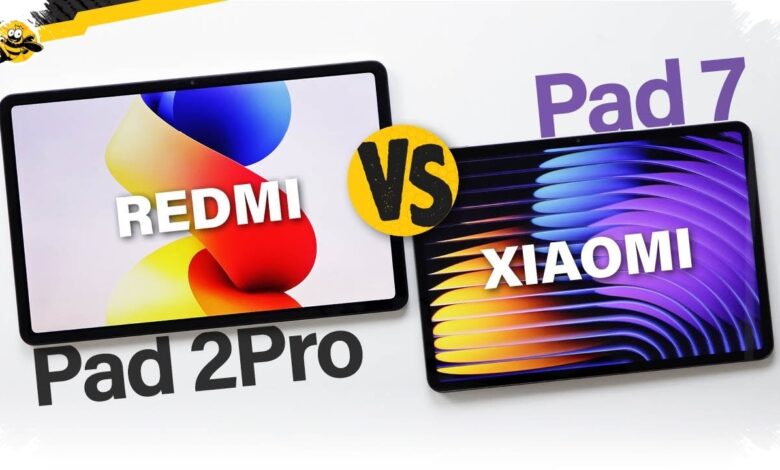
The new academic period has put two Xiaomi tablets into the spotlight for students, but they are clearly built around different priorities. Xiaomi Pad 7 leans toward performance and AI, while Redmi Pad 2 Pro focuses on a larger display and longer battery life.
That split matters for college use, where reading, multitasking, note-taking, and moving between classes can all demand different strengths from a tablet. Based on specifications shared through Xiaomi Global Product Page and Xiaomi Indonesia Official Store, the better choice depends on how the device will be used every day.
Performance first, or efficiency first
Xiaomi Pad 7 sits in the more premium position with Snapdragon 7+ Gen 3 built on 4nm. It is also tied to Xiaomi HyperAI and Gemini Live, making it more suitable for users who want faster text handling and stronger productivity support.
Redmi Pad 2 Pro uses Snapdragon 7s Gen 4 on 4nm, a chip designed with energy efficiency in mind. It is still aimed at handling daily campus apps smoothly, but without the same emphasis on heavier processing.
| Model | Chipset | Main Focus |
|---|---|---|
| Xiaomi Pad 7 | Snapdragon 7+ Gen 3 (4nm) | Premium performance, Xiaomi HyperAI, Gemini Live |
| Redmi Pad 2 Pro | Snapdragon 7s Gen 4 (4nm) | Power efficiency, everyday college apps |
Display size shapes the reading experience
For students who spend a lot of time reading journals and digital course material, Xiaomi Pad 7 offers an 11.2-inch panel with 3.2K resolution and an adaptive refresh rate of up to 144Hz. Its peak brightness reaches 800 nits, which helps it stay usable outdoors on campus.
Redmi Pad 2 Pro takes a different route with a 12.1-inch screen, 2.5K resolution, and a 120Hz refresh rate. It also carries TÜV Rheinland Low Blue Light, Flicker-Free, and Circadian Friendly certifications, all aimed at making long reading sessions easier on the eyes.
| Model | Display Size | Resolution and Refresh Rate | Notable Point |
|---|---|---|---|
| Xiaomi Pad 7 | 11.2 inches | 3.2K, up to 144Hz | 800 nits, comfortable outdoors |
| Redmi Pad 2 Pro | 12.1 inches | 2.5K, 120Hz | TÜV Rheinland Low Blue Light, Flicker-Free, Circadian Friendly |
Battery life becomes the deciding factor for mobile students
Redmi Pad 2 Pro is the stronger pick for students who move from room to room or study away from a charger for long periods. Its 12,000 mAh battery is paired with 33W charging and 27W reverse charging, which can even help top up a phone in an emergency.
Xiaomi Pad 7 carries an 8,850 mAh battery and supports 45W turbo charging, so its capacity is smaller but refilling is faster. Xiaomi says the tablet can play video continuously for up to 20.4 hours, which is long enough for a full day of academic use.
Which tablet makes more sense for college
Xiaomi Pad 7 is the better fit for students who prioritize computing speed, AI support, and faster charging. That combination makes it more appealing for heavier assignments, multitasking, and work that demands quick response.
Redmi Pad 2 Pro makes more sense for users who want a larger screen, broader eye comfort features, and a bigger battery for high mobility. The two tablets are built with clear differences, so the final choice comes down to whether daily needs lean toward speed or endurance.