


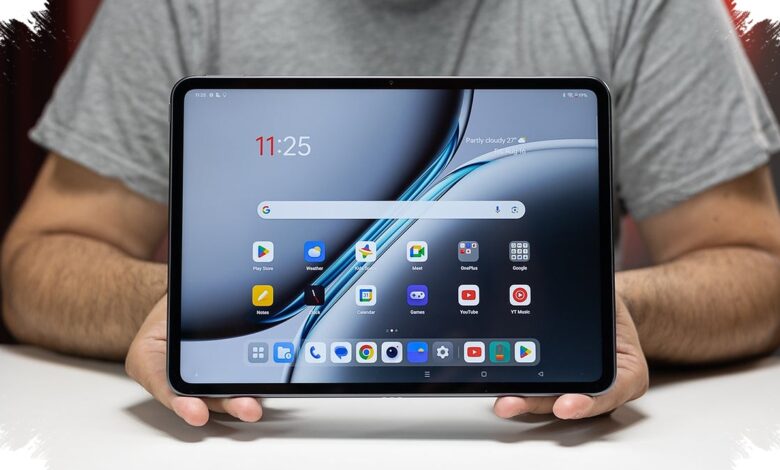
The OnePlus Tablet 2 Pro has the processing power expected from a premium large-screen device, led by the Snapdragon 8 Elite chipset and up to 16GB of RAM. Yet its missing fundamentals, including standalone cellular access, physical GPS, a fingerprint scanner and an OLED display, shape a more limited Pro experience.
Its lack of a SIM-slot variant means the tablet cannot connect to 4G or 5G networks independently. Users outside Wi-Fi coverage must rely on a smartphone hotspot for internet access.
There is also no physical GPS chip for standalone navigation. That omission may matter to users considering the tablet for in-car head-unit use, where accurate location data is important.
What the Hardware Offers and Omits
| Category | Available Feature | Limitation |
|---|---|---|
| Performance | Snapdragon 8 Elite, up to 16GB RAM | No MicroSD expansion |
| Display | 13.2-inch, high resolution, 144Hz | IPS LCD rather than OLED |
| Security | Face Unlock and PIN | No fingerprint scanner |
| Connectivity | Wi-Fi and smartphone tethering | No standalone cellular or physical GPS |
The tablet uses Face Unlock and a PIN for device security, but it does not include a fingerprint scanner. Facial recognition can be less convenient in low light or when the device is placed at an angle on a desk.
OnePlus has used an aluminium frame and kept the body at roughly 6 mm thick. The slim construction contributes to a premium impression, although there is no official IP Rating for water and dust resistance.
Users may therefore need to exercise more care when taking the device to open-air workspaces or outdoor locations. The absence of an official rating limits reassurance in environments where splashes or dust may be a concern.
Strong Performance for Work and Entertainment
The Snapdragon 8 Elite provides the foundation for demanding workloads, multitasking, entertainment and heavy gaming. The OnePlus Tablet 2 Pro also comes with either 256GB or 512GB of internal storage.
Storage cannot be expanded through a MicroSD card. This could be restrictive for photographers and videographers who regularly transfer large raw files.
A 13.2-inch high-resolution display gives users substantial space for typing, browsing and running multiple applications. The Open Canvas feature is intended to support smoother multitasking across the large screen.
The 144Hz refresh rate helps navigation and app switching feel responsive. For general productivity and content consumption, the expansive display remains one of the device’s central attractions.
A Fast Screen Without OLED Depth
Despite the high refresh rate, OnePlus uses an IPS LCD panel instead of AMOLED or OLED technology. Black levels cannot appear as deep as they do on an OLED screen during dark films or visual work requiring stronger contrast.
Some technology forum users, including those on GSMArena, have questioned that panel choice for a Pro-branded tablet. The display may be a consideration for multimedia creators who depend on deeper contrast for video editing.
A 30-day usage report published by techno.viva.co.id indicates that raw capability alone does not determine how comfortably a tablet can replace other devices. The 12,140mAh battery and large display still make it capable for work, gaming and entertainment.
The tablet also lacks a 3.5 mm audio port. Wired earphone users would need a USB-C dongle, while TWS earphones offer the alternative.
As a premium Wi-Fi tablet, the device has a clear role for users who mainly work and consume media near reliable wireless access. Its performance credentials are substantial, but the connectivity, display, security and storage compromises prevent it from being an uncompromised Pro device.