Samsung is preparing a new display structure intended to address two persistent concerns around foldable phones: durability and the visible crease across the middle of the screen. Called Flex Titanium, the technology is confirmed for the newest generation of Galaxy Foldable devices.
The company is combining ultra-thin titanium-based materials with a revised display construction. The stated objective is to keep foldable devices slim while improving screen stability through repeated opening and closing.
A Structure Designed Around Stability
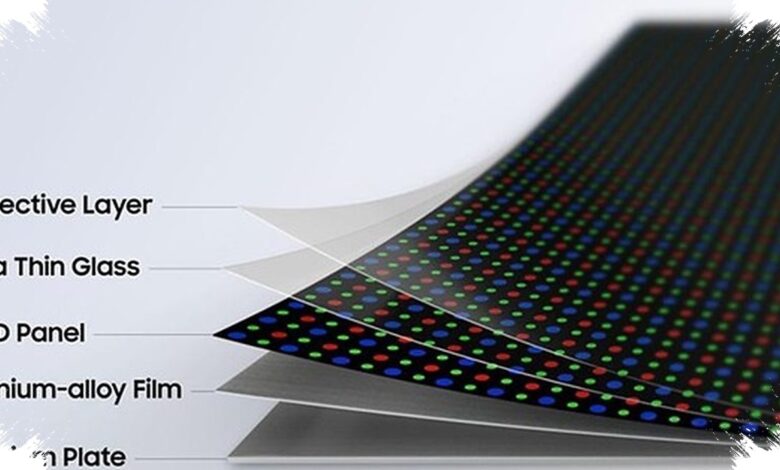
Flex Titanium uses two titanium components positioned at different points within the display assembly. Their roles are divided between reinforcing the screen structure and supporting the display module when the device is fully open.
| Component | Position | Main Role | Key Detail |
|---|---|---|---|
| Titanium-alloy film | Below the OLED panel | Strengthens the screen structure | Up to 20 times greater mechanical rigidity than conventional polymer film |
| Titanium plate | Below the display module | Maintains display stability | Uses special hole processing to reduce the air gap beneath the screen |
The titanium-alloy film sits directly below the foldable OLED panel. Samsung says its mechanical rigidity is up to 20 times higher than that of conventional polymer film.
Despite that reinforcement, the film is designed to be extremely thin. Its thickness is said to be about one-third of the average diameter of a human hair, helping preserve a slim device profile.
The titanium plate serves a separate purpose beneath the display module. It is intended to help the screen remain stable while the foldable phone is in its open position.
Reducing the Air Gap to Soften the Crease
Samsung’s titanium plate incorporates special hole-processing technology to reduce the air gap between the support plate and the screen. Managing that gap is presented as an important part of maintaining panel stability.
The construction is meant to allow the display to remain flexible through repeated folds while making the crease less visible when opened. Kyung-Jin Yoo, EVP and Head of Mobile Display Product Development Team at Samsung Display, said the micro-patterned hole technology preserves flexibility without compromising structural durability.
The development is not limited to the physical layers below the screen. Samsung is also pairing the new structure with a high-resolution display architecture and next-generation organic materials.
Sharper Images and Better Power Efficiency
According to Samsung, the combination is intended to deliver sharper images and improve battery power efficiency on foldable devices. The company is therefore positioning Flex Titanium as an integrated approach to durability, visual quality, thin design, and efficiency.
Sunghoon Moon, EVP and Senior Executive of the Mobile R&D Office Hardware at Samsung Electronics, linked the development to the company’s long experience in foldables. Samsung has developed seven generations of foldable products, with feedback from Galaxy Fold users helping shape the technology’s direction.
The company has not disclosed which model will be the first to use Flex Titanium. Further details about the technology and the devices carrying it are expected at an upcoming Galaxy Unpacked event.