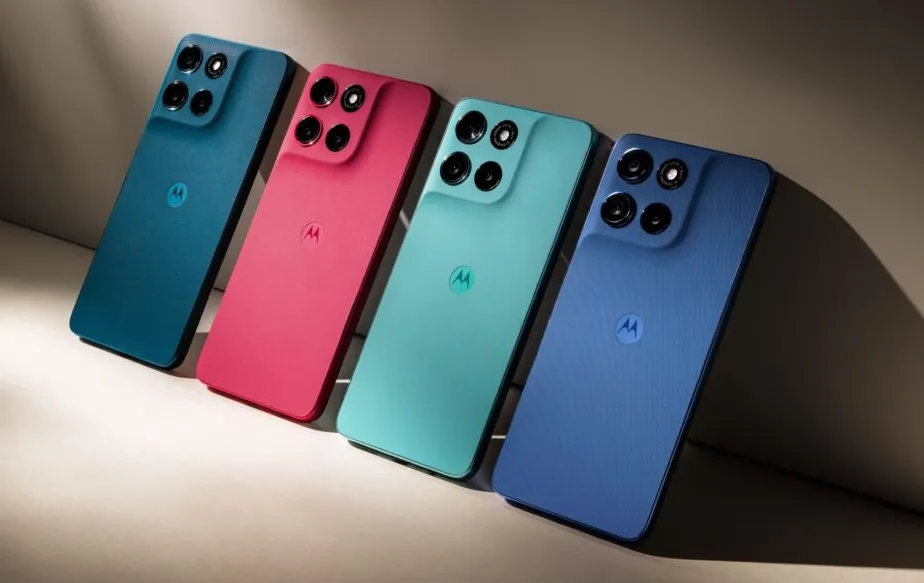
Motorola recently unveiled two new 5G smartphones, the Moto G57 and Moto G57 Power. Both models are the first in the industry to run on Qualcomm’s latest Snapdragon 6s Gen 4 chipset.
This move highlights Motorola’s strategic effort to boost its presence in the competitive mid-range segment by delivering modern chipsets and features at accessible prices.
Display and Design
The Moto G57 series features a large 6.72-inch LCD screen with Full HD+ resolution. Both devices support a smooth 120Hz refresh rate, enhancing the user experience with fluid visuals during scrolling and gaming.
Peak brightness reaches up to 1050 nits, allowing clear visibility even under direct sunlight. Corning Gorilla Glass 7i protects the display, providing durability against scratches and impacts. The selfie camera is integrated into a punch-hole cutout and offers an 8MP resolution.
Camera Capabilities
On the rear, both devices boast a dual-camera setup. The main shooter is a 50MP sensor from Sony (LYT-600) with a large 1/1.95-inch sensor size and f/1.8 aperture, designed to capture brighter and clearer photos.
An 8MP ultra-wide lens with an f/2.2 aperture accompanies the main camera, enabling wide-angle shots to capture more of the scenery. This balanced camera system caters well to casual photographers and social media users.
Performance and Software
Powered by the Snapdragon 6s Gen 4 processor, the Moto G57 and G57 Power deliver enhanced performance and improved energy efficiency for everyday tasks and 5G connectivity. Both phones run on Android 16 out of the box.
They come equipped with 8GB of LPDDR4x RAM and 256GB of UFS 2.2 internal storage, providing ample capacity for multitasking and media storage. Security is ensured via a fingerprint scanner mounted on the side of the device.
Connectivity and Additional Features
Connectivity options include full support for 5G, 4G VoLTE, Wi-Fi 6, Bluetooth 5.1, GPS + GLONASS, NFC, and a USB Type-C port. Motorola retains the classic 3.5mm headphone jack, complemented by stereo speakers and Dolby Atmos sound technology.
Durability is another highlight; both phones carry IP64 dust and splash resistance certification. Additionally, they have passed MIL-STD 810H tests, signifying robust construction suitable for tough environments.
Battery and Charging
The most visible difference between the two is the battery size. The standard Moto G57 sports a 5200mAh battery. The G57 Power features a larger 7000mAh silicon-carbon battery to provide longer usage.
Both models support 30W fast charging using Motorola’s TurboPower technology. The G57 Power is slightly bigger and heavier, measuring 166.23 x 76.50 x 8.60 mm and weighing 210 grams.
Pricing, Availability, and Color Options
Motorola offers vibrant color variations developed in partnership with PANTONE. The Moto G57 comes in PANTONE Regatta, Pink Lemonade, Corsair, and Fluidity colors. It launched in the Middle East at €249, roughly $285.
The Moto G57 Power’s colors include Meteorite, Pink Lemonade, Corsair, and Regatta. It is priced at €279, about $320, available initially in Europe.
Market Position and Outlook
These launches reveal Motorola’s commitment to making cutting-edge technology affordable in the mid-range category. The Snapdragon 6s Gen 4 chipset, combined with high refresh rate displays and large batteries, equips the G57 series to compete strongly in the crowded market.
Industry observers note that features like 120Hz screens, once reserved for flagship phones, have become mainstream in mid-tier devices. According to Selular.id, this aligns with evolving consumer demands and trends seen in devices such as the Infinix Note 12 VIP.
Initial sales performance in the Middle East and Europe will likely influence Motorola’s decision to expand availability into other regions, including Asia. This expansion could further increase competition among mid-range smartphones worldwide.
Motorola’s G57 series emphasizes premium features like Qualcomm’s latest chipset and MIL-STD durability certifications at competitive prices. These factors could position the new models as compelling choices for users seeking solid performance with balanced battery life in 2025’s mid-range segment.