Households increasingly face the challenge of rising electricity costs. Cooling systems like air conditioners (ACs) often contribute significantly to monthly bills. Therefore, choosing energy-efficient AC units has become crucial to managing household expenses without sacrificing comfort.
Recent market trends show a growing demand for ACs that combine affordability and electricity savings. Innovative technology advances allow several brands to offer models that consume less power while maintaining effective cooling performance.
Energy-Efficient Air Conditioners as a Cost-Saving Solution
Newer AC models employ refrigerants like R32, which have better cooling efficiency and lower environmental impact compared to older refrigerants. For example, Sharp’s AH-A9UCY, a 1 PK unit with 9000 BTU/h capacity, features the Turbo Cool system allowing rapid cooling while operating silently at 25 dB. Its Eco mode limits power consumption to just 750 watts, enabling users to balance comfort and electricity usage easily. With a 10-year compressor warranty, it also assures long-term durability.
Similarly, Polytron’s Neuva Ice PAC 09VX offers high cooling capabilities that achieve 40% faster temperature reduction. Utilizing Soft Start technology, its power consumption is limited to 630 watts. Additional benefits include a dual filter system for cleaner air and rust-resistant materials, which extend product life. This model’s warranty spans 5 to 7 years, further protecting consumer investment.
Affordable Models with Power-Saving Benefits
Budget-conscious consumers can also find ACs priced around $140 to $200 that meet efficiency needs. Brands such as Akari, Changhong, Gree, Aqua, Hisense, Midea, TCL, and Sharp provide units equipped with features designed to lower electricity usage. These include inverter compressors, adaptive temperature control, and eco-friendly refrigerants resulting in reduced energy bills.
Selection should factor in not only the initial price but also the long-term cost savings from lower power consumption. Investing in AC units with modern inverter technology can reduce electricity draw by 20%–30%, a significant relief amid rising tariffs.
Top Recommendations for 1 PK Air Conditioners in 2026
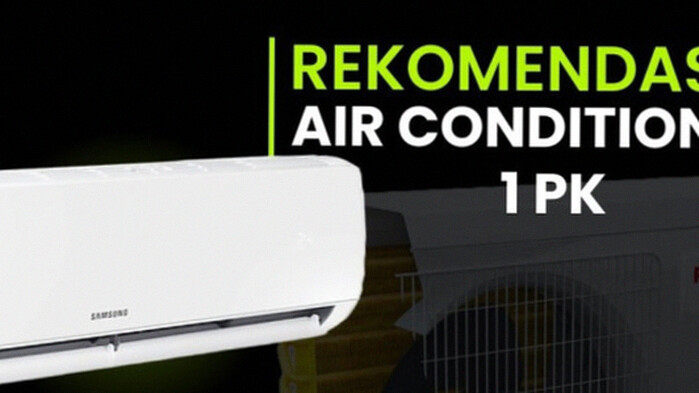
For typical household rooms, 1 PK (approximately 9000 BTU/h) remains the popular choice balancing space cooling and energy use. Based on recent reviews and market popularity, these five models stand out:
Sharp AH-A9UCY
- Power: 750W (Eco Mode)
- Features: Turbo Cool, Super Jet Stream, Silent Operation
- Warranty: Compressor 10 years
- Price Range: $200–$230
Polytron Neuva Ice PAC 09VX
- Power: 630W (Soft Start)
- Features: High Cooling Speed, Dual Filters, Rust-Resistant
- Warranty: 5–7 years
- Price Range: $170–$190
Akari, Changhong, and Gree Models
- Technologies: R32 Refrigerant, Low Watt Consumption
- Price Bands: Affordable, averaging $150–$200
- Focus: Efficiency and cost savings
Aqua, Hisense, Midea, TCL, and Sharp Economy Models
- Emphasis on fast cooling and energy saving
- Price Approximation: Around $140–$180
- Suitable for entry-level budget segments
- Popular 1 PK Units with Inverter Technology
- Benefits include lower electricity use up to 30%
- Enhanced temperature stability
- Competitive pricing and feature-rich
Guidelines for Selecting an Energy-Saving AC
Consumers should consider these factors:
- Energy Label Rating — Opt for units with high star ratings.
- Use of Eco-Friendly Refrigerants — Prefer R32 or newer gases for better efficiency.
- Soft Start/Inverter Technology — Reduces power surges and overall consumption.
- Noise Level — Lower decibel ratings contribute to better indoor comfort.
- Warranty Terms — Longer confidence in compressor and parts reduces future costs.
By prioritizing these elements, households can protect themselves against escalating electricity costs while benefiting from cool, comfortable indoor environments.
As energy prices continue their upward trend globally, shifting to energy-efficient air conditioners represents a practical approach for economic and environmental sustainability. Smart investments in modern AC technology help minimize carbon footprints and maximize cost-effectiveness over time.
Choosing the right AC, tuned to both performance and power consumption, provides a vital solution in addressing the dual challenge of rising household electricity expenses and consumer comfort needs.