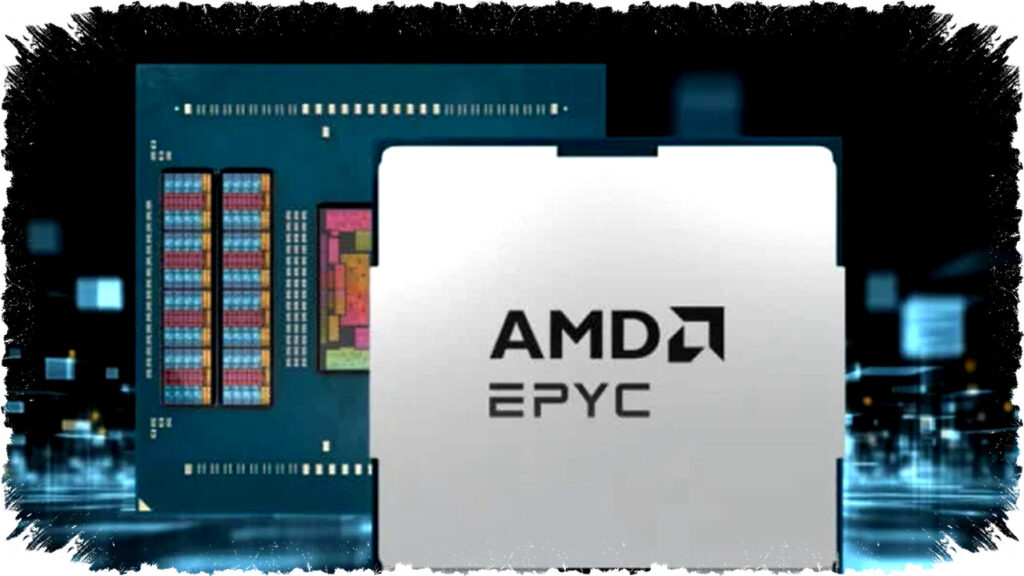
The adoption of AMD EPYC 5th Generation server CPUs by leading hyperscale cloud providers is a turning point for cloud computing performance in 2025. Amazon Web Services (AWS), Microsoft Azure, Google Cloud, and Oracle Cloud Infrastructure (OCI) have all expanded their use of these processors to deliver unparalleled computational power and operational efficiency. This shift directly targets the growing demand for high-performance and cost-effective cloud services across various workloads, from artificial intelligence to scientific simulations.
The AMD EPYC 5th Gen processors provide a foundation that supports this transformation with advanced architecture. These CPUs combine strong multi-core performance with efficient power consumption, enabling cloud providers to scale infrastructure without proportionally increasing energy costs. As a result, enterprise and scientific customers experience faster processing times and lower total costs.
Massive Deployment Across Cloud Providers
Each hyperscaler has integrated AMD EPYC 5th Gen processors into a wide portfolio of virtual machines (VMs) tailored to meet specific workload requirements. AWS, for example, has introduced new EC2 instance families such as the C8a and X8aedz. The C8a offers a 33% increase in memory bandwidth, while the X8aedz boosts computational performance, especially benefiting complex electronic design automation (EDA) and scientific computing tasks.
Google Cloud has strengthened its VM lineup with these processors as well. Their C4D, N4D, H4D, and G4 VMs now support workloads ranging from enterprise applications to high-performance computing (HPC). Notably, the N4D VM delivers a cost-performance ratio 3.5 times higher than previous generations. The HPC-focused H4D VM achieves node performance exceeding 12,000 gigaflops, making it suited for the most demanding technical workloads.
Microsoft Azure boasts one of the largest AMD EPYC-based VM offerings on the market. Their portfolio includes Dasv7, Easv7, and Fasv7 VMs, which enhance server web applications by up to 130% in performance. Azure’s HPC-focused HBv5 VMs provide memory bandwidth of 6.6 TB/s, while specialized VMs such as NVads V710 v5 deliver GPU acceleration. Azure also leads in confidential computing with secure VM options like DCasv6 and ECasv6.
Oracle Cloud Infrastructure sharpens its focus on large-scale enterprise workloads through virtual machines E6 and bare metal instances powered by AMD EPYC 5th Gen CPUs. OCI’s robust platform underlies core services such as Oracle Exadata Database Service and Oracle Autonomous Database. This integration facilitates efficient, high-performance handling of extensive distributed workloads with improved cost-effectiveness.
Confidential Computing and Security Enhancements
Security remains a critical factor driving widespread adoption of AMD EPYC’s latest architecture. The processors feature advanced confidential computing capabilities that isolate workloads within trusted execution environments (TEEs) secured by hardware-based memory encryption. This technology safeguards AI models, sensitive data, and processing tasks, meeting increasingly stringent privacy regulations and customer demands.
All four hyperscalers have implemented AMD’s Secure Encrypted Virtualization (SEV) technology, establishing arguably the most mature and secure confidential computing ecosystem in the cloud industry. This encryption at the hardware level ensures that data remains protected even from cloud administrators, thereby instilling greater trust in public cloud environments handling sensitive information.
Impact on Cloud Infrastructure and Future Outlook
The integration of AMD EPYC 5th Gen CPUs creates a new standard for hyperscale cloud infrastructure. By elevating both raw performance and data security, these processors enable service providers to offer next-generation workloads at scale and at better prices. For enterprises, this means improved access to powerful computing resources that can handle artificial intelligence, big data analytics, and scientific research more effectively.
Furthermore, the ongoing innovation in confidential computing supported by AMD EPYC architectures addresses one of the most critical concerns in cloud adoption: data privacy. This reassurance alongside performance gains positions AMD as a central figure in shaping cloud infrastructure through 2025 and beyond.
Key Benefits of AMD EPYC 5th Gen Adoption by Hyperscalers:
- Significant improvements in compute performance and memory bandwidth across diverse workloads.
- Enhanced cost-efficiency resulting in better price-to-performance ratios.
- Broad availability of AMD EPYC-powered VM types optimized for HPC, AI, and enterprise use cases.
- Advanced hardware-based confidential computing ensuring robust data security.
As hyperscale cloud providers continue to scale their next-gen infrastructure, the adoption of AMD EPYC 5th Generation CPUs will remain pivotal. These processors are redefining the benchmarks for speed, efficiency, and security within public cloud environments, influencing how digital transformation initiatives proceed worldwide.