


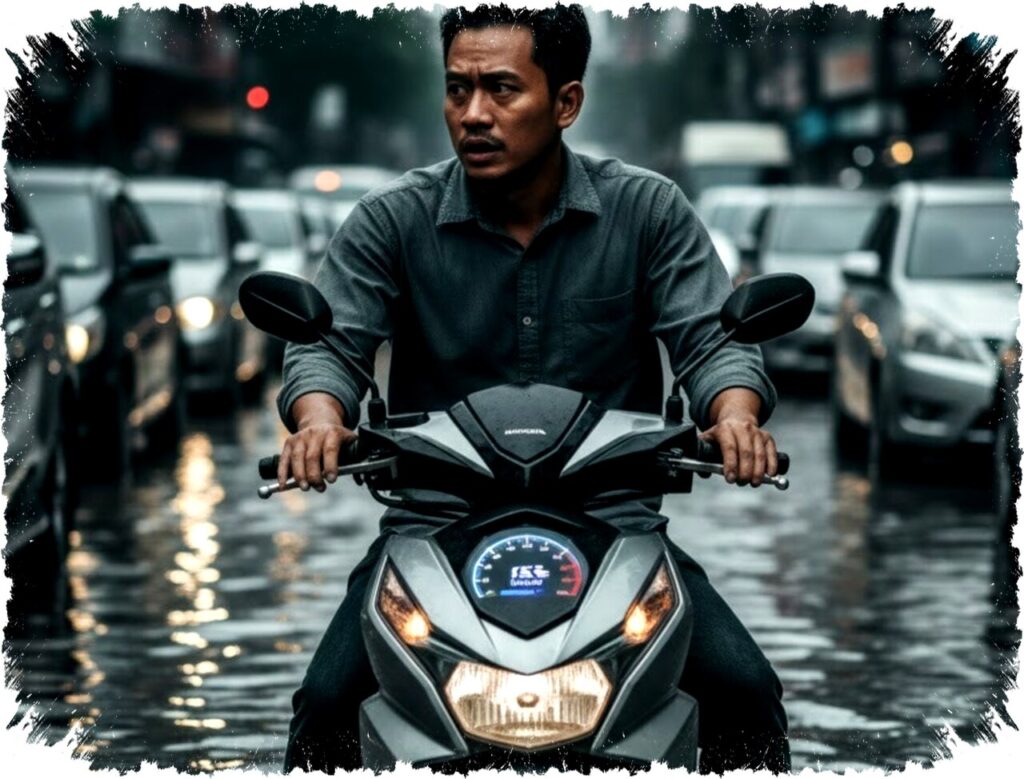
Idling Stop System (ISS) is widely known as a fuel-saving feature on modern automatic motorcycles. It automatically switches off the engine when the vehicle is stopped for a few seconds and restarts it swiftly once the throttle is engaged. This technology works well in typical stop-and-go traffic conditions, such as at traffic lights or slow-moving jams.
However, its effectiveness and safety become questionable when riders face traffic jams inundated with floodwaters. Many motorcyclists wonder if turning off ISS in such scenarios might save more fuel or even protect their bike better. To clarify this, we need to examine the technical functions of ISS and the real dynamics of riding in flood-affected congestions.
How ISS Works in Normal Traffic Situations
ISS reduces fuel consumption by shutting down the engine during idle stops, like red traffic lights, preventing the engine from wasting fuel. When the rider twists the throttle, the engine restarts promptly without noticeable delays. This process optimizes fuel use and lowers emissions, as the engine runs only when necessary.
This system, however, is optimized for relatively stable stops of several seconds or more. It relies on a consistent stopping pattern rather than frequent micro-stops and starts.
Challenges of ISS in Flooded Traffic Jams
Flooded roads bring a more complex challenge. Traffic movement becomes unpredictable, and riders often need to creep forward slowly while avoiding water entry into critical components. This frequent, short bursts of acceleration and braking cause ISS to switch off and on repeatedly within very short intervals.
Each time the engine restarts, the starter motor and fuel injector kick in, spraying extra fuel to ignite the engine. While one or two restarts per stop saves fuel, multiple rapid restarts may ironically increase overall fuel consumption and place excessive strain on the starter system.
Moreover, the engine needs a stable idle speed in flood conditions to keep its temperature steady and avoid water entering exhaust or intake pathways. Frequent engine shutdowns can cause temperature fluctuations that may temporarily reduce engine performance and increase wear.
Fuel Efficiency: Turning ISS Off May Not Mean Wasting Fuel
Contrary to common perception, turning off ISS during flooding-induced traffic jams may sometimes conserve fuel better. This is because constant idling consumes less fuel than repeated engine restarts, which spray additional fuel for ignition each time.
Technical experts and official workshops confirm that frequent start cycles elevate fuel use unnoticed. A stable idle allows the engine to run efficiently without triggering repeated mechanical stress or extra fuel injection.
Protecting Engine and Electrical Components
The repeated start-stop cycles also take a toll on the motorcycle’s battery and starter motor. Continuous starter usage demands high electrical current, which can quickly drain and degrade the battery’s lifespan. A weakened battery may fail during crucial moments in heavy flooding.
In addition, the slight delay caused by ISS restarting the engine may affect maneuverability in a tricky flood situation. Rapid engine responsiveness is vital for maintaining control and avoiding the risk of stalling in waterlogged streets.
When Is It Better to Keep ISS Active?
ISS is still beneficial under less severe flooding or slow-moving traffic with longer waiting periods. If water levels are low and traffic intermittently flows with noticeable stops of several seconds, keeping ISS on helps reduce fuel consumption by preventing unnecessary idling.
The key is rider judgment, evaluating the flow and water depth before deciding to disable ISS. Situations with very slow or halted movement amid high water call for ISS to be turned off, while lighter congestion with dry patches may allow it to remain enabled.
Guidelines for Motorcyclists in Flood-Related Traffic
- Assess the water depth and traffic flow before activating or deactivating ISS.
- Turn off ISS in severe flood jams to maintain engine stability and reduce starter wear.
- Keep ISS on during short stops in normal or light flood conditions to conserve fuel.
- Monitor battery performance and avoid excessive idling that could drain electrical power.
- Follow manufacturer recommendations and vehicle manual instructions for ISS use.
Balancing Technology and Situational Awareness
ISS is a valuable tool in enhancing fuel economy and reducing emissions in predictable traffic patterns. However, modern technology does not replace the need for rider discretion in complex environments like flooded roadways.
Manufacturers advise adaptable use of ISS, reinforcing that automatic systems require manual input under atypical circumstances to preserve component longevity and safety. Understanding when to engage or disengage features protects both vehicle health and rider well-being.
In flood-stricken traffic jams, disabling ISS is not an inefficiency but a strategic choice supporting engine health, safety, and potentially improved fuel economy. Riders who master this balance can better navigate challenging urban conditions with confidence and optimized motorcycle performance.