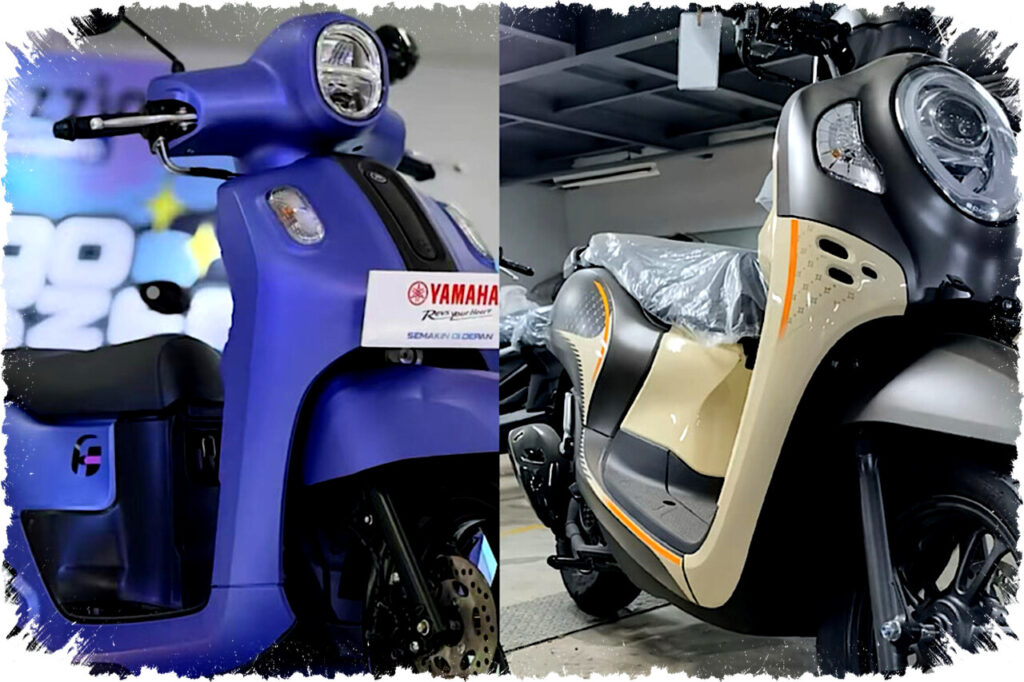
When comparing the Yamaha Fazzio and Honda Scoopy, the discussion often centers on their appealing designs. However, their real competition lies in acceleration and fuel efficiency. Both scooters have their strengths, making the choice largely dependent on rider priorities beyond aesthetics.
The testing of these scooters was conducted by Motofun Indonesia with a consistent test rider and precise instruments. This approach ensures reliable data that objectively reflects the performance differences between the two models. These findings shed light on what riders can expect in real-world conditions.
Acceleration Performance
The Yamaha Fazzio features a larger engine capacity, which translates to superior acceleration performance overall. Although the Honda Scoopy’s 110cc engine provides quicker throttle response at the start, the Fazzio pulls ahead as speed increases. This advantage is particularly notable during mid to high-speed acceleration phases.
Additionally, the Fazzio’s top speed clearly outperforms the Scoopy’s, making it the better option for riders who prioritize speed and rapid acceleration. This characteristic is consistent with the Fazzio’s engine design which favors power output.
Fuel Efficiency Comparison
On the other hand, the Honda Scoopy excels in fuel economy. Its smaller engine size reduces fuel consumption significantly. Testing reveals the Scoopy achieves approximately 58 km/liter (equivalent to about 136 miles per gallon), whereas the Fazzio manages around 50.43 km/liter (approximately 118 mpg). This makes the Scoopy the more economical choice for riders concerned about fuel costs and efficiency.
The Scoopy’s lighter weight, by about 2 kilograms, contributes to its better mileage. This lower mass demands less energy for motion, helping reduce fuel consumption.
Choosing Between Power and Economy
Ultimately, the decision between these two scooters hinges on whether acceleration or fuel economy is the priority. Riders who value quick acceleration and higher top speeds may prefer the Fazzio. Meanwhile, those seeking to minimize operating costs might lean toward the Scoopy for its superior fuel efficiency.
Battery Maintenance for Hybrid Features
The Yamaha Fazzio incorporates a hybrid system relying heavily on a robust battery. Proper battery maintenance is crucial to keep all hybrid functionalities operational. Users should monitor the battery voltage displayed on the speedometer to determine when charging is necessary.
A voltage reading below 12.5 volts indicates the need for a battery charge. Charging the dry battery typically takes 4 to 6 hours to restore it to optimal performance.
It is recommended to routinely check the battery condition, as a failing battery impacts many of the Fazzio’s features. A battery lifespan of 3 to 5 years is typical, but frequent recharges with declining performance or physical signs of damage such as swelling or leaking signal replacement is necessary.
Best Practices for Battery Longevity
To maintain battery health, start the engine and allow it to warm up for at least five minutes before riding. This ensures stable energy flow to the battery. If hybrid features stop functioning, checking the battery voltage should be the first diagnostic step before seeking professional service.
Summary of Key Differences
| Feature | Yamaha Fazzio | Honda Scoopy |
|---|---|---|
| Engine Capacity | Larger engine, stronger acceleration | 110cc engine, more responsive throttle start |
| Acceleration | Better mid-to-high speed acceleration | Quicker initial acceleration |
| Top Speed | Higher | Lower |
| Fuel Efficiency | ~50.43 km/l (118 mpg) | ~58 km/l (136 mpg) |
| Weight | Heavier by 2 kg | Lighter |
| Battery | Hybrid system requiring regular maintenance | Conventional system |
Both scooters offer distinct advantages addressing different rider needs without compromising their popular visual appeal. Understanding their acceleration and efficiency details helps buyers make informed choices tailored to personal preferences and practical requirements.