


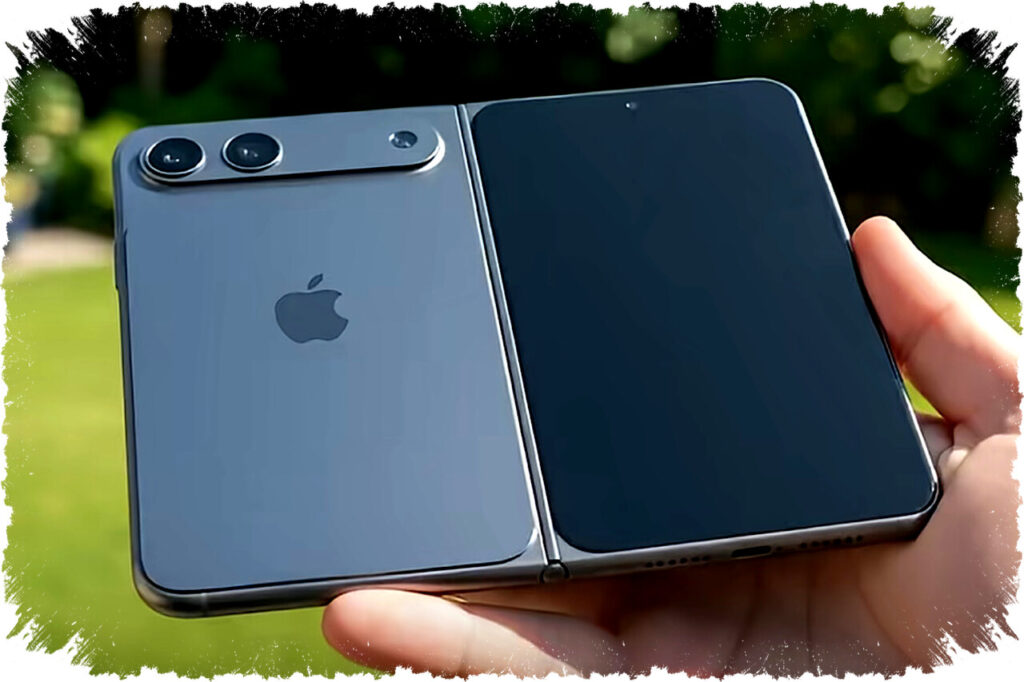
Apple has officially settled on the design for its upcoming foldable iPhone, confirming the shift towards a fold-style rather than a flip model. This decision is a key milestone after years of speculation about Apple’s approach to foldable smartphones. The company tested two distinct concepts: one resembling a flip phone that folds vertically like a clamshell, and the other unfolding sideways like a small book.
The fold design Apple chose means the phone opens horizontally, similar to a book, offering a more expansive screen experience akin to a small tablet. This form factor is drastically different from the flip style, which essentially would have created a phone that folds vertically but remains a standard smartphone form when open. Analysts suggest Apple’s decision is logical because the fold format introduces a genuinely new device category rather than a simple variation of existing iPhone shapes.
Choosing a fold design also allows Apple to focus on unique software and hardware integration, which is critical given the device’s dual screens and foldable nature. Earlier rumors indicate the iPhone Fold could feature a main display around 7.8 inches, nearly as large as an iPad Mini, with a fold line that is expected to be minimal or invisible. This could provide users with a seamless, large-screen experience without the distracting crease found on many current foldables.
Design Appeal Versus Market Hesitation
While Apple is known for delivering premium design and build quality, convincing consumers to adopt a foldable iPhone could prove challenging. The question remains whether the foldable iPhone will be perceived as a must-have innovation or merely a novelty with limited practical use. Apple’s past product launches show that beyond aesthetic appeal, buyers expect clear, useful functionalities that enhance daily smartphone operations.
Industry experts stress that Apple must present compelling reasons beyond the cool factor of the foldable design. Improving multitasking, enhancing video viewing, or revolutionizing mobile gaming are plausible benefits the iPhone Fold could bring. Without tangible advantages, the device risks falling into the "trendy gadget" category, potentially facing lukewarm sales similar to the initial reception of other high-profile but niche products like the Apple Vision Pro.
Apple’s challenge will be to integrate this new form factor into its ecosystem smoothly. Developers will need to optimize apps to leverage the larger and foldable screen real estate. This implies that the success of the iPhone Fold depends as much on software innovation as on the hardware design.
Key Factors Apple Must Address for Success
- Durability and Longevity: Foldable phones must withstand frequent bending without damaging their displays. Apple’s reputation for quality means the foldable iPhone must excel here to avoid skepticism.
- User Experience: The phone should feel intuitive whether folded or unfolded. Transitioning between phone and tablet modes needs to be seamless and beneficial.
- App Optimization: Foldable screen apps and multitasking features will play a major role in convincing users of the device’s practicality.
- Price Point: Foldables currently command premium prices. Apple must balance cost and value to attract early adopters without limiting the market size.
- Market Timing: Launching at the right time, when foldable technology matures, is vital to avoid being seen as a gadget that’s “too soon” for wide adoption.
Implications for the Smartphone Industry
Apple entering the foldable phone space with a book-style foldable iPhone could accelerate innovation and competition. So far, Samsung and a few other manufacturers have dominated this market niche, with mixed commercial success. Apple’s entry will bring heightened consumer attention and potentially push the market forward.
However, a foldable iPhone’s success is not guaranteed purely by brand power. Apple’s approach suggests that the company is cautiously ensuring its foldable model is a true leap-forward product rather than a mere experiment. The choice of the fold design also signals Apple’s intent to redefine mobile device usage rather than merely fitting the concept into current smartphone norms.
Final Considerations
The upcoming foldable iPhone marks a significant chapter in mobile technology history. While the design promises to be outstanding, convincing the market to embrace this new category poses a challenge. Apple’s success with the iPhone Fold will hinge on its ability to deliver genuine user benefits beyond its futuristic design.
As the launch date approaches, consumers and analysts alike will watch closely to see if the foldable iPhone can establish itself as a transformative device or end up as a limited-interest product. In any case, Apple’s fold decision marks a bold step that could reshape how smartphones evolve in years to come.