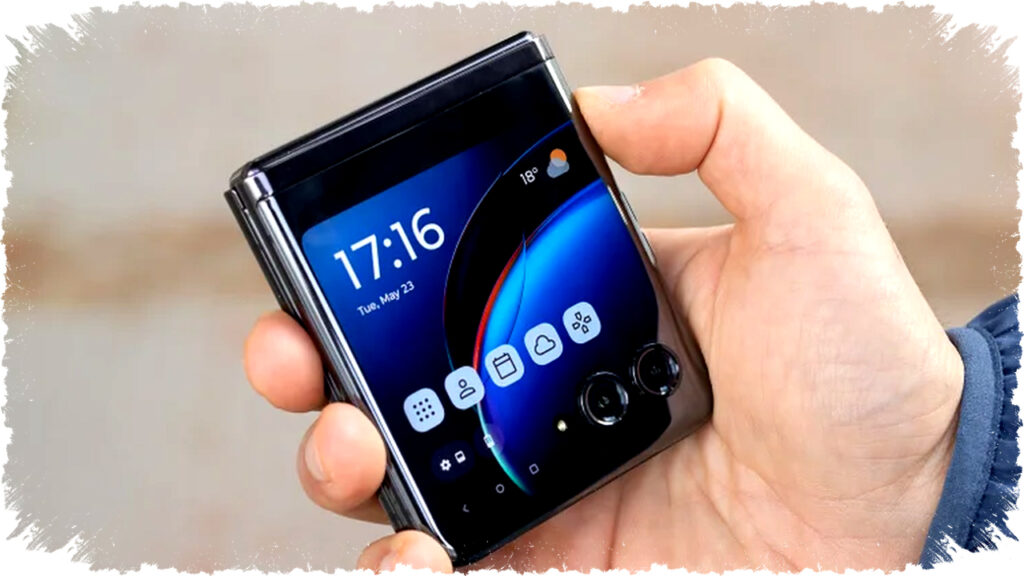
Motorola has expanded its foldable smartphone lineup with the introduction of the Motorola Razr Fold, marking a strategic shift in its product design approach. Unlike previous Razr models that featured a vertical clamshell fold, the new Razr Fold adopts a book-style horizontal fold to offer a larger display area for enhanced productivity and content consumption.
This change diversifies the Razr family, aligning Motorola more directly with competitors who dominate the horizontal foldable market. According to hands-on reports from PhoneArena, the device boasts a flexible OLED main screen that folds inward and a secondary outer display designed to show notifications and facilitate quick access to applications without opening the phone.
The Motorola Razr Fold uses a refined hinge mechanism intended to minimize the gap when the phone is closed. The company emphasizes the durability and solid feel of this mechanism, which is critical for long-term usability in foldable smartphones. Reliable hinges enhance user experience and device longevity, which have historically been issues in the foldable smartphone market.
On the software side, the Razr Fold runs a customized Android interface optimized for the foldable display. Multitasking is a highlighted feature, allowing users to operate two apps simultaneously via split-screen mode. This capability exploits the device’s wider screen real estate for better productivity and seamless app interaction.
Performance-wise, Motorola equips the Razr Fold with a premium chipset targeting power efficiency and high performance, a necessity given the power demands of its expansive foldable OLED screen. Chipsets in foldables must balance raw processing power and battery conservation to sustain optimal device runtime.
Camera setup on the Razr Fold is positioned to leverage its foldable form factor. The main camera is on the back alongside the secondary screen, which acts as a viewfinder for taking selfies using the primary lenses. This design enhances photography flexibility, a significant advantage over traditional smartphone layouts.
Motorola’s launch of the Razr Fold comes amid growing global interest and investments in foldable smartphones. Industry leaders continue to explore innovations in hinge design, flexible displays, and user interface optimization. Motorola leverages its Razr brand legacy, which has been synonymous with foldable and flip phones, to strengthen its foothold in the premium foldable segment.
Key features of the Motorola Razr Fold include:
Book-style Horizontal Fold: Enables a wider display akin to an open book, beneficial for multitasking and media consumption.
Flexible OLED Display: Provides durability with pixel-level flexibility, supporting repeated folding and unfolding without damage.
Secondary Outer Screen: Allows for quick notifications and app access, enhancing user convenience.
Robust Hinge Engineering: Designed to minimize gaps and improve structural integrity over long-term use.
Android with Motorola UI Optimization: Enhances app adaptability and multitasking on the foldable screen.
High-performance Chipset: Balances power efficiency and processing capability for smooth operation.
- Innovative Camera Setup: Uses the outer display as a viewfinder for high-quality photo capturing on the main lenses.
Details about pricing and global availability are yet to be fully disclosed. However, the introduction of the Razr Fold expands Motorola’s portfolio beyond clamshell designs, signaling its commitment to innovation in foldable technologies.
As Motorola challenges rivals such as Samsung’s Galaxy Z Fold series and Google’s Pixel Fold, market reception will likely depend on the Razr Fold’s durability, software fluidity, and overall user experience. This launch is a significant indicator of the evolving competition in the foldable segment during 2026.
Motorola Razr Fold represents a strategic effort to cater to users seeking versatile foldable devices with practical form factors. Its combination of design innovation, optimized software, and premium hardware positions it well to meet the demands of a dynamic and growing foldable smartphone market.