


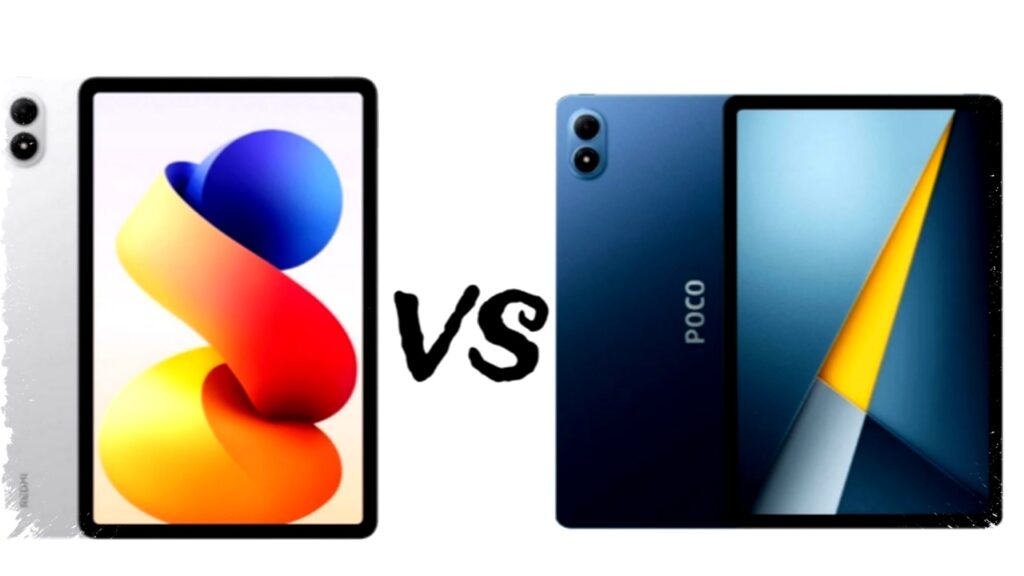
POCO Pad M1 and REDMI Pad 2 Pro debuted simultaneously in late 2025, drawing attention for their striking similarities. Both tablets feature a 12.1-inch IPS LCD display with a sharp 2.5K resolution and a smooth 120 Hz refresh rate. This large screen size and high refresh rate make both devices suitable for entertainment, multitasking, and productivity on the go.
Under the hood, they share the same Snapdragon 7s Gen 4 chipset fabricated with a 4nm process. This octa-core processor includes a Cortex-A720 prime core running at 2.7 GHz, enabling smooth performance across various daily tasks. Gaming is handled capably by the Adreno 810 GPU, supporting popular titles such as Call of Duty Mobile and PUBG Mobile on high settings, sometimes even at 90 to 120 FPS.
Both tablets pack 8 GB of LPDDR4X RAM paired with 256 GB of UFS 2.2 storage, ensuring responsive navigation and enough space for apps and media. According to POCO, the Pad M1 scores an impressive 1.06 million points on AnTuTu Benchmark v11, while REDMI Pad 2 Pro’s score is approximately 880,000 on AnTuTu v10, reflecting minor variations in benchmarking methodologies rather than stark performance differences.
Battery capacity is a standout feature for both models, each equipped with a massive 12,000 mAh unit. This large battery promises extended usage periods covering video streaming for over 14 hours, music playback exceeding 100 hours, and long hours of reading or light use. Notably, POCO Pad M1 supports 27W reverse charging, turning it into a power bank for other devices, while REDMI’s Pad 2 Pro improves on the predecessor’s 10,000 mAh capacity.
Display and Multimedia Experience
The tablets’ screen panels offer 1.07 billion colors and Dolby Vision support, facilitating vibrant visuals and enhanced contrast. The peak brightness of 600 nits ensures usability in bright environments. POCO adds extra features like wet touch functionality for responsiveness when the screen is wet, and TÜV Rheinland certification to reduce eye strain.
Audio performance differs slightly between the two. POCO Pad M1 features four symmetrically placed speakers with Dolby Atmos technology, delivering immersive stereo sound and customizable audio modes via its HyperOS interface. REDMI Pad 2 Pro boasts up to 300% higher volume capacity but experiences some quality degradation at maximum volume levels.
Camera and Physical Design
Camera setups on both devices are minimalistic, with 8 MP sensors on the front and rear. These are sufficient for video calls, quick document scans, and basic photography but fall short in low-light conditions due to noise. Video recording tops out at 1080p with 30 frames per second. The camera placement is optimized for landscape orientation but lacks advanced features like autofocus or face tracking.
In terms of design, the tablets share a similar premium metal unibody construction, measuring about 7.5 mm thick and weighing approximately 610 grams. The weight distribution is balanced, enhancing comfort during extended use in landscape mode. Color options vary slightly, with REDMI offering Silver, Graphite Gray, and Lavender Purple, while POCO provides Blue and Gray.
Security and Charging
Both tablets omit fingerprint sensors, relying instead on 2D camera-based Face Unlock, PINs, or password inputs. This approach can be less convenient during low-light conditions or when wearing masks. For users requiring quick, secure unlocking—especially when handling sensitive apps like mobile banking—this may be a notable drawback.
Charging speed is moderate. Both support 33W fast charging, but given the substantial 12,000 mAh battery, a full charge requires between two to three hours. POCO’s reverse charging feature offers versatility but only applies to tuning other gadgets, not expediting its own charging process.
Price and Value Comparison
At launch, POCO Pad M1 is priced at roughly $260 for the 8 GB RAM and 256 GB storage model, benefiting from an initial promotional discount. Meanwhile, REDMI Pad 2 Pro is positioned at about $293 for the equivalent configuration. This price gap may influence buyer choices depending on budget and brand affinity.
For consumers seeking extensive runtime, solid multimedia capabilities, and balanced performance in an affordable package, POCO Pad M1 presents an excellent value proposition. REDMI Pad 2 Pro, while slightly more expensive, offers extra color choices and marginal improvements, making it attractive for those prioritizing aesthetic preferences or who prefer the REDMI ecosystem.
Key Differences at a Glance
- Performance: Both use Snapdragon 7s Gen 4; POCO Pad M1 scores higher on AnTuTu.
- Battery: Both 12,000 mAh; POCO supports 27W reverse charging.
- Display: Identical 12.1-inch 2.5K IPS LCD with 120 Hz refresh rate.
- Audio: POCO emphasizes Dolby Atmos and balanced stereo; REDMI excels in maximum volume.
- Camera: Same 8 MP front and rear, basic functionality.
- Build: Metal body; variant color options differ.
- Security: No fingerprint sensor; relies on 2D Face Unlock.
- Charging: 33W fast charging; full charge in about 2–3 hours.
- Price: POCO Pad M1 is approximately $260; REDMI Pad 2 Pro is about $293.
Ultimately, both tablets serve well in the midrange segment, with nearly identical hardware and user experience. Choice boils down to prioritizing brand appeal, color preference, slight price variances, and minor feature differences like audio tuning and reverse charging capabilities. Those looking for budget-friendly tablets with strong all-around features may lean toward POCO Pad M1. In contrast, users appreciating subtle enhancements and color variety might find REDMI Pad 2 Pro more suitable.